 Add to Chrome
 Add to Firefox
 Add to Edge
Guidelines for Designing AI Technologies to Support Adult Learning
May 06, 2026
AI-powered educational technologies have demonstrated measurable benefits for learners, but their design and evaluation have largely centered on K-12 contexts. As a result, many AI-supported learning systems remain poorly aligned with the needs, constraints, and goals of adult learners. To better understand how AI systems function in adult education, this paper examines the deployment of several AI learning technologies developed within a multidisciplinary, national research institute in the United States focused on adult learning and online education. Drawing on longitudinal deployment data, we conducted a reflexive thematic analysis to identify recurring challenges and design considerations across systems. These insights were synthesized into a set of 19 design guidelines intended to inform future AI-supported adult learning technologies. We demonstrate the utility of these guidelines through a heuristic evaluation of the deployed systems. Lastly, we present a guideline exploration tool that aids in the ideation of technologies by connecting the guidelines to stakeholder statements surfaced in the analysis process.

Jill Watson: A Virtual Teaching Assistant powered by ChatGPT
May 17, 2024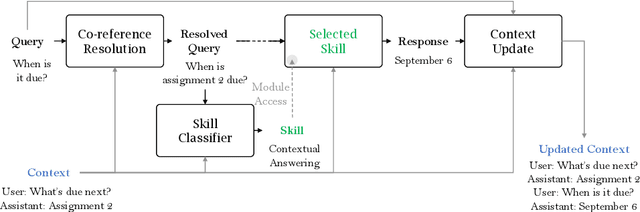
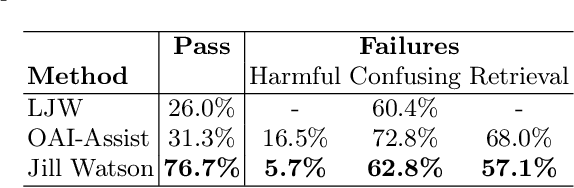
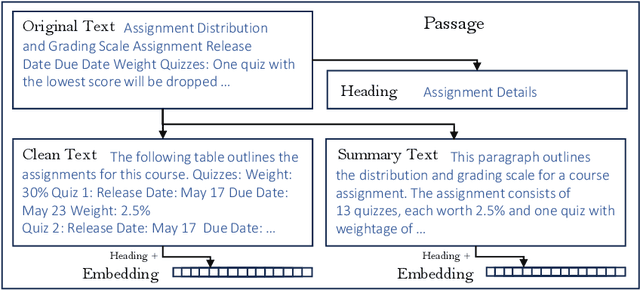

Conversational AI agents often require extensive datasets for training that are not publicly released, are limited to social chit-chat or handling a specific domain, and may not be easily extended to accommodate the latest advances in AI technologies. This paper introduces Jill Watson, a conversational Virtual Teaching Assistant (VTA) leveraging the capabilities of ChatGPT. Jill Watson based on ChatGPT requires no prior training and uses a modular design to allow the integration of new APIs using a skill-based architecture inspired by XiaoIce. Jill Watson is also well-suited for intelligent textbooks as it can process and converse using multiple large documents. We exclusively utilize publicly available resources for reproducibility and extensibility. Comparative analysis shows that our system outperforms the legacy knowledge-based Jill Watson as well as the OpenAI Assistants service. We employ many safety measures that reduce instances of hallucinations and toxicity. The paper also includes real-world examples from a classroom setting that demonstrate different features of Jill Watson and its effectiveness.