 Add to Chrome
 Add to Firefox
 Add to Edge
Belief-Guided Decision Making with Uncertainty Gating in the Game of Go
Jul 29, 2026
Recent advancements in Computer Go, driven by AlphaZero and MuZero, rely heavily on Monte Carlo Tree Search (MCTS) to correct the errors of the neural network policy. While effective on massive computational clusters, this dependence creates a critical bottleneck on consumer-grade hardware, where the computational cost of tree management severely limits inference rates. Furthermore, without deep search, these models suffer from hallucination, proposing moves with high confidence that are strategically fatal. This paper introduces a novel Belief-Guided architecture that disentangles the Policy head from a distinct Belief head. Unlike traditional value functions, the Belief head acts as an internal simulator and independent critic, modeling epistemic uncertainty and strategic stability. By integrating memory mechanisms (Transformer/GRU) to handle long-term dependencies and the Ko rule, and utilizing a gating mechanism to filter overconfident policy errors, our model shifts the burden of intelligence from runtime search to parametric "intuition." Experimental results demonstrate that this approach significantly improves search-free win rates and reduces hallucination, enabling professional-level play on limited hardware where massive MCTS is infeasible.

Fairness for Robust Learning to Rank
Dec 12, 2021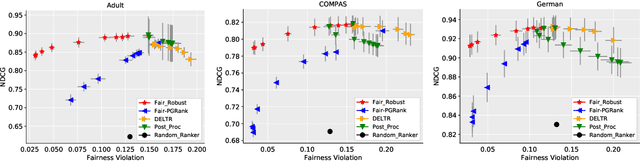

While conventional ranking systems focus solely on maximizing the utility of the ranked items to users, fairness-aware ranking systems additionally try to balance the exposure for different protected attributes such as gender or race. To achieve this type of group fairness for ranking, we derive a new ranking system based on the first principles of distributional robustness. We formulate a minimax game between a player choosing a distribution over rankings to maximize utility while satisfying fairness constraints against an adversary seeking to minimize utility while matching statistics of the training data. We show that our approach provides better utility for highly fair rankings than existing baseline methods.
Robust Fairness under Covariate Shift
Oct 17, 2020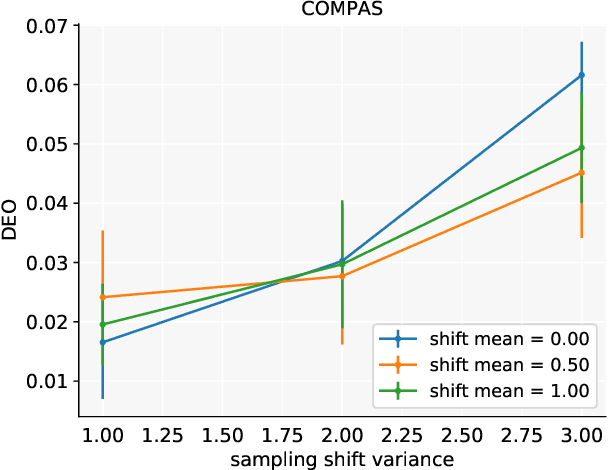
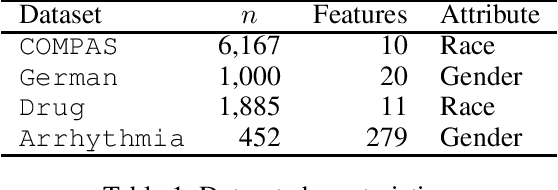
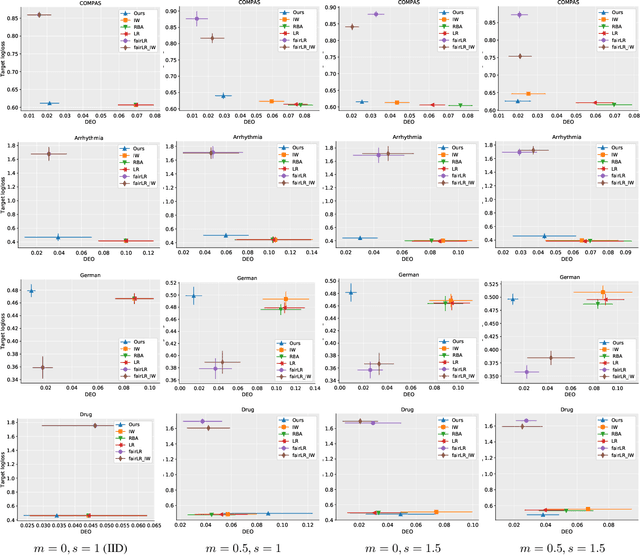
Making predictions that are fair with regard to protected group membership (race, gender, age, etc.) has become an important requirement for classification algorithms. Existing techniques derive a fair model from sampled labeled data relying on the assumption that training and testing data are identically and independently drawn (iid) from the same distribution.In practice, distribution shift can and does occur between training and testing datasets as the characteristics of individuals interacting with the machine learning system -- and which individuals interact with the system -- change. We investigate fairness under covariate shift, a relaxation of the iid assumption in which the inputs or covariates change while the conditional label distribution remains the same. We seek fair decisions under these assumptions on target data with unknown labels.We propose an approach that obtains the predictor that is robust to the worst-case in terms of target performance while satisfying target fairness requirements and matching statistical properties of the source data. We demonstrate the benefits of our approach on benchmark prediction tasks.
Fair Logistic Regression: An Adversarial Perspective
Mar 19, 2019
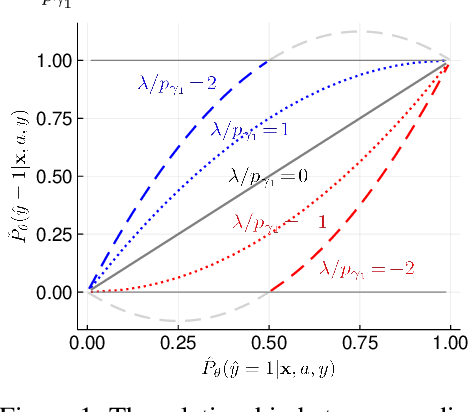
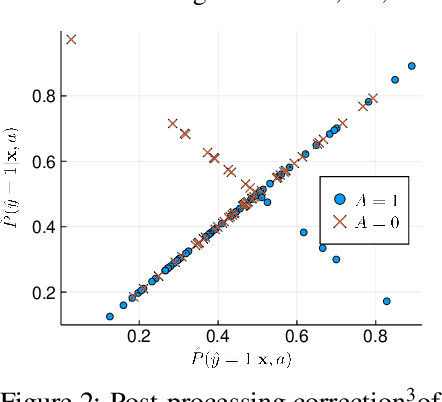
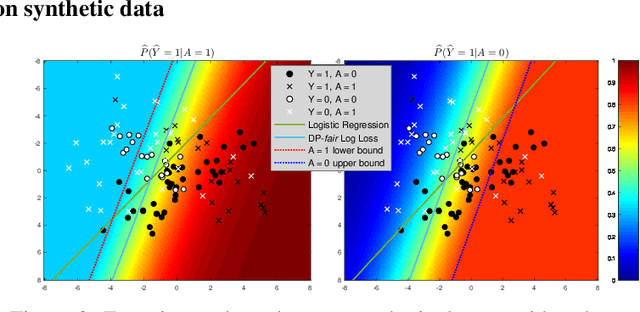
Fair prediction methods have primarily been built around existing classification techniques using pre-processing methods, post-hoc adjustments, reduction-based constructions, or deep learning procedures. We investigate a new approach to fair data-driven decision making by designing predictors with fairness requirements integrated into their core formulations. We augment a game-theoretic construction of the logistic regression model with fairness constraints, producing a novel prediction model that robustly and fairly minimizes the logarithmic loss. We demonstrate the advantages of our approach on a range of benchmark datasets for fairness.
Distributionally Robust Graphical Models
Nov 07, 2018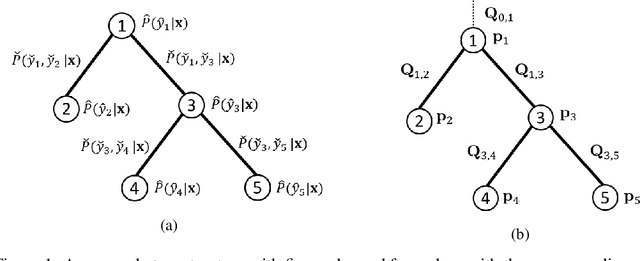
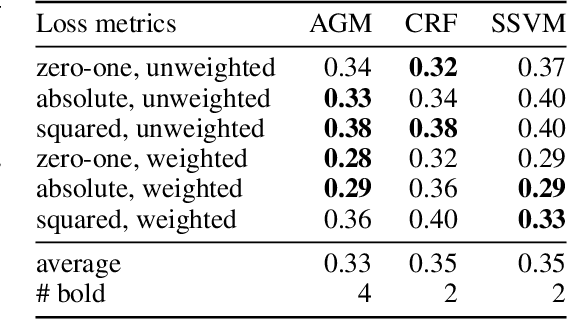
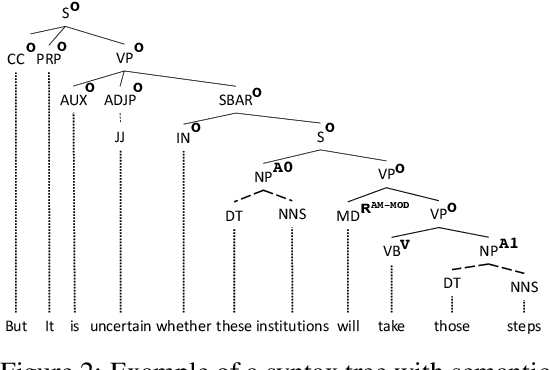
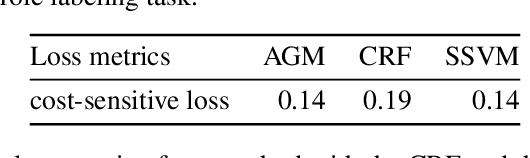
In many structured prediction problems, complex relationships between variables are compactly defined using graphical structures. The most prevalent graphical prediction methods---probabilistic graphical models and large margin methods---have their own distinct strengths but also possess significant drawbacks. Conditional random fields (CRFs) are Fisher consistent, but they do not permit integration of customized loss metrics into their learning process. Large-margin models, such as structured support vector machines (SSVMs), have the flexibility to incorporate customized loss metrics, but lack Fisher consistency guarantees. We present adversarial graphical models (AGM), a distributionally robust approach for constructing a predictor that performs robustly for a class of data distributions defined using a graphical structure. Our approach enjoys both the flexibility of incorporating customized loss metrics into its design as well as the statistical guarantee of Fisher consistency. We present exact learning and prediction algorithms for AGM with time complexity similar to existing graphical models and show the practical benefits of our approach with experiments.
Adversarial Structured Prediction for Multivariate Measures
Dec 21, 2017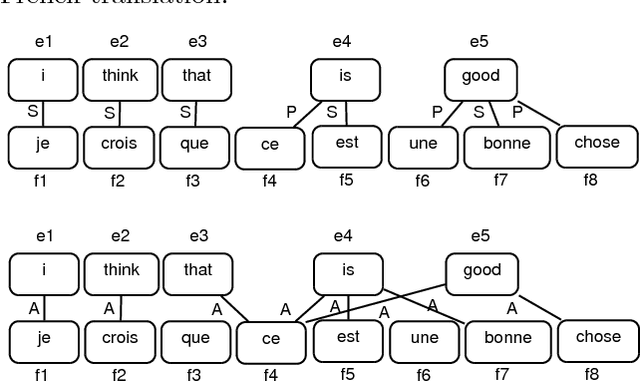
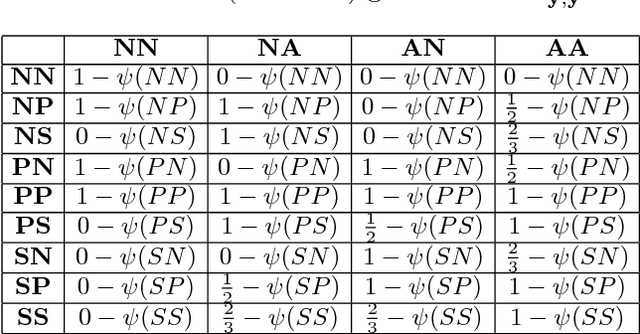
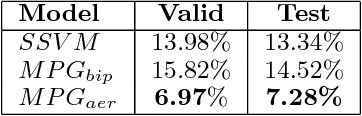
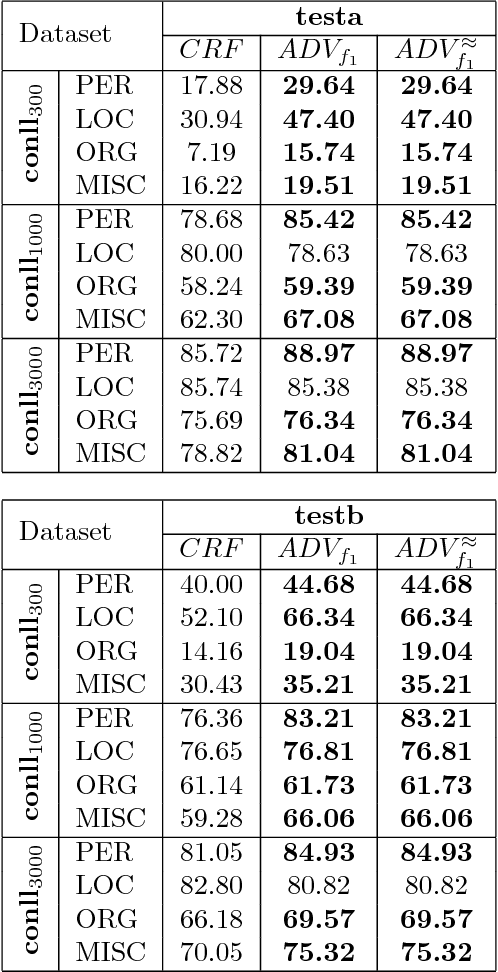
Many predicted structured objects (e.g., sequences, matchings, trees) are evaluated using the F-score, alignment error rate (AER), or other multivariate performance measures. Since inductively optimizing these measures using training data is typically computationally difficult, empirical risk minimization of surrogate losses is employed, using, e.g., the hinge loss for (structured) support vector machines. These approximations often introduce a mismatch between the learner's objective and the desired application performance, leading to inconsistency. We take a different approach: adversarially approximate training data while optimizing the exact F-score or AER. Structured predictions under this formulation result from solving zero-sum games between a predictor seeking the best performance and an adversary seeking the worst while required to (approximately) match certain structured properties of the training data. We explore this approach for word alignment (AER evaluation) and named entity recognition (F-score evaluation) with linear-chain constraints.