 Add to Chrome
 Add to Firefox
 Add to Edge
Evaluating LLM-Driven Summarisation of Parliamentary Debates with Computational Argumentation
Apr 21, 2026
Understanding how policy is debated and justified in parliament is a fundamental aspect of the democratic process. However, the volume and complexity of such debates mean that outside audiences struggle to engage. Meanwhile, Large Language Models (LLMs) have been shown to enable automated summarisation at scale. While summaries of debates can make parliamentary procedures more accessible, evaluating whether these summaries faithfully communicate argumentative content remains challenging. Existing automated summarisation metrics have been shown to correlate poorly with human judgements of consistency (i.e., faithfulness or alignment between summary and source). In this work, we propose a formal framework for evaluating parliamentary debate summaries that grounds argument structures in the contested proposals up for debate. Our novel approach, driven by computational argumentation, focuses the evaluation on formal properties concerning the faithful preservation of the reasoning presented to justify or oppose policy outcomes. We demonstrate our methods using a case-study of debates from the European Parliament and associated LLM-driven summaries.

Argumentative Human-AI Decision-Making: Toward AI Agents That Reason With Us, Not For Us
Mar 16, 2026Computational argumentation offers formal frameworks for transparent, verifiable reasoning but has traditionally been limited by its reliance on domain-specific information and extensive feature engineering. In contrast, LLMs excel at processing unstructured text, yet their opaque nature makes their reasoning difficult to evaluate and trust. We argue that the convergence of these fields will lay the foundation for a new paradigm: Argumentative Human-AI Decision-Making. We analyze how the synergy of argumentation framework mining, argumentation framework synthesis, and argumentative reasoning enables agents that do not just justify decisions, but engage in dialectical processes where decisions are contestable and revisable -- reasoning with humans rather than for them. This convergence of computational argumentation and LLMs is essential for human-aware, trustworthy AI in high-stakes domains.
From User Preferences to Base Score Extraction Functions in Gradual Argumentation (with Appendix)
Feb 17, 2026Gradual argumentation is a field of symbolic AI which is attracting attention for its ability to support transparent and contestable AI systems. It is considered a useful tool in domains such as decision-making, recommendation, debate analysis, and others. The outcomes in such domains are usually dependent on the arguments' base scores, which must be selected carefully. Often, this selection process requires user expertise and may not always be straightforward. On the other hand, organising the arguments by preference could simplify the task. In this work, we introduce \emph{Base Score Extraction Functions}, which provide a mapping from users' preferences over arguments to base scores. These functions can be applied to the arguments of a \emph{Bipolar Argumentation Framework} (BAF), supplemented with preferences, to obtain a \emph{Quantitative Bipolar Argumentation Framework} (QBAF), allowing the use of well-established computational tools in gradual argumentation. We outline the desirable properties of base score extraction functions, discuss some design choices, and provide an algorithm for base score extraction. Our method incorporates an approximation of non-linearities in human preferences to allow for better approximation of the real ones. Finally, we evaluate our approach both theoretically and experimentally in a robotics setting, and offer recommendations for selecting appropriate gradual semantics in practice.
Synthesising Counterfactual Explanations via Label-Conditional Gaussian Mixture Variational Autoencoders
Oct 06, 2025Counterfactual explanations (CEs) provide recourse recommendations for individuals affected by algorithmic decisions. A key challenge is generating CEs that are robust against various perturbation types (e.g. input and model perturbations) while simultaneously satisfying other desirable properties. These include plausibility, ensuring CEs reside on the data manifold, and diversity, providing multiple distinct recourse options for single inputs. Existing methods, however, mostly struggle to address these multifaceted requirements in a unified, model-agnostic manner. We address these limitations by proposing a novel generative framework. First, we introduce the Label-conditional Gaussian Mixture Variational Autoencoder (L-GMVAE), a model trained to learn a structured latent space where each class label is represented by a set of Gaussian components with diverse, prototypical centroids. Building on this, we present LAPACE (LAtent PAth Counterfactual Explanations), a model-agnostic algorithm that synthesises entire paths of CE points by interpolating from inputs' latent representations to those learned latent centroids. This approach inherently ensures robustness to input changes, as all paths for a given target class converge to the same fixed centroids. Furthermore, the generated paths provide a spectrum of recourse options, allowing users to navigate the trade-off between proximity and plausibility while also encouraging robustness against model changes. In addition, user-specified actionability constraints can also be easily incorporated via lightweight gradient optimisation through the L-GMVAE's decoder. Comprehensive experiments show that LAPACE is computationally efficient and achieves competitive performance across eight quantitative metrics.
How Do People Revise Inconsistent Beliefs? Examining Belief Revision in Humans with User Studies
Jun 11, 2025Understanding how humans revise their beliefs in light of new information is crucial for developing AI systems which can effectively model, and thus align with, human reasoning. While theoretical belief revision frameworks rely on a set of principles that establish how these operations are performed, empirical evidence from cognitive psychology suggests that people may follow different patterns when presented with conflicting information. In this paper, we present three comprehensive user studies showing that people consistently prefer explanation-based revisions, i.e., those which are guided by explanations, that result in changes to their belief systems that are not necessarily captured by classical belief change theory. Our experiments systematically investigate how people revise their beliefs with explanations for inconsistencies, whether they are provided with them or left to formulate them themselves, demonstrating a robust preference for what may seem non-minimal revisions across different types of scenarios. These findings have implications for AI systems designed to model human reasoning or interact with humans, suggesting that such systems should accommodate explanation-based, potentially non-minimal belief revision operators to better align with human cognitive processes.
Explainable Prediction of the Mechanical Properties of Composites with CNNs
May 20, 2025Composites are amongst the most important materials manufactured today, as evidenced by their use in countless applications. In order to establish the suitability of composites in specific applications, finite element (FE) modelling, a numerical method based on partial differential equations, is the industry standard for assessing their mechanical properties. However, FE modelling is exceptionally costly from a computational viewpoint, a limitation which has led to efforts towards applying AI models to this task. However, in these approaches: the chosen model architectures were rudimentary, feed-forward neural networks giving limited accuracy; the studies focus on predicting elastic mechanical properties, without considering material strength limits; and the models lacked transparency, hindering trustworthiness by users. In this paper, we show that convolutional neural networks (CNNs) equipped with methods from explainable AI (XAI) can be successfully deployed to solve this problem. Our approach uses customised CNNs trained on a dataset we generate using transverse tension tests in FE modelling to predict composites' mechanical properties, i.e., Young's modulus and yield strength. We show empirically that our approach achieves high accuracy, outperforming a baseline, ResNet-34, in estimating the mechanical properties. We then use SHAP and Integrated Gradients, two post-hoc XAI methods, to explain the predictions, showing that the CNNs use the critical geometrical features that influence the composites' behaviour, thus allowing engineers to verify that the models are trustworthy by representing the science of composites.
Free Argumentative Exchanges for Explaining Image Classifiers
Feb 18, 2025Deep learning models are powerful image classifiers but their opacity hinders their trustworthiness. Explanation methods for capturing the reasoning process within these classifiers faithfully and in a clear manner are scarce, due to their sheer complexity and size. We provide a solution for this problem by defining a novel method for explaining the outputs of image classifiers with debates between two agents, each arguing for a particular class. We obtain these debates as concrete instances of Free Argumentative eXchanges (FAXs), a novel argumentation-based multi-agent framework allowing agents to internalise opinions by other agents differently than originally stated. We define two metrics (consensus and persuasion rate) to assess the usefulness of FAXs as argumentative explanations for image classifiers. We then conduct a number of empirical experiments showing that FAXs perform well along these metrics as well as being more faithful to the image classifiers than conventional, non-argumentative explanation methods. All our implementations can be found at https://github.com/koriavinash1/FAX.
Explainable Reinforcement Learning for Formula One Race Strategy
Jan 07, 2025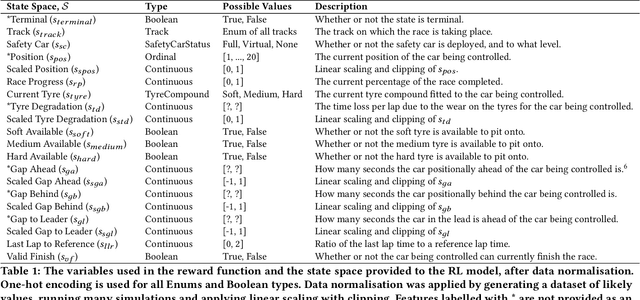

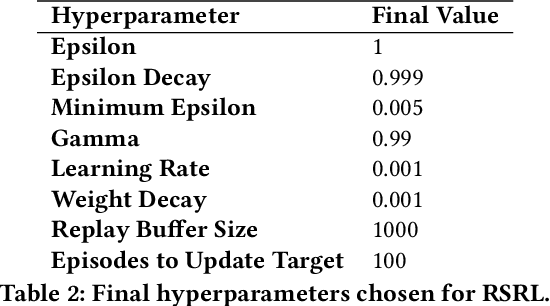
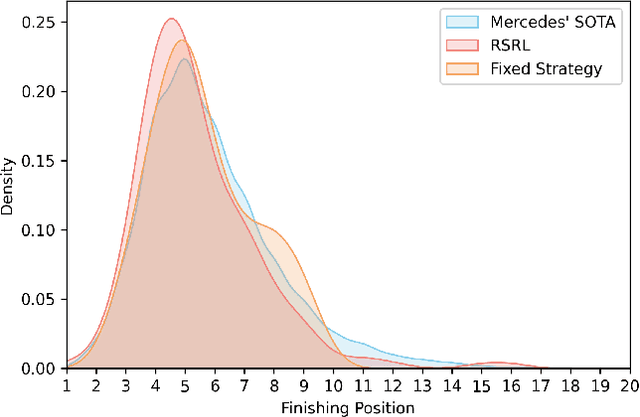
In Formula One, teams compete to develop their cars and achieve the highest possible finishing position in each race. During a race, however, teams are unable to alter the car, so they must improve their cars' finishing positions via race strategy, i.e. optimising their selection of which tyre compounds to put on the car and when to do so. In this work, we introduce a reinforcement learning model, RSRL (Race Strategy Reinforcement Learning), to control race strategies in simulations, offering a faster alternative to the industry standard of hard-coded and Monte Carlo-based race strategies. Controlling cars with a pace equating to an expected finishing position of P5.5 (where P1 represents first place and P20 is last place), RSRL achieves an average finishing position of P5.33 on our test race, the 2023 Bahrain Grand Prix, outperforming the best baseline of P5.63. We then demonstrate, in a generalisability study, how performance for one track or multiple tracks can be prioritised via training. Further, we supplement model predictions with feature importance, decision tree-based surrogate models, and decision tree counterfactuals towards improving user trust in the model. Finally, we provide illustrations which exemplify our approach in real-world situations, drawing parallels between simulations and reality.
Explainable Time Series Prediction of Tyre Energy in Formula One Race Strategy
Jan 07, 2025Formula One (F1) race strategy takes place in a high-pressure and fast-paced environment where split-second decisions can drastically affect race results. Two of the core decisions of race strategy are when to make pit stops (i.e. replace the cars' tyres) and which tyre compounds (hard, medium or soft, in normal conditions) to select. The optimal pit stop decisions can be determined by estimating the tyre degradation of these compounds, which in turn can be computed from the energy applied to each tyre, i.e. the tyre energy. In this work, we trained deep learning models, using the Mercedes-AMG PETRONAS F1 team's historic race data consisting of telemetry, to forecast tyre energies during races. Additionally, we fitted XGBoost, a decision tree-based machine learning algorithm, to the same dataset and compared the results, with both giving impressive performance. Furthermore, we incorporated two different explainable AI methods, namely feature importance and counterfactual explanations, to gain insights into the reasoning behind the forecasts. Our contributions thus result in an explainable, automated method which could assist F1 teams in optimising their race strategy.
Argumentation and Machine Learning
Oct 31, 2024This chapter provides an overview of research works that present approaches with some degree of cross-fertilisation between Computational Argumentation and Machine Learning. Our review of the literature identified two broad themes representing the purpose of the interaction between these two areas: argumentation for machine learning and machine learning for argumentation. Across these two themes, we systematically evaluate the spectrum of works across various dimensions, including the type of learning and the form of argumentation framework used. Further, we identify three types of interaction between these two areas: synergistic approaches, where the Argumentation and Machine Learning components are tightly integrated; segmented approaches, where the two are interleaved such that the outputs of one are the inputs of the other; and approximated approaches, where one component shadows the other at a chosen level of detail. We draw conclusions about the suitability of certain forms of Argumentation for supporting certain types of Machine Learning, and vice versa, with clear patterns emerging from the review. Whilst the reviewed works provide inspiration for successfully combining the two fields of research, we also identify and discuss limitations and challenges that ought to be addressed in order to ensure that they remain a fruitful pairing as AI advances.