 Add to Chrome
 Add to Firefox
 Add to Edge
Fisher Rank Inflation: A Spectral Signature of Memorization under Label Noise
Jul 14, 2026
Deep networks trained with label noise often learn clean structure before memorizing corrupted labels. We show that this transition leaves a spectral signature in the centered scatter of per-example last-layer gradients. Its effective rank transiently expands during memorization and contracts after corrupted labels are fit. We call this phenomenon Fisher Rank Inflation. Corrupted labels increase effective rank by injecting spectral mass into low-energy or previously unused eigendirections, increasing the entropy of the gradient spectrum. We derive a first-order leave-one-out attribution formula, identify conditions under which corrupted examples contribute more strongly than clean examples, and explain why attribution signals weaken once the normalized Fisher-gradient spectrum stabilizes. We test these predictions on CIFAR-10, CIFAR-100, and CIFAR-10N using SmallCNN, ResNet18, and Vision Transformers. Across settings, Fisher effective rank exhibits a consistent inflation--collapse trajectory aligned with memorization. At peak-rank checkpoints, corrupted examples are enriched among the highest rank-contributing samples, with top-100 noisy fractions from \(69.2\%\) to \(96.2\%\) across five-seed synthetic-corruption experiments and \(94.4\%\pm1.9\%\) on CIFAR-10N. First-order spectral attribution closely matches exact leave-one-out contributions in convolutional models and remains enriched in the Vision Transformer. Peak effective rank increases monotonically with corruption severity, from \(28.88\pm1.95\) under clean training to \(97.09\pm1.78\) at \(60\%\) corruption. In several settings, the retrospectively identified onset of rank inflation precedes observable test degradation. These results establish Fisher Rank Inflation as a spectral signature connecting corrupted-example enrichment, corruption severity, and the transition from structure learning to memorization.

Predicting Post-Traumatic Epilepsy from Clinical Records using Large Language Model Embeddings
Apr 16, 2026Objective: Post-traumatic epilepsy (PTE) is a debilitating neurological disorder that develops after traumatic brain injury (TBI). Early prediction of PTE remains challenging due to heterogeneous clinical data, limited positive cases, and reliance on resource-intensive neuroimaging data. We investigate whether routinely collected acute clinical records alone can support early PTE prediction using language model-based approaches. Methods: Using a curated subset of the TRACK-TBI cohort, we developed an automated PTE prediction framework that implements pretrained large language models (LLMs) as fixed feature extractors to encode clinical records. Tabular features, LLM-generated embeddings, and hybrid feature representations were evaluated using gradient-boosted tree classifiers under stratified cross-validation. Results: LLM embeddings achieved performance improvements by capturing contextual clinical information compared to using tabular features alone. The best performance was achieved by a modality-aware feature fusion strategy combining tabular features and LLM embeddings, achieving an AUC-ROC of 0.892 and AUPRC of 0.798. Acute post-traumatic seizures, injury severity, neurosurgical intervention, and ICU stay are key contributors to the predictive performance. Significance: These findings demonstrate that routine acute clinical records contain information suitable for early PTE risk prediction using LLM embeddings in conjunction with gradient-boosted tree classifiers. This approach represents a promising complement to imaging-based prediction.
Gating Enables Curvature: A Geometric Expressivity Gap in Attention
Apr 16, 2026Multiplicative gating is widely used in neural architectures and has recently been applied to attention layers to improve performance and training stability in large language models. Despite the success of gated attention, the mathematical implications of gated attention mechanisms remain poorly understood. We study attention through the geometry of its representations by modeling outputs as mean parameters of Gaussian distributions and analyzing the induced Fisher--Rao geometry. We show that ungated attention operator is restricted to intrinsically flat statistical manifolds due to its affine structure, while multiplicative gating enables non-flat geometries, including positively curved manifolds that are unattainable in the ungated setting. These results establish a geometric expressivity gap between ungated and gated attention. Empirically, we show that gated models exhibit higher representation curvature and improved performance on tasks requiring nonlinear decision boundaries whereas they provide no consistent advantage on tasks with linear decision boundaries. Furthermore, we identify a structured regime in which curvature accumulates under composition, yielding a systematic depth amplification effect.
Feasibility of simultaneous EEG-fMRI at 0.55 T: Recording, Denoising, and Functional Mapping
Feb 13, 2026Simultaneous recording of electroencephalography (EEG) and functional MRI (fMRI) can provide a more complete view of brain function by merging high temporal and spatial resolutions. High-field ($\geq$3T) systems are standard, and require technical trade-offs, including artifacts in the EEG signal, reduced compatibility with metallic implants, high acoustic noise, and artifacts around high-susceptibility areas such as the optic nerve and nasal sinus. This proof-of-concept study demonstrates the feasibility of simultaneous EEG-fMRI at 0.55T in a visual task. We characterize the gradient and ballistocardiogram (BCG) artifacts inherent to this environment and observe reduced BCG magnitude consistent with the expected scaling of pulse-related artifacts with static magnetic field strength. This reduction shows promise for facilitating effective denoising while preserving the alpha rhythm and signal integrity. Furthermore, we tested a multimodal integration pipeline and demonstrated that the EEG power envelope corresponds with the hemodynamic BOLD response, supporting the potential to measure neurovascular coupling in this environment. We demonstrate that combined EEG-fMRI at 0.55T is feasible and represents a promising environment for multimodal neuroimaging.
A Feasibility Study of Task-Based fMRI at 0.55 T
May 26, 20250.55T MRI offers advantages compared to conventional field strengths, including reduced susceptibility artifacts and better compatibility with simultaneous EEG recordings. However, reliable task-based fMRI at 0.55T has not been significantly demonstrated. In this study, we establish a robust task-based fMRI protocol and analysis pipeline at 0.55T that achieves full brain coverage and results comparable to what is expected for activation extent and location. We attempted fMRI at 0.55T by combining EPI acquisition with custom analysis techniques. Finger-tapping and visual tasks were used, comparing 5- and 10-minute runs to enhance activation detection. The results show significant activations, demonstrating that high-quality task-based fMRI is achievable at 0.55T in single subjects. This study demonstrates that reliable task-based fMRI is feasible on 0.55T scanners, potentially broadening functional neuroimaging access in clinical and research settings where high-field MRI is unavailable or impractical, supporting broader diagnostic and research applications.
Multi-Center Fetal Brain Tissue Annotation (FeTA) Challenge 2022 Results
Feb 08, 2024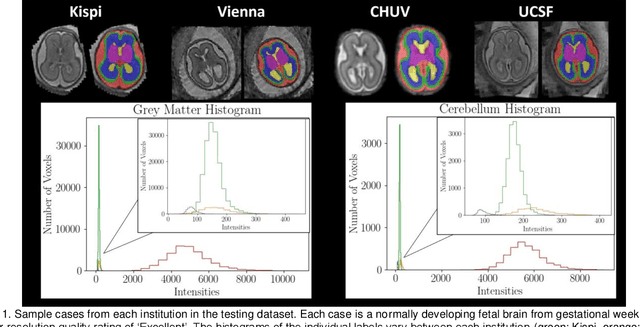
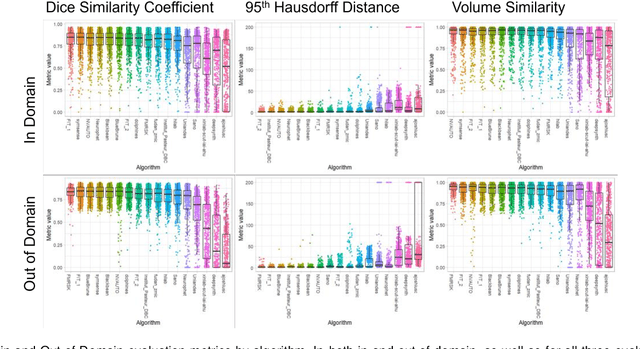
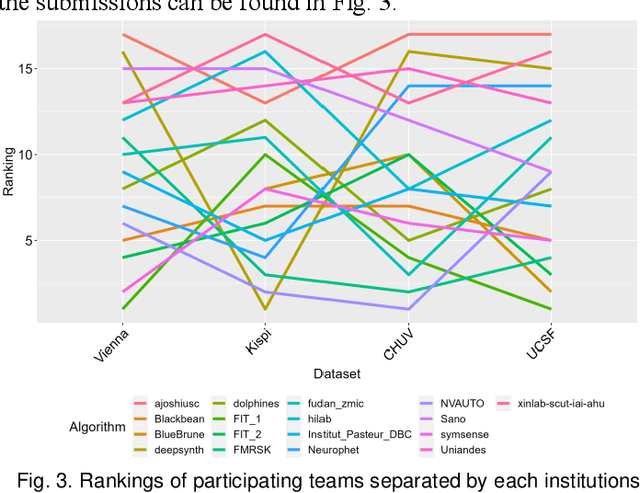
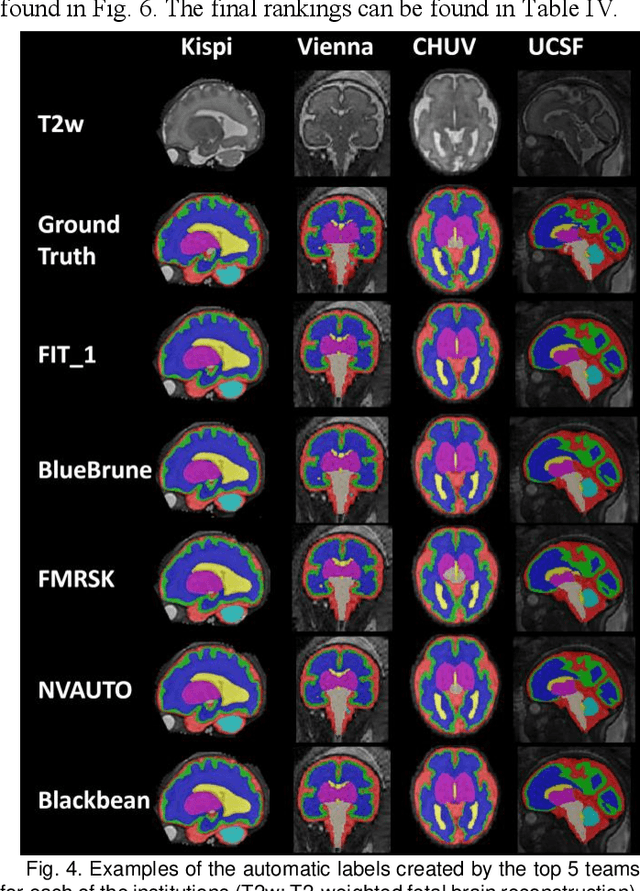
Segmentation is a critical step in analyzing the developing human fetal brain. There have been vast improvements in automatic segmentation methods in the past several years, and the Fetal Brain Tissue Annotation (FeTA) Challenge 2021 helped to establish an excellent standard of fetal brain segmentation. However, FeTA 2021 was a single center study, and the generalizability of algorithms across different imaging centers remains unsolved, limiting real-world clinical applicability. The multi-center FeTA Challenge 2022 focuses on advancing the generalizability of fetal brain segmentation algorithms for magnetic resonance imaging (MRI). In FeTA 2022, the training dataset contained images and corresponding manually annotated multi-class labels from two imaging centers, and the testing data contained images from these two imaging centers as well as two additional unseen centers. The data from different centers varied in many aspects, including scanners used, imaging parameters, and fetal brain super-resolution algorithms applied. 16 teams participated in the challenge, and 17 algorithms were evaluated. Here, a detailed overview and analysis of the challenge results are provided, focusing on the generalizability of the submissions. Both in- and out of domain, the white matter and ventricles were segmented with the highest accuracy, while the most challenging structure remains the cerebral cortex due to anatomical complexity. The FeTA Challenge 2022 was able to successfully evaluate and advance generalizability of multi-class fetal brain tissue segmentation algorithms for MRI and it continues to benchmark new algorithms. The resulting new methods contribute to improving the analysis of brain development in utero.
Meta Transfer of Self-Supervised Knowledge: Foundation Model in Action for Post-Traumatic Epilepsy Prediction
Dec 21, 2023Despite the impressive advancements achieved using deep-learning for functional brain activity analysis, the heterogeneity of functional patterns and scarcity of imaging data still pose challenges in tasks such as prediction of future onset of Post-Traumatic Epilepsy (PTE) from data acquired shortly after traumatic brain injury (TBI). Foundation models pre-trained on separate large-scale datasets can improve the performance from scarce and heterogeneous datasets. For functional Magnetic Resonance Imaging (fMRI), while data may be abundantly available from healthy controls, clinical data is often scarce, limiting the ability of foundation models to identify clinically-relevant features. We overcome this limitation by introducing a novel training strategy for our foundation model by integrating meta-learning with self-supervised learning to improve the generalization from normal to clinical features. In this way we enable generalization to other downstream clinical tasks, in our case prediction of PTE. To achieve this, we perform self-supervised training on the control dataset to focus on inherent features that are not limited to a particular supervised task while applying meta-learning, which strongly improves the model's generalizability using bi-level optimization. Through experiments on neurological disorder classification tasks, we demonstrate that the proposed strategy significantly improves task performance on small-scale clinical datasets. To explore the generalizability of the foundation model in downstream applications, we then apply the model to an unseen TBI dataset for prediction of PTE using zero-shot learning. Results further demonstrated the enhanced generalizability of our foundation model.
Neuro-GPT: Developing A Foundation Model for EEG
Nov 11, 2023To handle the scarcity and heterogeneity of electroencephalography (EEG) data for Brain-Computer Interface (BCI) tasks, and to harness the power of large publicly available data sets, we propose Neuro-GPT, a foundation model consisting of an EEG encoder and a GPT model. The foundation model is pre-trained on a large-scale data set using a self-supervised task that learns how to reconstruct masked EEG segments. We then fine-tune the model on a Motor Imagery Classification task to validate its performance in a low-data regime (9 subjects). Our experiments demonstrate that applying a foundation model can significantly improve classification performance compared to a model trained from scratch, which provides evidence for the generalizability of the foundation model and its ability to address challenges of data scarcity and heterogeneity in EEG.
Toward Improved Generalization: Meta Transfer of Self-supervised Knowledge on Graphs
Dec 16, 2022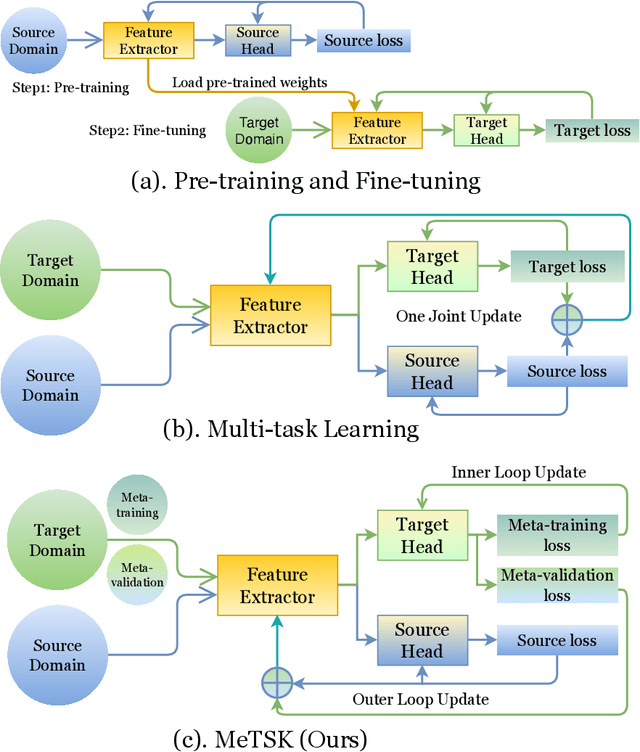
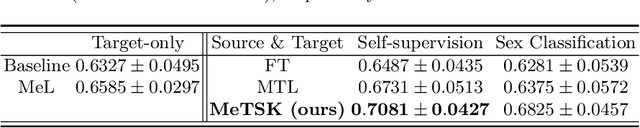
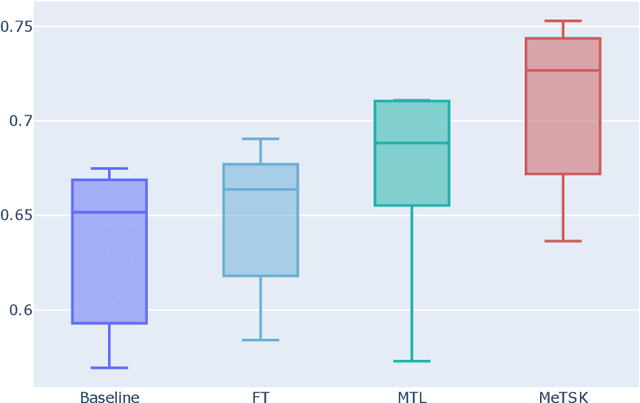
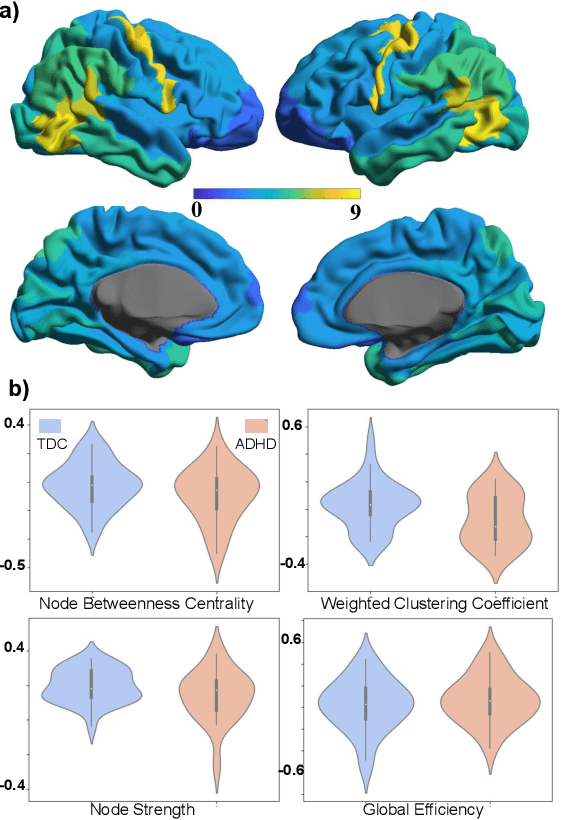
Despite the remarkable success achieved by graph convolutional networks for functional brain activity analysis, the heterogeneity of functional patterns and the scarcity of imaging data still pose challenges in many tasks. Transferring knowledge from a source domain with abundant training data to a target domain is effective for improving representation learning on scarce training data. However, traditional transfer learning methods often fail to generalize the pre-trained knowledge to the target task due to domain discrepancy. Self-supervised learning on graphs can increase the generalizability of graph features since self-supervision concentrates on inherent graph properties that are not limited to a particular supervised task. We propose a novel knowledge transfer strategy by integrating meta-learning with self-supervised learning to deal with the heterogeneity and scarcity of fMRI data. Specifically, we perform a self-supervised task on the source domain and apply meta-learning, which strongly improves the generalizability of the model using the bi-level optimization, to transfer the self-supervised knowledge to the target domain. Through experiments on a neurological disorder classification task, we demonstrate that the proposed strategy significantly improves target task performance by increasing the generalizability and transferability of graph-based knowledge.
Semi-supervised Learning with Robust Loss in Brain Segmentation
Dec 03, 2022
In this work, we used a semi-supervised learning method to train deep learning model that can segment the brain MRI images. The semi-supervised model uses less labeled data, and the performance is competitive with the supervised model with full labeled data. This framework could reduce the cost of labeling MRI images. We also introduced robust loss to reduce the noise effects of inaccurate labels generated in semi-supervised learning.