 Add to Chrome
 Add to Firefox
 Add to Edge
Capacity-constrained demand response in smart grids using deep reinforcement learning
Feb 18, 2026
This paper presents a capacity-constrained incentive-based demand response approach for residential smart grids. It aims to maintain electricity grid capacity limits and prevent congestion by financially incentivising end users to reduce or shift their energy consumption. The proposed framework adopts a hierarchical architecture in which a service provider adjusts hourly incentive rates based on wholesale electricity prices and aggregated residential load. The financial interests of both the service provider and end users are explicitly considered. A deep reinforcement learning approach is employed to learn optimal real-time incentive rates under explicit capacity constraints. Heterogeneous user preferences are modelled through appliance-level home energy management systems and dissatisfaction costs. Using real-world residential electricity consumption and price data from three households, simulation results show that the proposed approach effectively reduces peak demand and smooths the aggregated load profile. This leads to an approximately 22.82% reduction in the peak-to-average ratio compared to the no-demand-response case.

Kriging-Based Robotic Exploration for Soil Moisture Mapping Using a Cosmic-Ray Sensor
Nov 13, 2018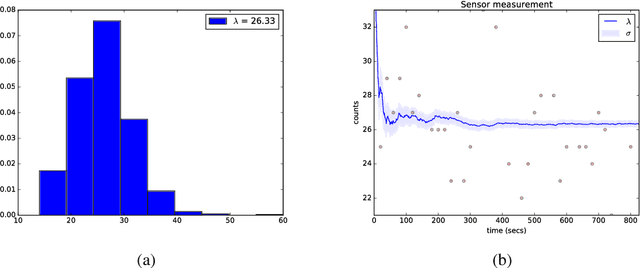
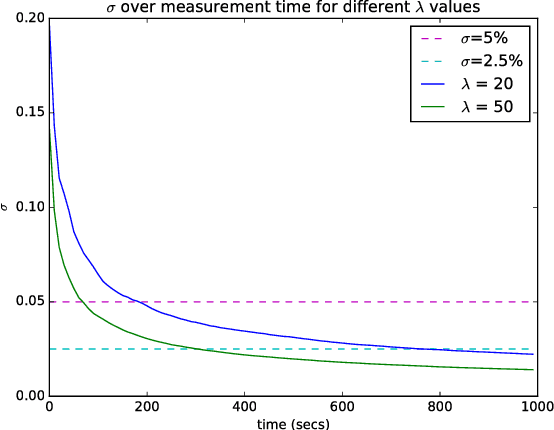
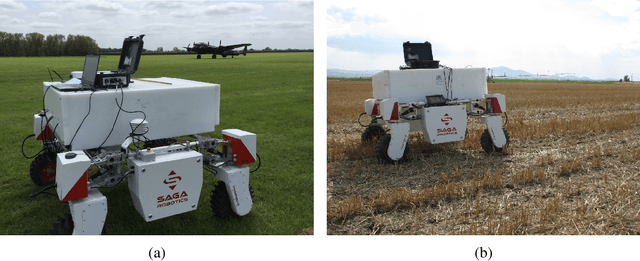
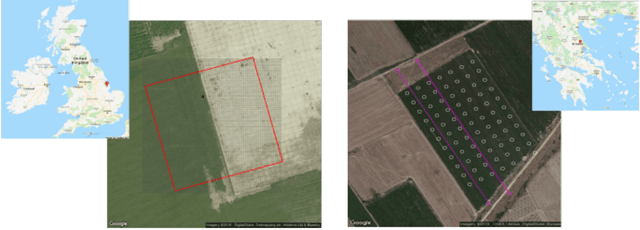
Soil moisture monitoring is a fundamental process to enhance agricultural outcomes and to protect the environment. The traditional methods for measuring moisture content in soil are laborious and expensive, and therefore there is a growing interest in developing sensors and technologies which can reduce the effort and costs. In this work, we propose to use an autonomous mobile robot equipped with a state-of-the-art non-contact soil moisture sensor that builds moisture maps on the fly and automatically selects the most optimal sampling locations. The robot is guided by an autonomous exploration strategy driven by the quality of the soil moisture model which indicates areas of the field where the information is less precise. The sensor model follows the Poisson distribution and we demonstrate how to integrate such measurements into the kriging framework. We also investigate a range of different exploration strategies and assess their usefulness through a set of evaluation experiments based on real soil moisture data collected from two different fields. We demonstrate the benefits of using the adaptive measurement interval and adaptive sampling strategies for building better quality soil moisture models. The presented method is general and can be applied to other scenarios where the measured phenomena directly affects the acquisition time and needs to be spatially mapped.