 Add to Chrome
 Add to Firefox
 Add to Edge
Progressive Deep Learning for Automated Spheno-Occipital Synchondrosis Maturation Assessment
Apr 13, 2026
Accurate assessment of spheno-occipital synchondrosis (SOS) maturation is a key indicator of craniofacial growth and a critical determinant for orthodontic and surgical timing. However, SOS staging from cone-beam CT (CBCT) relies on subtle, continuously evolving morphological cues, leading to high inter-observer variability and poor reproducibility, especially at transitional fusion stages. We frame SOS assessment as a fine-grained visual recognition problem and propose a progressive representation-learning framework that explicitly mirrors how expert clinicians reason about synchondral fusion: from coarse anatomical structure to increasingly subtle patterns of closure. Rather than training a full-capacity network end-to-end, we sequentially grow the model by activating deeper blocks over time, allowing early layers to first encode stable cranial base morphology before higher-level layers specialize in discriminating adjacent maturation stages. This yields a curriculum over network depth that aligns deep feature learning with the biological continuum of SOS fusion. Extensive experiments across convolutional and transformer-based architectures show that this expert-inspired training strategy produces more stable optimization and consistently higher accuracy than standard training, particularly for ambiguous intermediate stages. Importantly, these gains are achieved without changing network architectures or loss functions, demonstrating that training dynamics alone can substantially improve anatomical representation learning. The proposed framework establishes a principled link between expert dental intuition and deep visual representations, enabling robust, data-efficient SOS staging from CBCT and offering a general strategy for modeling other continuous biological processes in medical imaging.

Knowledge Distillation Approach for SOS Fusion Staging: Towards Fully Automated Skeletal Maturity Assessment
May 27, 2025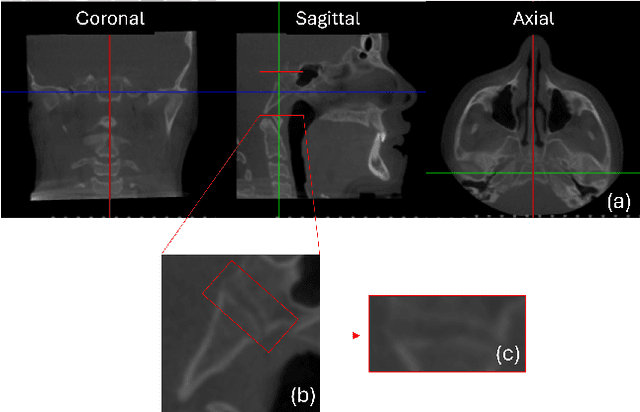
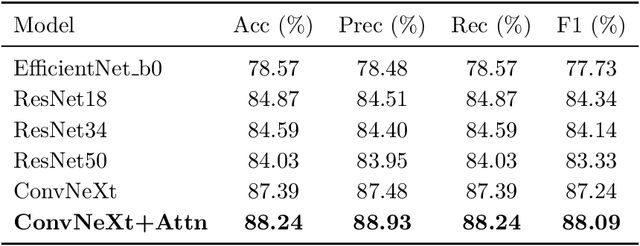
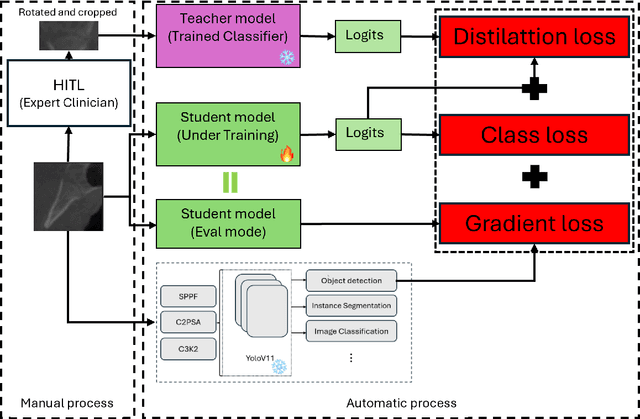
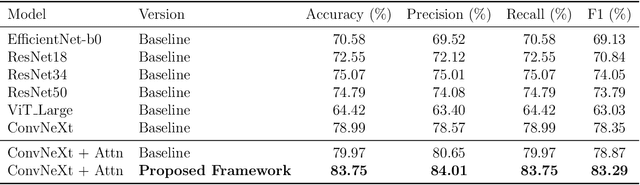
We introduce a novel deep learning framework for the automated staging of spheno-occipital synchondrosis (SOS) fusion, a critical diagnostic marker in both orthodontics and forensic anthropology. Our approach leverages a dual-model architecture wherein a teacher model, trained on manually cropped images, transfers its precise spatial understanding to a student model that operates on full, uncropped images. This knowledge distillation is facilitated by a newly formulated loss function that aligns spatial logits as well as incorporates gradient-based attention spatial mapping, ensuring that the student model internalizes the anatomically relevant features without relying on external cropping or YOLO-based segmentation. By leveraging expert-curated data and feedback at each step, our framework attains robust diagnostic accuracy, culminating in a clinically viable end-to-end pipeline. This streamlined approach obviates the need for additional pre-processing tools and accelerates deployment, thereby enhancing both the efficiency and consistency of skeletal maturation assessment in diverse clinical settings.
Gradient Attention Map Based Verification of Deep Convolutional Neural Networks with Application to X-ray Image Datasets
Apr 29, 2025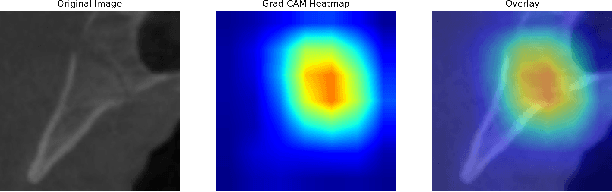

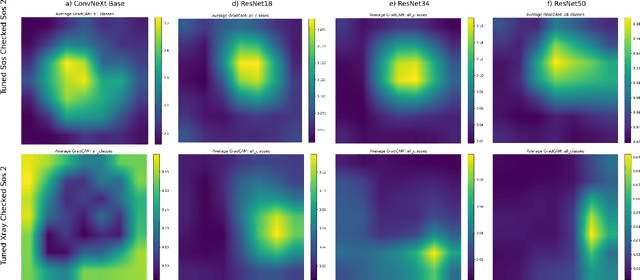

Deep learning models have great potential in medical imaging, including orthodontics and skeletal maturity assessment. However, applying a model to data different from its training set can lead to unreliable predictions that may impact patient care. To address this, we propose a comprehensive verification framework that evaluates model suitability through multiple complementary strategies. First, we introduce a Gradient Attention Map (GAM)-based approach that analyzes attention patterns using Grad-CAM and compares them via similarity metrics such as IoU, Dice Similarity, SSIM, Cosine Similarity, Pearson Correlation, KL Divergence, and Wasserstein Distance. Second, we extend verification to early convolutional feature maps, capturing structural mis-alignments missed by attention alone. Finally, we incorporate an additional garbage class into the classification model to explicitly reject out-of-distribution inputs. Experimental results demonstrate that these combined methods effectively identify unsuitable models and inputs, promoting safer and more reliable deployment of deep learning in medical imaging.