 Add to Chrome
 Add to Firefox
 Add to Edge
SpatialEpiBench: Benchmarking Spatial Information and Epidemic Priors in Forecasting
May 07, 2026
Accurate epidemic forecasting is crucial for public health response, resource allocation, and outbreak intervention, but remains difficult with sparse, noisy, and highly non-stationary data. Because epidemics unfold across interacting regions, spatiotemporal methods are natural candidates for improving forecasts. Despite growing interest in spatial information, no standardized benchmark exists, and current evaluations often use simple chronological train-test splits that do not reflect real-time forecasting practice. We address this gap with SpatialEpiBench, a challenging benchmark for spatiotemporal epidemic forecasting in realistic public-health settings. SpatialEpiBench includes 11 epidemic datasets with standardized rolling evaluations and outbreak-specific metrics. We evaluate adjacency-informed forecasting models with widely used epidemic priors that adapt general models to epidemiology, but find that most methods underperform a simple last-value baseline from 1 day to 1 month ahead, even during outbreaks and with these priors. We identify three major failure modes: (1) poor outbreak anticipation, (2) difficulty handling sparsity and noise, and (3) limited utility of common geographic adjacency for epidemiological spatial information. We release benchmark data, code, and instructions at https://github.com/Rachel-Lyu/SpatialEpiBench to support development of operationally useful epidemic forecasting models.

SKILLFOUNDRY: Building Self-Evolving Agent Skill Libraries from Heterogeneous Scientific Resources
Apr 05, 2026Modern scientific ecosystems are rich in procedural knowledge across repositories, APIs, scripts, notebooks, documentation, databases, and papers, yet much of this knowledge remains fragmented across heterogeneous artifacts that agents cannot readily operationalize. This gap between abundant scientific know-how and usable agent capabilities is a key bottleneck for building effective scientific agents. We present SkillFoundry, a self-evolving framework that converts such resources into validated agent skills, reusable packages that encode task scope, inputs and outputs, execution steps, environment assumptions, provenance, and tests. SkillFoundry organizes a target domain as a domain knowledge tree, mines resources from high-value branches, extracts operational contracts, compiles them into executable skill packages, and then iteratively expands, repairs, merges, or prunes the resulting library through a closed-loop validation process. SkillFoundry produces a substantially novel and internally valid skill library, with 71.1\% of mined skills differing from existing skill libraries such as SkillHub and SkillSMP. We demonstrate that these mined skills improve coding agent performance on five of the six MoSciBench datasets. We further show that SkillFoundry can design new task-specific skills on demand for concrete scientific objectives, and that the resulting skills substantially improve performance on two challenging genomics tasks: cell type annotation and the scDRS workflow. Together, these results show that automatically mined skills improve agent performance on benchmarks and domain-specific tasks, expand coverage beyond hand-crafted skill libraries, and provide a practical foundation for more capable scientific agents.
Combining digital data streams and epidemic networks for real time outbreak detection
Nov 10, 2025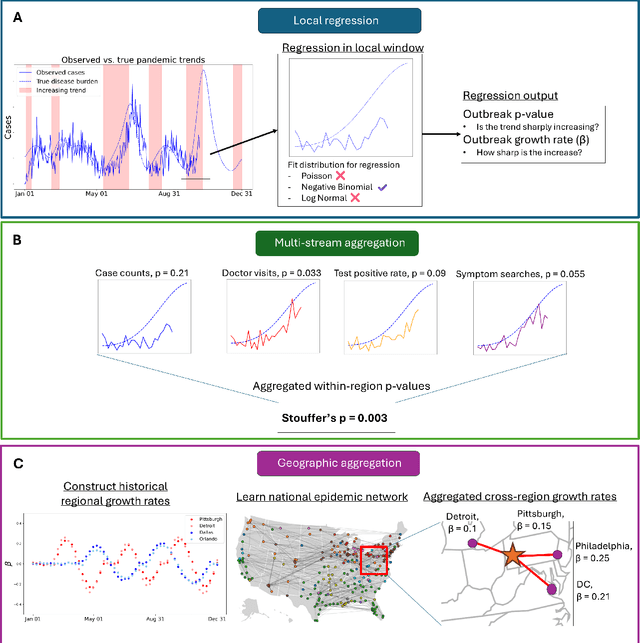
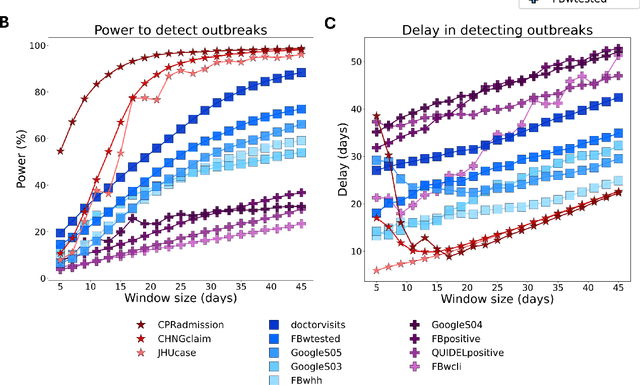
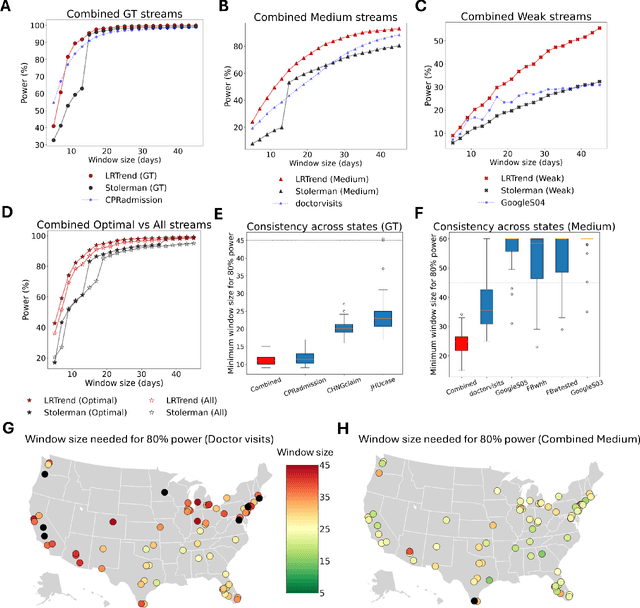
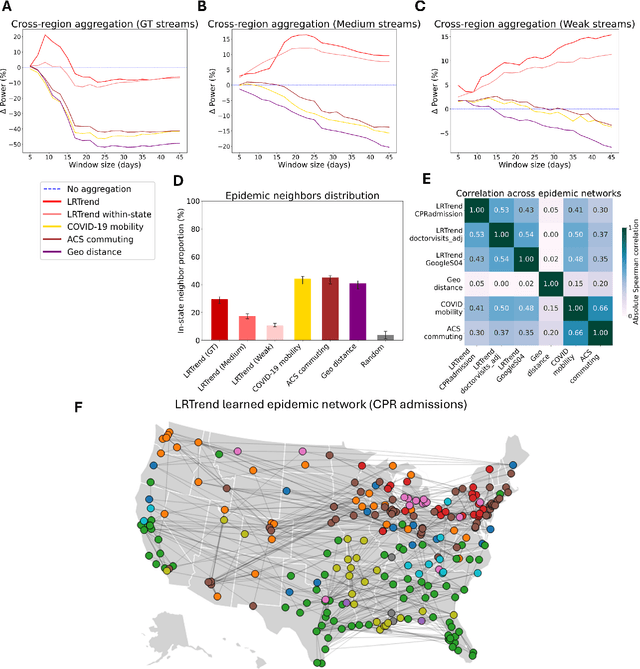
Responding to disease outbreaks requires close surveillance of their trajectories, but outbreak detection is hindered by the high noise in epidemic time series. Aggregating information across data sources has shown great denoising ability in other fields, but remains underexplored in epidemiology. Here, we present LRTrend, an interpretable machine learning framework to identify outbreaks in real time. LRTrend effectively aggregates diverse health and behavioral data streams within one region and learns disease-specific epidemic networks to aggregate information across regions. We reveal diverse epidemic clusters and connections across the United States that are not well explained by commonly used human mobility networks and may be informative for future public health coordination. We apply LRTrend to 2 years of COVID-19 data in 305 hospital referral regions and frequently detect regional Delta and Omicron waves within 2 weeks of the outbreak's start, when case counts are a small fraction of the wave's resulting peak.
Predicting Language Models' Success at Zero-Shot Probabilistic Prediction
Sep 18, 2025Recent work has investigated the capabilities of large language models (LLMs) as zero-shot models for generating individual-level characteristics (e.g., to serve as risk models or augment survey datasets). However, when should a user have confidence that an LLM will provide high-quality predictions for their particular task? To address this question, we conduct a large-scale empirical study of LLMs' zero-shot predictive capabilities across a wide range of tabular prediction tasks. We find that LLMs' performance is highly variable, both on tasks within the same dataset and across different datasets. However, when the LLM performs well on the base prediction task, its predicted probabilities become a stronger signal for individual-level accuracy. Then, we construct metrics to predict LLMs' performance at the task level, aiming to distinguish between tasks where LLMs may perform well and where they are likely unsuitable. We find that some of these metrics, each of which are assessed without labeled data, yield strong signals of LLMs' predictive performance on new tasks.
Explaining Concept Shift with Interpretable Feature Attribution
May 27, 2025Regardless the amount of data a machine learning (ML) model is trained on, there will inevitably be data that differs from their training set, lowering model performance. Concept shift occurs when the distribution of labels conditioned on the features changes, making even a well-tuned ML model to have learned a fundamentally incorrect representation. Identifying these shifted features provides unique insight into how one dataset differs from another, considering the difference may be across a scientifically relevant dimension, such as time, disease status, population, etc. In this paper, we propose SGShift, a model for detecting concept shift in tabular data and attributing reduced model performance to a sparse set of shifted features. SGShift models concept shift with a Generalized Additive Model (GAM) and performs subsequent feature selection to identify shifted features. We propose further extensions of SGShift by incorporating knockoffs to control false discoveries and an absorption term to account for models with poor fit to the data. We conduct extensive experiments in synthetic and real data across various ML models and find SGShift can identify shifted features with AUC $>0.9$ and recall $>90\%$, often 2 or 3 times as high as baseline methods.