 Add to Chrome
 Add to Firefox
 Add to Edge
Multimodal Graph-based Classification of Esophageal Motility Disorders
May 13, 2026
Diagnosing esophageal motility disorders pose significant challenges due to the complexity of high-resolution impedance manometry (HRIM) data and variability in clinical interpretation. This work explores the feasibility of a multimodal Machine Learning (ML)-based classification approach that combines HRIM recordings with patient-specific information and incorporates a graph-based modeling of esophageal physiology. We analyze HRIM recordings with corresponding patient information from 104 patients with esophageal motility disorders. Patient data includes demographic, clinical, and symptom information extracted from structured questionnaires and free-text notes using keyword detection and large language model-based processing. HRIM data is represented as spatio-temporal graphs, where nodes correspond to pressure values along the esophagus and edges encode spatial adjacency and impedance dynamics. A graph neural network (GNN) is applied to learn physiologically meaningful representations, which are fused with patient embeddings for multi-category, multi-class classification of swallow events. The impact of patient features and graph-based modeling is evaluated by ablation studies and comparison to vision-based classifier baselines. The proposed multimodal approach indicates improvements over models that rely solely on HRIM-derived features across all classification categories. Additionally, the graph-based modeling provides gains compared to vision-based baselines. Our experiments systematically assess the complementary contribution of multiple modalities, as well as demonstrate the feasibility of our proposed graph-based approach. Our initial findings demonstrate that integrating patient-level data with graph-based representations of HRIM signals appears to be a promising direction for more accurate classification of esophageal motility disorders.

On the notion of missingness for path attribution explainability methods in medical settings: Guiding the selection of medically meaningful baselines
Aug 20, 2025The explainability of deep learning models remains a significant challenge, particularly in the medical domain where interpretable outputs are critical for clinical trust and transparency. Path attribution methods such as Integrated Gradients rely on a baseline input representing the absence of relevant features ("missingness"). Commonly used baselines, such as all-zero inputs, are often semantically meaningless, especially in medical contexts where missingness can itself be informative. While alternative baseline choices have been explored, existing methods lack a principled approach to dynamically select baselines tailored to each input. In this work, we examine the notion of missingness in the medical setting, analyze its implications for baseline selection, and introduce a counterfactual-guided approach to address the limitations of conventional baselines. We argue that a clinically normal but input-close counterfactual represents a more accurate representation of a meaningful absence of features in medical data. To implement this, we use a Variational Autoencoder to generate counterfactual baselines, though our concept is generative-model-agnostic and can be applied with any suitable counterfactual method. We evaluate the approach on three distinct medical data sets and empirically demonstrate that counterfactual baselines yield more faithful and medically relevant attributions compared to standard baseline choices.
Detecting and clustering swallow events in esophageal long-term high-resolution manometry
May 02, 2024
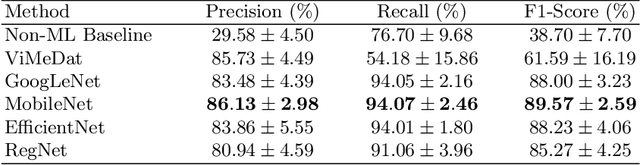
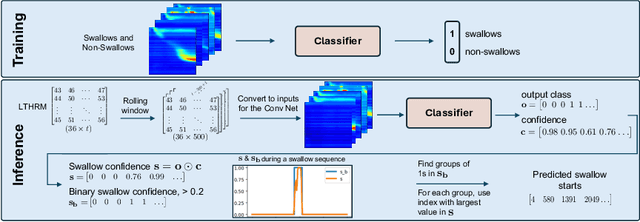

High-resolution manometry (HRM) is the gold standard in diagnosing esophageal motility disorders. As HRM is typically conducted under short-term laboratory settings, intermittently occurring disorders are likely to be missed. Therefore, long-term (up to 24h) HRM (LTHRM) is used to gain detailed insights into the swallowing behavior. However, analyzing the extensive data from LTHRM is challenging and time consuming as medical experts have to analyze the data manually, which is slow and prone to errors. To address this challenge, we propose a Deep Learning based swallowing detection method to accurately identify swallowing events and secondary non-deglutitive-induced esophageal motility disorders in LTHRM data. We then proceed with clustering the identified swallows into distinct classes, which are analyzed by highly experienced clinicians to validate the different swallowing patterns. We evaluate our computational pipeline on a total of 25 LTHRMs, which were meticulously annotated by medical experts. By detecting more than 94% of all relevant swallow events and providing all relevant clusters for a more reliable diagnostic process among experienced clinicians, we are able to demonstrate the effectiveness as well as positive clinical impact of our approach to make LTHRM feasible in clinical care.