 Add to Chrome
 Add to Firefox
 Add to Edge
Where can AI be used? Insights from a deep ontology of work activities
Mar 21, 2026
Artificial intelligence (AI) is poised to profoundly reshape how work is executed and organized, but we do not yet have deep frameworks for understanding where AI can be used. Here we provide a comprehensive ontology of work activities that can help systematically analyze and predict uses of AI. To do this, we disaggregate and then substantially reorganize the approximately 20K activities in the US Department of Labor's widely used O*NET occupational database. Next, we use this framework to classify descriptions of 13,275 AI software applications and a worldwide tally of 20.8 million robotic systems. Finally, we use the data about both these kinds of AI to generate graphical displays of how the estimated units and market values of all worldwide AI systems used today are distributed across the work activities that these systems help perform. We find a highly uneven distribution of AI market value across activities, with the top 1.6% of activities accounting for over 60% of AI market value. Most of the market value is used in information-based activities (72%), especially creating information (36%), and only 12% is used in physical activities. Interactive activities include both information-based and physical activities and account for 48% of AI market value, much of which (26%) involves transferring information. These results can be viewed as rough predictions of the AI applicability for all the different work activities down to very low levels of detail. Thus, we believe this systematic framework can help predict at a detailed level where today's AI systems can and cannot be used and how future AI capabilities may change this.

Antagonistic AI
Feb 12, 2024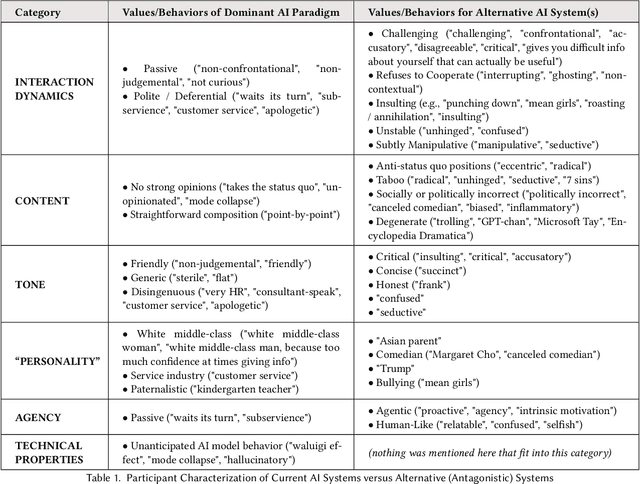
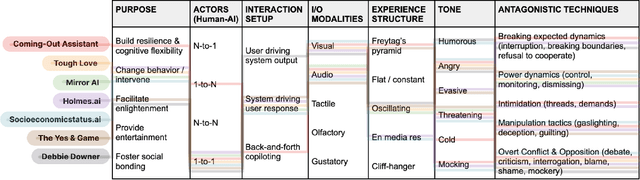
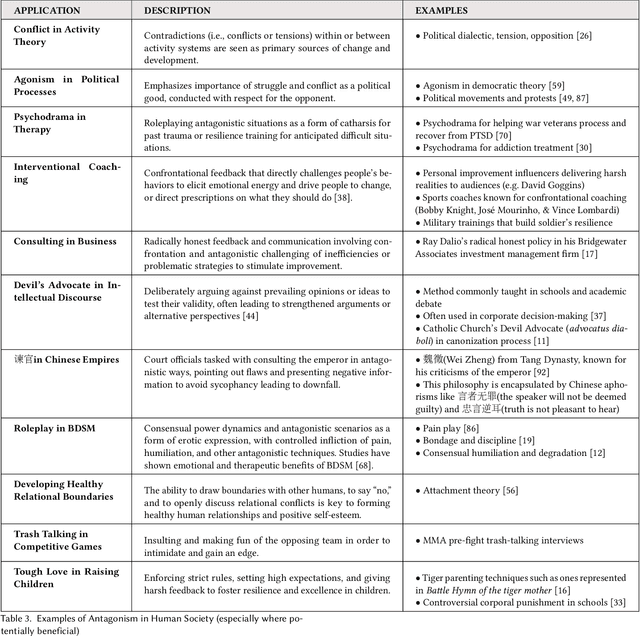
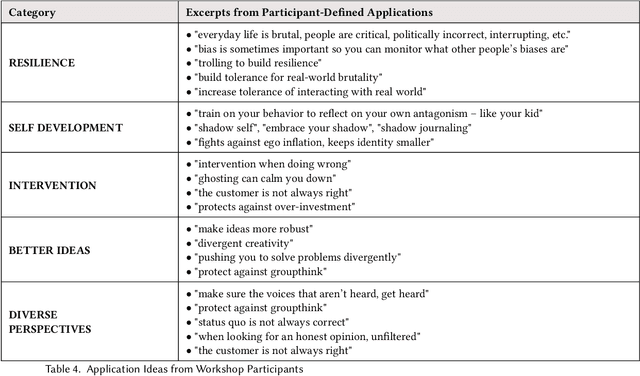
The vast majority of discourse around AI development assumes that subservient, "moral" models aligned with "human values" are universally beneficial -- in short, that good AI is sycophantic AI. We explore the shadow of the sycophantic paradigm, a design space we term antagonistic AI: AI systems that are disagreeable, rude, interrupting, confrontational, challenging, etc. -- embedding opposite behaviors or values. Far from being "bad" or "immoral," we consider whether antagonistic AI systems may sometimes have benefits to users, such as forcing users to confront their assumptions, build resilience, or develop healthier relational boundaries. Drawing from formative explorations and a speculative design workshop where participants designed fictional AI technologies that employ antagonism, we lay out a design space for antagonistic AI, articulating potential benefits, design techniques, and methods of embedding antagonistic elements into user experience. Finally, we discuss the many ethical challenges of this space and identify three dimensions for the responsible design of antagonistic AI -- consent, context, and framing.
AtomXR: Streamlined XR Prototyping with Natural Language and Immersive Physical Interaction
Nov 19, 2023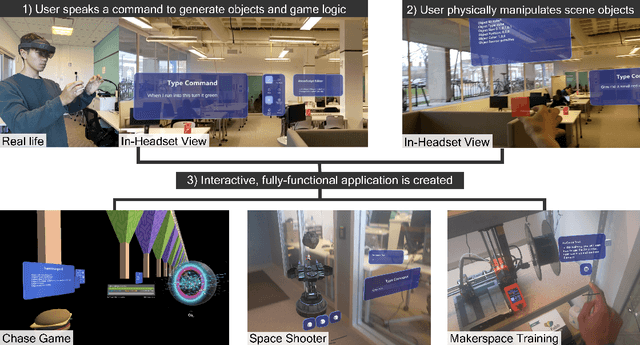
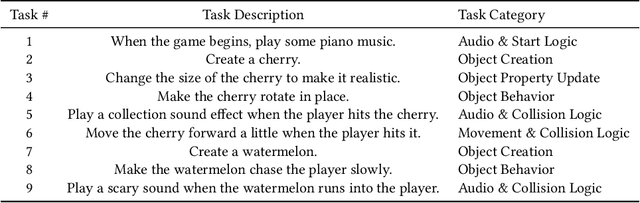
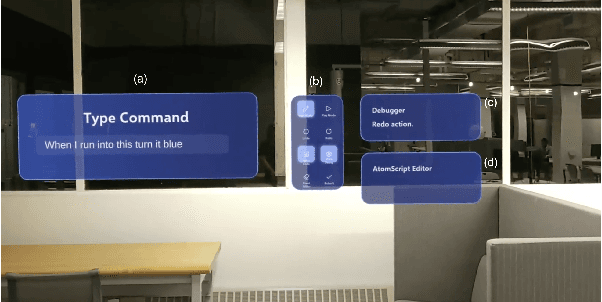
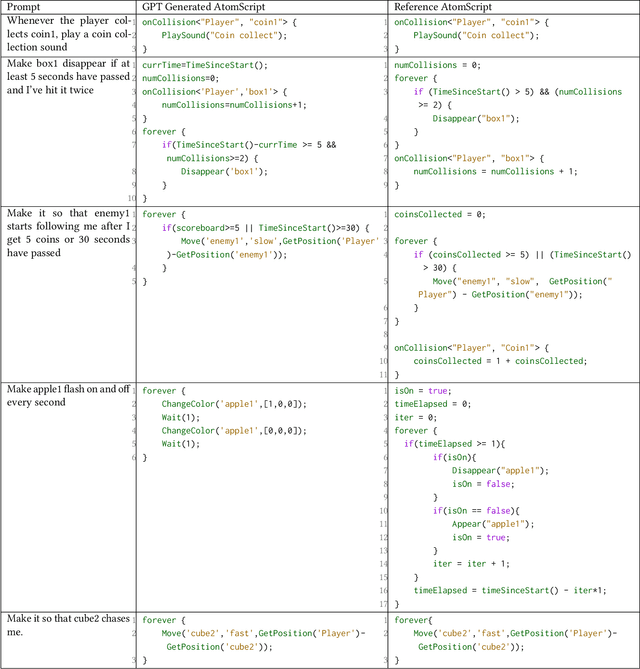
As technological advancements in extended reality (XR) amplify the demand for more XR content, traditional development processes face several challenges: 1) a steep learning curve for inexperienced developers, 2) a disconnect between 2D development environments and 3D user experiences inside headsets, and 3) slow iteration cycles due to context switching between development and testing environments. To address these challenges, we introduce AtomXR, a streamlined, immersive, no-code XR prototyping tool designed to empower both experienced and inexperienced developers in creating applications using natural language, eye-gaze, and touch interactions. AtomXR consists of: 1) AtomScript, a high-level human-interpretable scripting language for rapid prototyping, 2) a natural language interface that integrates LLMs and multimodal inputs for AtomScript generation, and 3) an immersive in-headset authoring environment. Empirical evaluation through two user studies offers insights into natural language-based and immersive prototyping, and shows AtomXR provides significant improvements in speed and user experience compared to traditional systems.