 Add to Chrome
 Add to Firefox
 Add to Edge
LO-Free Joint Communication and Sensing via Inter-Antenna Cross-Correlation and Graph-Based Spatial Phase Inference
Jun 01, 2026
Joint communication and sensing (JCAS) typically rely on coherent downconversion to recover the phase relationships required for array processing. Meanwhile, Local Oscillators (LOs) are a major source of cost, power consumption, and implementation complexity in millimeter-wave (mmWave) and sub-THz receivers. Existing LO-free receiver designs are typically based on envelope detection or related non-coherent operations that do not preserve inter-branch phase information, which limits their applicability to JCAS. This work proposes an LO-free JCAS receiver architecture that leverages pairwise inter-branch correlation processing to suppress the common carrier component and to synthesize relative-phase observables across the antenna array, enabling both data communication and Direction-of-Arrival (DoA) estimation. The transmitted symbols are designed to induce distinct phase-difference patterns, such that the resulting correlation phases contain both a data-dependent component and a DoA-dependent component. We formulate recovery as inference over a correlation graph, where branches are nodes and pairwise correlations are edges, and show that the resulting cycle-consistent redundancy enables robust relative-phase recovery under noise and perturbations. We further derive a topology-aware Cramér-Rao lower bound for DoA estimation under a locally unwrapped approximation. Numerical results confirm that increasing graph connectivity improves both bit-error rate and DoA accuracy, with sensing performance approaching the derived bound.

RAG-driven Multi-Agent LLM Framework with Task Decomposition for Beyond 5G Auto-Configuration
May 31, 2026While Large Language Models (LLMs) offer a promising path toward intent-driven network management by translating natural language human intents into machine-readable configurations, they often suffer from hallucinations and structural inconsistencies in multi-step and complex tasks. To address these challenges, this paper proposes a retrieval-augmented and task decomposition-based multi-agent LLM framework for Beyond 5G network auto-configuration. The framework employs a semantic retrieval-augmented generation pipeline to ensure that its outputs are aligned with technical standards and vendor-specific manuals. Furthermore, it introduces a modular architecture for configuration generation, closed-loop configuration verification, and network deployment, in which complex tasks are decomposed into smaller sub-tasks handled by specialized agents. In this architecture, hallucinated configuration parameters are identified by the configuration verifier agent and corrected through low computational segment-level regeneration. The performance evaluation experiments with the OpenAirInterface emulator demonstrate that the proposed task decomposition-based configuration and verification approach improves the average success rate by 22.7% over monolithic methods, achieving 94.4% success in network configuration.
Rethinking NB-IoT Downlink Synchronization for LEO-NTN: A Novel Overhead Reduction Method and Measurement-Based Evaluation
May 30, 2026Narrowband Internet of Things (NB-IoT) over non-terrestrial networks (NTN) is a key enabler for massive Internet of Things (IoT) in 6G, but in low Earth orbit (LEO) scenarios, large and time-varying Doppler shifts generate carrier frequency offset (CFO) beyond the correction range of standard user equipment (UE), making initial downlink synchronization a major bottleneck. This paper analyzes Doppler characteristics in realistic NB-IoT LEO scenarios, reviews Doppler mitigation strategies, and proposes a standard-compliant, low-overhead search-space optimization method for downlink acquisition. Results under realistic LEO conditions with real-time measurements show reduced acquisition overhead while maintaining synchronization reliability, supporting NB-IoT adaptation to 6G NTN deployment.
Perceptual-Quality based AMC for Enhanced mmWave Spectral Efficiency: Concept and Experiment
May 29, 2026For high-throughput applications such as ultra-high-definition video streaming and immersive extended-reality, perceptual quality rather than bit-level accuracy defines the primary performance criterion and provides a more informative and spectrally efficient objective than strict bitwise reconstruction. This is particularly relevant in millimeter-wave (mmWave) and sub-Terahertz (sub-THz) systems, where path loss, short channel coherence times and phase noise introduce severe fluctuations that degrade link spectral efficiency. We propose an extension to conventional Adaptive Modulation and Coding (AMC) framework that incorporates perceptual quality awareness into link adaptation. In this framework, the decision metric is a Perceptual Quality Indicator (PQI) derived from the Structural Similarity Index Measure (SSIM). The receiver employs a Denoising Convolutional Neural Network (DnCNN) denoiser to enhance post-decoding image quality before feedback estimation. The resulting perceptual metric replaces the standard Channel Quality Indicator (CQI) in the AMC loop, enabling adaptation to maximize spectral efficiency while satisfying a perceptual-fidelity constraint. Experiments on a 5G-compliant mmWave testbed demonstrate up to a twofold gain in spectral efficiency while maintaining perceptual fidelity, underscoring the potential of perception-optimized link adaptation.
Ray Tracing-Enabled Digital Twin for RIS Phase Optimization: Implementation and Experimental Validation
Apr 20, 2026Determining the optimal phase configurations of reconfigurable intelligent surface (RIS) elements typically requires complex channel estimation procedures with high pilot overhead, creating a bottleneck for real-time deployment in time-varying wireless environments. In this paper, we propose a digital twin (DT)-driven framework for RIS phase shift optimization that eliminates extensive signaling overhead associated with estimating high-dimensional RIS channels. Leveraging the NVIDIA Sionna ray-tracing library, we construct a DT of the physical environment based on a three-dimensional map. The proposed system utilizes the location information of the transceivers to compute the optimal RIS phase shift configurations within the DT. These computationally generated configurations are then transferred to a physical RIS prototype. Experimental results demonstrate that the phase configurations obtained from the DT significantly enhance the received signal power in the physical environment, validating the fidelity of the ray-tracing model and the feasibility of the proposed optimization strategy.
Design and Evaluation of Neural Network-Based Receiver Architectures for Reliable Communication
Mar 26, 2025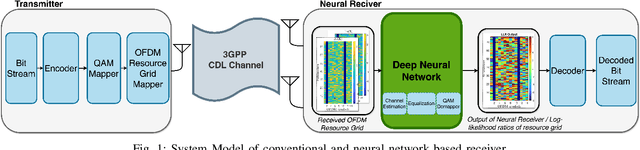
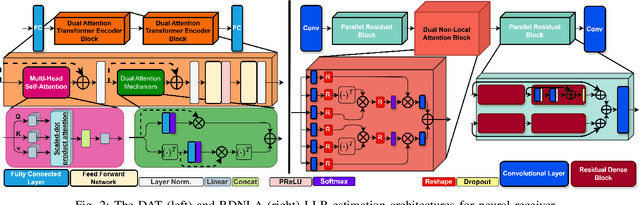
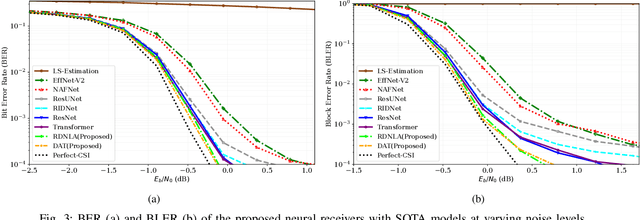
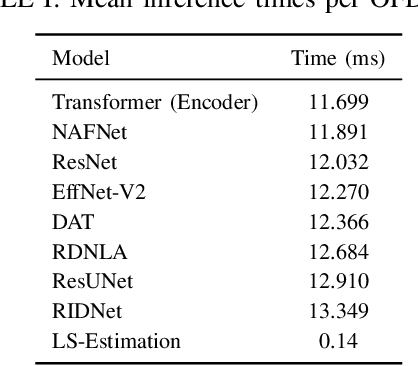
Neural network-based receivers leverage deep learning to optimize signal detection and decoding, significantly improving bit-error rate (BER) and block-error rate (BLER) in challenging environments. This study evaluates various architectures and compares their BER and BLER performance across different noise levels. Two novel models, the Dual Attention Transformer (DAT) and the Residual Dual Non-Local Attention Network (RDNLA), integrate self-attention and residual learning to enhance signal reconstruction. These models bypass conventional channel estimation and equalization by directly predicting log-likelihood ratios (LLRs) from received signals, with noise variance as an additional input. Simulations show that DAT and RDNLA outperform traditional and other neural receiver models under varying signal-to-noise ratios (SNR), while their computational efficiency supports their feasibility for next-generation communication systems.
RIS Optimization Algorithms for Urban Wireless Scenarios in Sionna RT
Jan 10, 2025This paper evaluates the performance of reconfigurable intelligent surface (RIS) optimization algorithms, which utilize channel estimation methods, in ray tracing (RT) simulations within urban digital twin environments. Beyond Sionna's native capabilities, we implement and benchmark additional RIS optimization algorithms based on channel estimation, enabling an evaluation of RIS strategies under various deployment conditions. Coverage maps for RIS-assisted communication systems are generated through the integration of Sionna's RT simulations. Moreover, real-world experimentation underscores the necessity of validating algorithms in near-realistic simulation environments, as minor variations in measurement setups can significantly affect performance.
RF Chain-Free mmWave Transmission: Modeling and Experimental Verification
May 03, 2024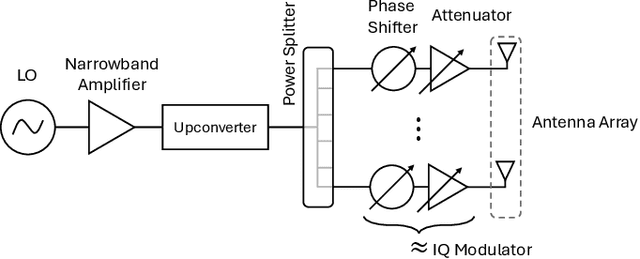
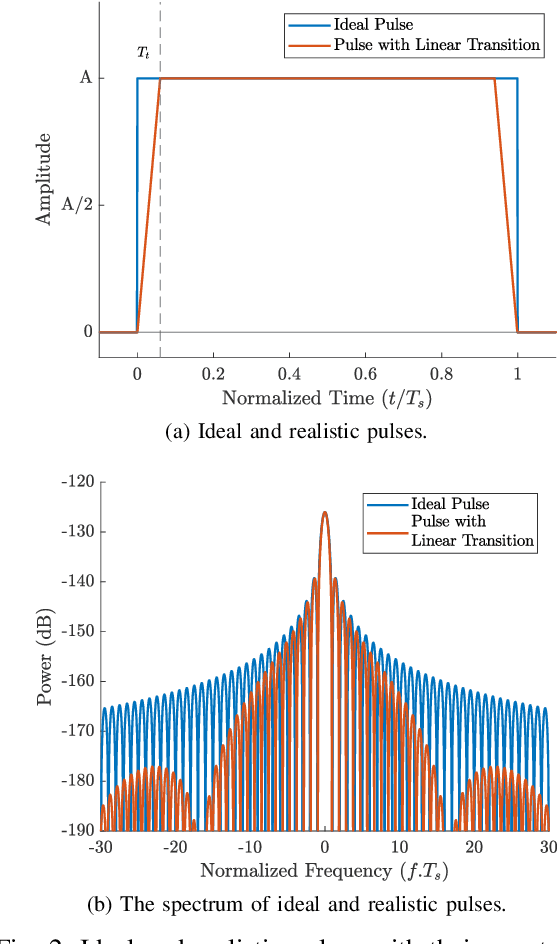
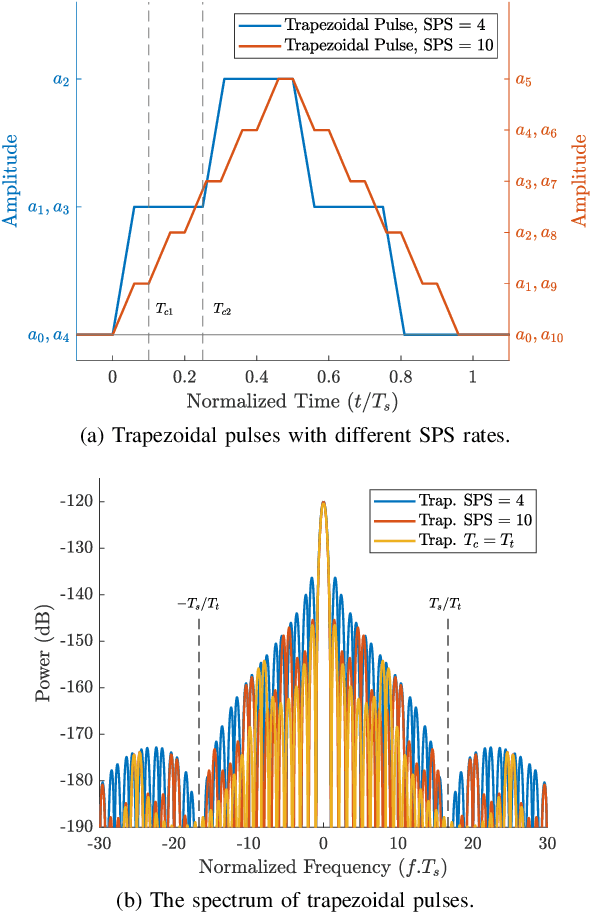
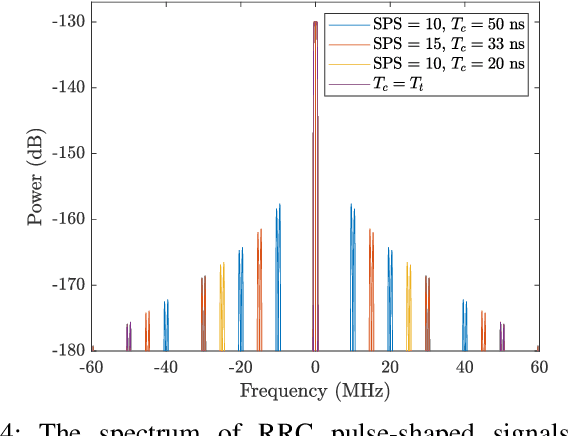
The utilization of millimeter wave frequency bands is expected to become prevalent in the following communication systems. However, generating and transmitting communication signals over these frequencies is not as straightforward as in sub-6 GHz frequencies due to complex transceiver structures. As an alternative to conventional transmitter architectures, this paper investigates the implementation of time-modulated arrays to effectively modulate and transmit high-quality communication signals at millimeter wave frequencies. By exploiting the array structures and analog beamformers, which are the fundamental components of millimeter wave transmitters, secure and low-cost transmission can be achieved. Though, harmonics of theoretically infinite bandwidth arise as a fundamental problem in this approach. Thus, this paper presents a frequency analysis tool for the time-modulated arrays with hardware impairments and shows how controlling the sampling period can reduce the harmonics. Furthermore, the derived results are experimentally verified at 25 GHz with two important remarks. First, the phase error of received signals can be reduced by 32% using the proposed architecture. Second, the harmonics can be significantly suppressed by the correct choice of sampling period for the given hardware.
Channel Estimation Using RIDNet Assisted OMP for Hybrid-field THz Massive MIMO Systems
Aug 31, 2023The terahertz (THz) band radio access with larger available bandwidth is anticipated to provide higher capacities for next-generation wireless communication systems. However, higher path loss at THz frequencies significantly limits the wireless communication range. Massive multiple-input multiple-output (mMIMO) is an attractive technology to increase the Rayleigh distance by generating higher gain beams using low wavelength and highly directive antenna array aperture. In addition, both far-field and near-field components of the antenna system should be considered for modelling THz electromagnetic propagation, where the channel estimation for this environment becomes a challenging task. This paper proposes a novel channel estimation method using a recursive information distillation network (RIDNet) together with orthogonal matching pursuit (OMP) for hybrid-field THz mMIMO channels, including both far-field and near-field components. The simulation experiments are performed using the ray-tracing tool. The results indicate that the proposed RIDNet-based method consistently provides lower channel estimation errors compared to the conventional OMP algorithm for all signal-to-noise ratio (SNR) regimes, and the performance gap becomes higher at low SNR regimes. Furthermore, the results imply that the same error performance of the OMP can be achieved by the RIDNet-based method using a lower number of RF chains and pilot symbols.
Rapid CNN-Assisted Iterative RIS Element Configuration
Jul 21, 2023Reconfigurable Intelligent Surfaces (RISs) are becoming one of the fundamental building blocks of next-generation wireless communication systems. To that end, RIS phase configuration optimization is an important issue, where finding the most suitable configuration becomes a challenging and resource-consuming task, especially as the number of RIS elements increases. Since exhaustive search is not practical, iterative algorithms are utilized to determine the RIS configuration by sequentially considering all RIS elements, where the best-performing phase shift configuration is obtained for each element. However, each configuration attempt requires receiver performance feedback, leading to higher delay and signaling overhead. Thus, in this paper, a convolutional neural network (CNN) based solution is formulated to rapidly find the phase configurations of the RIS elements. The simulation results for a RIS with $40\times40$ elements imply that the proposed algorithm reduces the number of steps dramatically e.g., from 3200 to 160 for the particular setup. Furthermore, such improvement in complexity is achieved with a slight degradation in performance.