 Add to Chrome
 Add to Firefox
 Add to Edge
MGSM-Pro: A Simple Strategy for Robust Multilingual Mathematical Reasoning Evaluation
Jan 29, 2026
Large language models have made substantial progress in mathematical reasoning. However, benchmark development for multilingual evaluation has lagged behind English in both difficulty and recency. Recently, GSM-Symbolic showed a strong evidence of high variance when models are evaluated on different instantiations of the same question; however, the evaluation was conducted only in English. In this paper, we introduce MGSM-Pro, an extension of MGSM dataset with GSM-Symbolic approach. Our dataset provides five instantiations per MGSM question by varying names, digits and irrelevant context. Evaluations across nine languages reveal that many low-resource languages suffer large performance drops when tested on digit instantiations different from those in the original test set. We further find that some proprietary models, notably Gemini 2.5 Flash and GPT-4.1, are less robust to digit instantiation, whereas Claude 4.0 Sonnet is more robust. Among open models, GPT-OSS 120B and DeepSeek V3 show stronger robustness. Based on these findings, we recommend evaluating each problem using at least five digit-varying instantiations to obtain a more robust and realistic assessment of math reasoning.

Enabling Delayed-Full Charging Through Transformer-Based Real-Time-to-Departure Modeling for EV Battery Longevity
Dec 10, 2025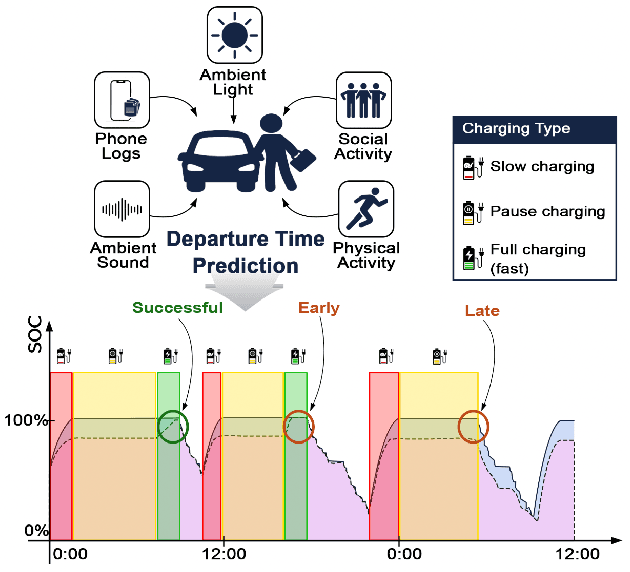
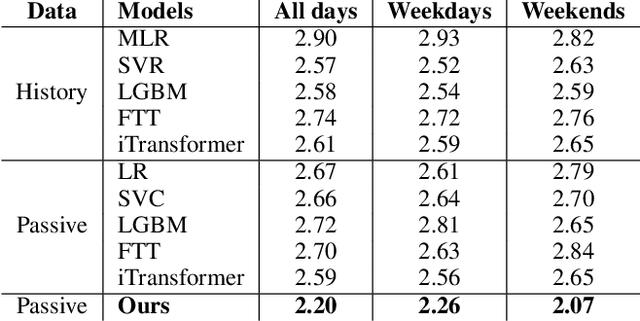
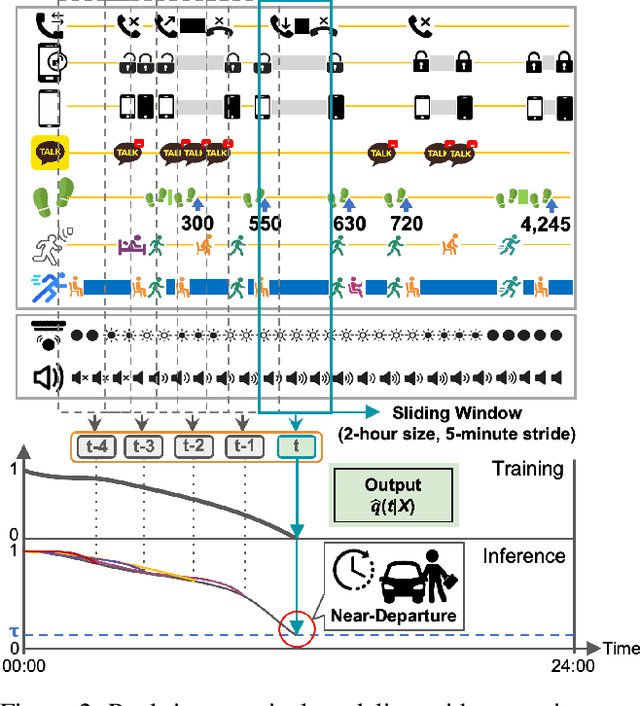
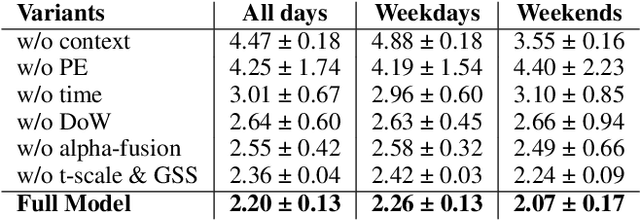
Electric vehicles (EVs) are key to sustainable mobility, yet their lithium-ion batteries (LIBs) degrade more rapidly under prolonged high states of charge (SOC). This can be mitigated by delaying full charging \ours until just before departure, which requires accurate prediction of user departure times. In this work, we propose Transformer-based real-time-to-event (TTE) model for accurate EV departure prediction. Our approach represents each day as a TTE sequence by discretizing time into grid-based tokens. Unlike previous methods primarily dependent on temporal dependency from historical patterns, our method leverages streaming contextual information to predict departures. Evaluation on a real-world study involving 93 users and passive smartphone data demonstrates that our method effectively captures irregular departure patterns within individual routines, outperforming baseline models. These results highlight the potential for practical deployment of the \ours algorithm and its contribution to sustainable transportation systems.
SwaQuAD-24: QA Benchmark Dataset in Swahili
Oct 18, 2024This paper proposes the creation of a Swahili Question Answering (QA) benchmark dataset, aimed at addressing the underrepresentation of Swahili in natural language processing (NLP). Drawing from established benchmarks like SQuAD, GLUE, KenSwQuAD, and KLUE, the dataset will focus on providing high-quality, annotated question-answer pairs that capture the linguistic diversity and complexity of Swahili. The dataset is designed to support a variety of applications, including machine translation, information retrieval, and social services like healthcare chatbots. Ethical considerations, such as data privacy, bias mitigation, and inclusivity, are central to the dataset development. Additionally, the paper outlines future expansion plans to include domain-specific content, multimodal integration, and broader crowdsourcing efforts. The Swahili QA dataset aims to foster technological innovation in East Africa and provide an essential resource for NLP research and applications in low-resource languages.