 Add to Chrome
 Add to Firefox
 Add to Edge
AMT-X: Phase-Structured Multi-Turn Red-Teaming with Checklist-Gated Evaluation
Jul 13, 2026
Safety evaluation of large language models (LLMs) relies largely on single-turn attack datasets and single-judge scoring, underestimating risk from adaptive multi-turn adversaries and reporting a single success rate that does not separate partially actionable outputs from those carrying complete operational detail. We propose AMT-X (Adaptive Multi-Turn Exploitation), a phase-structured multi-turn red-teaming framework. Unlike prior multi-turn attacks that rely on ad hoc escalation or free-form per-goal plans, AMT-X casts the attack as an explicit, reproducible multi-phase state machine driven by semantic signals from the victim, and replaces single-judge scoring with a multi-role jury whose phase-conditioned checklists gate success on actionable harm. Across six frontier victim models (queried under their default safety alignment, without added moderation layers) and seven Moderation sub-categories, AMT-X attains overall attack success rates of 97.6-100% under a lenient score threshold, but 66.7-78.6% under a stricter gate requiring complete, real, and operational detail: a gap of up to 33 percentage points between partially and fully actionable harm.

From Control Boundary to Insurance Claim: Reconstructing AI-Mediated Losses Through the CER Framework
Jun 02, 2026AI losses that arise through an insured organization's generative or agentic AI system require state reconstruction, not merely event reconstruction, because the relevant state changes as the system reasons, retrieves, calls tools, and acts. The relevant question is not only what loss occurred, but what the system was allowed to do, what it actually did, and whether that reconstructed loss can support insurance claim recovery. This paper addresses losses in which the insured's AI system is in the causal chain, including externally triggered failures such as prompt injection, retrieval-augmented generation (RAG) poisoning, malicious tool output, credential misuse, and data poisoning. Specifically, this paper introduces CER, a use-case-level diagnostic for AI residual risk transfer. C (control boundary) asks whether the system had an enforceable operating envelope. E (evidence reconstruction) asks whether the system state and causal chain can be reconstructed from retained artifacts. R (insurance response) asks whether the reconstructed loss is insured: whether insurance coverage is available in the market and placed for the insured, together with the proof needed to support insurance claim recovery. The paper makes three contributions: it defines the AI-specific reconstruction problem, operationalizes that problem through CER, and specifies claim-grade evidence for AI reconstruction. Public examples include the reported PocketOS and Replit agentic database-deletion incidents and Moffatt v. Air Canada as an adjudicated output/reliance case. Keywords: AI systems; CER framework; residual risk transfer; agentic AI; generative AI; AI insurance; evidence reconstruction.
IPI-proxy: An Intercepting Proxy for Red-Teaming Web-Browsing AI Agents Against Indirect Prompt Injection
May 12, 2026Web-browsing AI agents are increasingly deployed in enterprise settings under strict whitelists of approved domains, yet adversaries can still influence them by embedding hidden instructions in the HTML pages those domains serve. Existing red-teaming resources fall short of this scenario: prompt-injection benchmarks ship pre-built adversarial pages that whitelisted agents cannot reach, and generic LLM scanners probe the model API rather than its retrieved content. We present IPI-proxy, an open-source toolkit for red-teaming web-browsing agents against indirect prompt injection (IPI). At its core is an intercepting proxy that rewrites real HTTP responses from whitelisted domains in flight, embedding payloads drawn from a unified library of 820 deduplicated attack strings extracted from six published benchmarks (BIPIA, InjecAgent, AgentDojo, Tensor Trust, WASP, and LLMail-Inject). A YAML-driven test harness independently parameterizes the payload set, the embedding technique (HTML comment, invisible CSS, or LLM-generated semantic prose), and the HTML insertion point (6 locations from \icode{head\_meta} to \icode{script\_comment}), enabling parameter-sweep evaluation without mock pages or sandboxed environments. A companion exfiltration tracker logs successful callbacks. This paper describes the threat model, situates IPI-proxy among contemporary IPI benchmarks and red-teaming tools, and details its architecture, design decisions, and configuration interface. By bridging static benchmarks and live deployment, IPI-proxy gives AI security teams a reproducible substrate for measuring and hardening web-browsing agents against indirect prompt injection on the same retrieval surface attackers exploit in production.
AI Identity: Standards, Gaps, and Research Directions for AI Agents
Apr 25, 2026AI agents are now running real transactions, workflows, and sub-agent chains across organizational boundaries without continuous human supervision. This creates a problem no current infrastructure is equipped to solve: how do you identify, verify, and hold accountable an entity with no body, no persistent memory, and no legal standing? We define AI Identity as the continuous relationship between what an AI agent is declared to be and what it is observed to do, bounded by the confidence that those two things correspond at any given moment. Through a structured survey of industry trends, emerging standards, and technical literature, we conduct a gap analysis across the full agent identity lifecycle and make three contributions: (1) a structural comparison of human and AI identity across four dimensions (substrate, persistence, verifiability, and legal standing) showing that the asymmetry is fundamental and that extending human frameworks to agents without structural modification produces systematic failures; (2) an evaluation of current technical and regulatory documents against the identity requirements of autonomous agents, finding that none adequately address the challenge of governing nondeterministic, boundary-crossing entities; and (3) identification of five critical gaps (semantic intent verification, recursive delegation accountability, agent identity integrity, governance opacity and enforcement, and operational sustainability) that no current technology or regulatory instrument resolves. These gaps are structural; more engineering effort alone will not close them. Foundational research on AI identity is the central conclusion of this report.
MCPThreatHive: Automated Threat Intelligence for Model Context Protocol Ecosystems
Apr 15, 2026The rapid proliferation of Model Context Protocol (MCP)-based agentic systems has introduced a new category of security threats that existing frameworks are inadequately equipped to address. We present MCPThreatHive, an open-source platform that automates the end-to-end lifecycle of MCP threat intelligence: from continuous, multi-source data collection through AI-driven threat extraction and classification, to structured knowledge graph storage and interactive visualization. The platform operationalizes the MCP-38 threat taxonomy, a curated set of 38 MCP-specific threat patterns mapped to STRIDE, OWASP Top 10 for LLM Applications, and OWASP Top 10 for Agentic Applications. A composite risk scoring model provides quantitative prioritization. Through a comparative analysis of representative existing MCP security tools, we identify three critical coverage gaps that MCPThreatHive addresses: incomplete compositional attack modeling, absence of continuous threat intelligence, and lack of unified multi-framework classification.
MCP-38: A Comprehensive Threat Taxonomy for Model Context Protocol Systems (v1.0)
Mar 18, 2026The Model Context Protocol (MCP) introduces a structurally distinct attack surface that existing threat frameworks, designed for traditional software systems or generic LLM deployments, do not adequately cover. This paper presents MCP-38, a protocol-specific threat taxonomy consisting of 38 threat categories (MCP-01 through MCP-38). The taxonomy was derived through a systematic four-phase methodology: protocol decomposition, multi-framework cross-mapping, real-world incident synthesis, and remediation-surface categorization. Each category is mapped to STRIDE, OWASP Top 10 for LLM Applications (2025, LLM01--LLM10), and the OWASP Top 10 for Agentic Applications (2026, ASI01--ASI10). MCP-38 addresses critical threats arising from MCP's semantic attack surface (tool description poisoning, indirect prompt injection, parasitic tool chaining, and dynamic trust violations), none of which are adequately captured by prior work. MCP-38 provides the definitional and empirical foundation for automated threat intelligence platforms.
DRIFT: Deep Reinforcement Learning for Functional Software Testing
Jul 16, 2020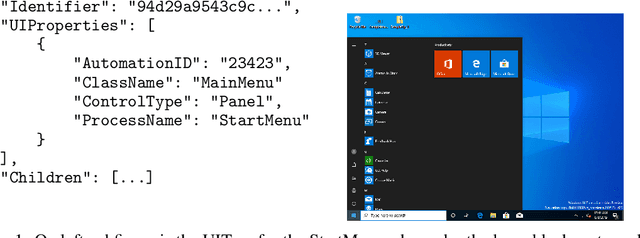
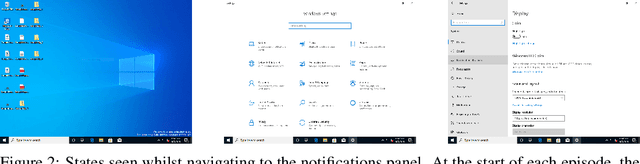
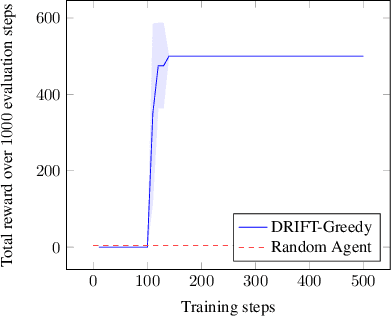

Efficient software testing is essential for productive software development and reliable user experiences. As human testing is inefficient and expensive, automated software testing is needed. In this work, we propose a Reinforcement Learning (RL) framework for functional software testing named DRIFT. DRIFT operates on the symbolic representation of the user interface. It uses Q-learning through Batch-RL and models the state-action value function with a Graph Neural Network. We apply DRIFT to testing the Windows 10 operating system and show that DRIFT can robustly trigger the desired software functionality in a fully automated manner. Our experiments test the ability to perform single and combined tasks across different applications, demonstrating that our framework can efficiently test software with a large range of testing objectives.