 Add to Chrome
 Add to Firefox
 Add to Edge
MindGuard: Guardrail Classifiers for Multi-Turn Mental Health Support
Feb 01, 2026
Large language models are increasingly used for mental health support, yet their conversational coherence alone does not ensure clinical appropriateness. Existing general-purpose safeguards often fail to distinguish between therapeutic disclosures and genuine clinical crises, leading to safety failures. To address this gap, we introduce a clinically grounded risk taxonomy, developed in collaboration with PhD-level psychologists, that identifies actionable harm (e.g., self-harm and harm to others) while preserving space for safe, non-crisis therapeutic content. We release MindGuard-testset, a dataset of real-world multi-turn conversations annotated at the turn level by clinical experts. Using synthetic dialogues generated via a controlled two-agent setup, we train MindGuard, a family of lightweight safety classifiers (with 4B and 8B parameters). Our classifiers reduce false positives at high-recall operating points and, when paired with clinician language models, help achieve lower attack success and harmful engagement rates in adversarial multi-turn interactions compared to general-purpose safeguards. We release all models and human evaluation data.

Efficiently Constructing Sparse Navigable Graphs
Jul 17, 2025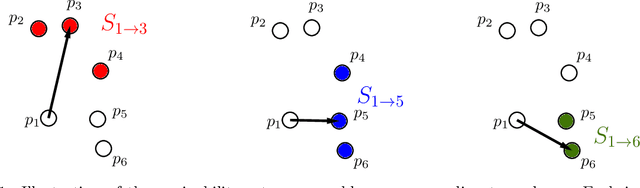
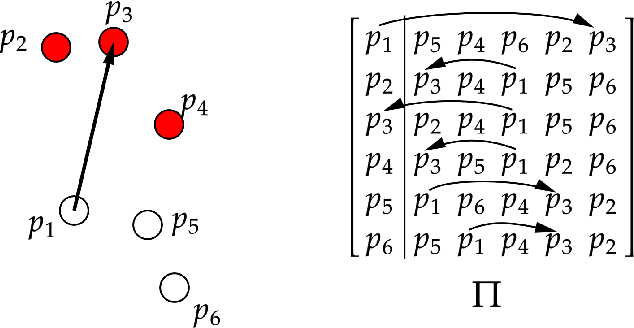
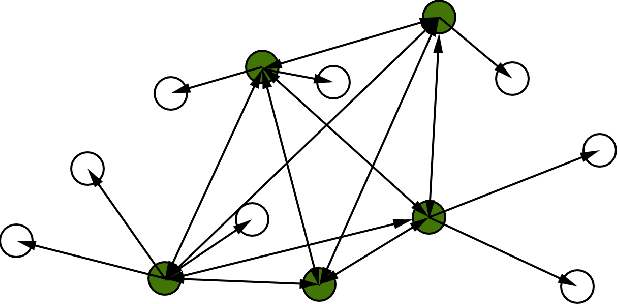
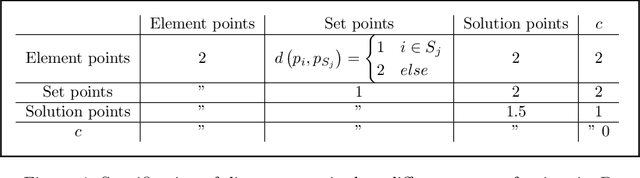
Graph-based nearest neighbor search methods have seen a surge of popularity in recent years, offering state-of-the-art performance across a wide variety of applications. Central to these methods is the task of constructing a sparse navigable search graph for a given dataset endowed with a distance function. Unfortunately, doing so is computationally expensive, so heuristics are universally used in practice. In this work, we initiate the study of fast algorithms with provable guarantees for search graph construction. For a dataset with $n$ data points, the problem of constructing an optimally sparse navigable graph can be framed as $n$ separate but highly correlated minimum set cover instances. This yields a naive $O(n^3)$ time greedy algorithm that returns a navigable graph whose sparsity is at most $O(\log n)$ higher than optimal. We improve significantly on this baseline, taking advantage of correlation between the set cover instances to leverage techniques from streaming and sublinear-time set cover algorithms. Combined with problem-specific pre-processing techniques, we present an $\tilde{O}(n^2)$ time algorithm for constructing an $O(\log n)$-approximate sparsest navigable graph under any distance function. The runtime of our method is optimal up to logarithmic factors under the Strong Exponential Time Hypothesis via a reduction from Monochromatic Closest Pair. Moreover, we prove that, as with general set cover, obtaining better than an $O(\log n)$-approximation is NP-hard, despite the significant additional structure present in the navigable graph problem. Finally, we show that our techniques can also beat cubic time for the closely related and practically important problems of constructing $\alpha$-shortcut reachable and $\tau$-monotonic graphs, which are also used for nearest neighbor search. For such graphs, we obtain $\tilde{O}(n^{2.5})$ time or better algorithms.