 Add to Chrome
 Add to Firefox
 Add to Edge
Ambivalence/Hesitancy Recognition in Videos for Personalized Digital Health Interventions
Apr 14, 2026
Using behavioural science, health interventions focus on behaviour change by providing a framework to help patients acquire and maintain healthy habits that improve medical outcomes. In-person interventions are costly and difficult to scale, especially in resource-limited regions. Digital health interventions offer a cost-effective approach, potentially supporting independent living and self-management. Automating such interventions, especially through machine learning, has gained considerable attention recently. Ambivalence and hesitancy (A/H) play a primary role for individuals to delay, avoid, or abandon health interventions. A/H are subtle and conflicting emotions that place a person in a state between positive and negative evaluations of a behaviour, or between acceptance and refusal to engage in it. They manifest as affective inconsistency across modalities or within a modality, such as language, facial, vocal expressions, and body language. While experts can be trained to recognize A/H, integrating them into digital health interventions is costly and less effective. Automatic A/H recognition is therefore critical for the personalization and cost-effectiveness of digital health interventions. Here, we explore the application of deep learning models for A/H recognition in videos, a multi-modal task by nature. In particular, this paper covers three learning setups: supervised learning, unsupervised domain adaptation for personalization, and zero-shot inference via large language models (LLMs). Our experiments are conducted on the unique and recently published BAH video dataset for A/H recognition. Our results show limited performance, suggesting that more adapted multi-modal models are required for accurate A/H recognition. Better methods for modeling spatio-temporal and multimodal fusion are necessary to leverage conflicts within/across modalities.

CLIP-AUTT: Test-Time Personalization with Action Unit Prompting for Fine-Grained Video Emotion Recognition
Mar 31, 2026Personalization in emotion recognition (ER) is essential for an accurate interpretation of subtle and subject-specific expressive patterns. Recent advances in vision-language models (VLMs) such as CLIP demonstrate strong potential for leveraging joint image-text representations in ER. However, CLIP-based methods either depend on CLIP's contrastive pretraining or on LLMs to generate descriptive text prompts, which are noisy, computationally expensive, and fail to capture fine-grained expressions, leading to degraded performance. In this work, we leverage Action Units (AUs) as structured textual prompts within CLIP to model fine-grained facial expressions. AUs encode the subtle muscle activations underlying expressions, providing localized and interpretable semantic cues for more robust ER. We introduce CLIP-AU, a lightweight AU-guided temporal learning method that integrates interpretable AU semantics into CLIP. It learns generic, subject-agnostic representations by aligning AU prompts with facial dynamics, enabling fine-grained ER without CLIP fine-tuning or LLM-generated text supervision. Although CLIP-AU models fine-grained AU semantics, it does not adapt to subject-specific variability in subtle expressions. To address this limitation, we propose CLIP-AUTT, a video-based test-time personalization method that dynamically adapts AU prompts to videos from unseen subjects. By combining entropy-guided temporal window selection with prompt tuning, CLIP-AUTT enables subject-specific adaptation while preserving temporal consistency. Our extensive experiments on three challenging video-based subtle ER datasets, BioVid, StressID, and BAH, indicate that CLIP-AU and CLIP-AUTT outperform state-of-the-art CLIP-based FER and TTA methods, achieving robust and personalized subtle ER. Our code is publicly available at: https://github.com/osamazeeshan/CLIP-AUTT.
Test-Time Adaptation via Cache Personalization for Facial Expression Recognition in Videos
Mar 22, 2026Facial expression recognition (FER) in videos requires model personalization to capture the considerable variations across subjects. Vision-language models (VLMs) offer strong transfer to downstream tasks through image-text alignment, but their performance can still degrade under inter-subject distribution shifts. Personalizing models using test-time adaptation (TTA) methods can mitigate this challenge. However, most state-of-the-art TTA methods rely on unsupervised parameter optimization, introducing computational overhead that is impractical in many real-world applications. This paper introduces TTA through Cache Personalization (TTA-CaP), a cache-based TTA method that enables cost-effective (gradient-free) personalization of VLMs for video FER. Prior cache-based TTA methods rely solely on dynamic memories that store test samples, which can accumulate errors and drift due to noisy pseudo-labels. TTA-CaP leverages three coordinated caches: a personalized source cache that stores source-domain prototypes, a positive target cache that accumulates reliable subject-specific samples, and a negative target cache that stores low-confidence cases as negative samples to reduce the impact of noisy pseudo-labels. Cache updates and replacement are controlled by a tri-gate mechanism based on temporal stability, confidence, and consistency with the personalized cache. Finally, TTA-CaP refines predictions through fusion of embeddings, yielding refined representations that support temporally stable video-level predictions. Our experiments on three challenging video FER datasets, BioVid, StressID, and BAH, indicate that TTA-CaP can outperform state-of-the-art TTA methods under subject-specific and environmental shifts, while maintaining low computational and memory overhead for real-world deployment.
MuSACo: Multimodal Subject-Specific Selection and Adaptation for Expression Recognition with Co-Training
Aug 17, 2025Personalized expression recognition (ER) involves adapting a machine learning model to subject-specific data for improved recognition of expressions with considerable interpersonal variability. Subject-specific ER can benefit significantly from multi-source domain adaptation (MSDA) methods, where each domain corresponds to a specific subject, to improve model accuracy and robustness. Despite promising results, state-of-the-art MSDA approaches often overlook multimodal information or blend sources into a single domain, limiting subject diversity and failing to explicitly capture unique subject-specific characteristics. To address these limitations, we introduce MuSACo, a multi-modal subject-specific selection and adaptation method for ER based on co-training. It leverages complementary information across multiple modalities and multiple source domains for subject-specific adaptation. This makes MuSACo particularly relevant for affective computing applications in digital health, such as patient-specific assessment for stress or pain, where subject-level nuances are crucial. MuSACo selects source subjects relevant to the target and generates pseudo-labels using the dominant modality for class-aware learning, in conjunction with a class-agnostic loss to learn from less confident target samples. Finally, source features from each modality are aligned, while only confident target features are combined. Our experimental results on challenging multimodal ER datasets: BioVid and StressID, show that MuSACo can outperform UDA (blending) and state-of-the-art MSDA methods.
BAH Dataset for Ambivalence/Hesitancy Recognition in Videos for Behavioural Change
May 25, 2025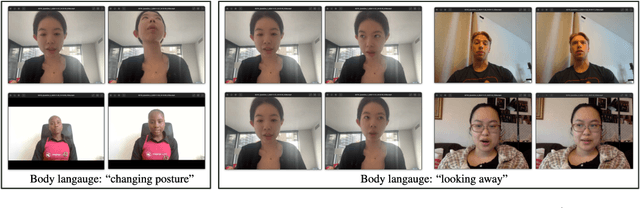
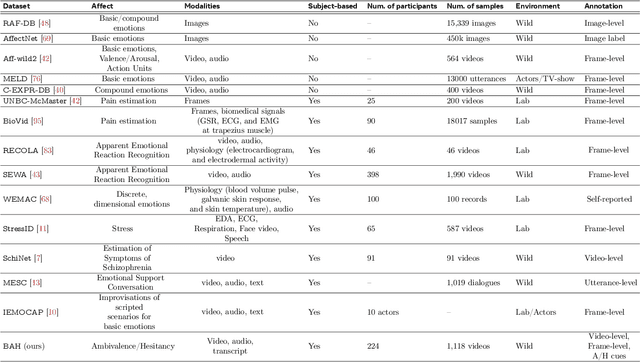
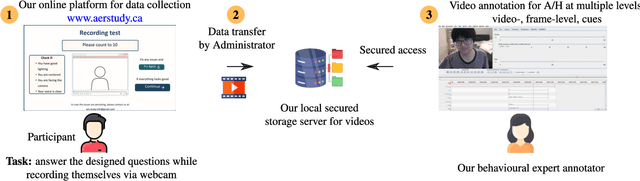
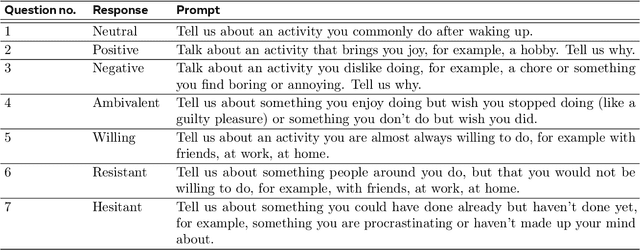
Recognizing complex emotions linked to ambivalence and hesitancy (A/H) can play a critical role in the personalization and effectiveness of digital behaviour change interventions. These subtle and conflicting emotions are manifested by a discord between multiple modalities, such as facial and vocal expressions, and body language. Although experts can be trained to identify A/H, integrating them into digital interventions is costly and less effective. Automatic learning systems provide a cost-effective alternative that can adapt to individual users, and operate seamlessly within real-time, and resource-limited environments. However, there are currently no datasets available for the design of ML models to recognize A/H. This paper introduces a first Behavioural Ambivalence/Hesitancy (BAH) dataset collected for subject-based multimodal recognition of A/H in videos. It contains videos from 224 participants captured across 9 provinces in Canada, with different age, and ethnicity. Through our web platform, we recruited participants to answer 7 questions, some of which were designed to elicit A/H while recording themselves via webcam with microphone. BAH amounts to 1,118 videos for a total duration of 8.26 hours with 1.5 hours of A/H. Our behavioural team annotated timestamp segments to indicate where A/H occurs, and provide frame- and video-level annotations with the A/H cues. Video transcripts and their timestamps are also included, along with cropped and aligned faces in each frame, and a variety of participants meta-data. We include results baselines for BAH at frame- and video-level recognition in multi-modal setups, in addition to zero-shot prediction, and for personalization using unsupervised domain adaptation. The limited performance of baseline models highlights the challenges of recognizing A/H in real-world videos. The data, code, and pretrained weights are available.
Automatic Proficiency Assessment in L2 English Learners
May 05, 2025Second language proficiency (L2) in English is usually perceptually evaluated by English teachers or expert evaluators, with the inherent intra- and inter-rater variability. This paper explores deep learning techniques for comprehensive L2 proficiency assessment, addressing both the speech signal and its correspondent transcription. We analyze spoken proficiency classification prediction using diverse architectures, including 2D CNN, frequency-based CNN, ResNet, and a pretrained wav2vec 2.0 model. Additionally, we examine text-based proficiency assessment by fine-tuning a BERT language model within resource constraints. Finally, we tackle the complex task of spontaneous dialogue assessment, managing long-form audio and speaker interactions through separate applications of wav2vec 2.0 and BERT models. Results from experiments on EFCamDat and ANGLISH datasets and a private dataset highlight the potential of deep learning, especially the pretrained wav2vec 2.0 model, for robust automated L2 proficiency evaluation.
Progressive Multi-Source Domain Adaptation for Personalized Facial Expression Recognition
Apr 05, 2025Personalized facial expression recognition (FER) involves adapting a machine learning model using samples from labeled sources and unlabeled target domains. Given the challenges of recognizing subtle expressions with considerable interpersonal variability, state-of-the-art unsupervised domain adaptation (UDA) methods focus on the multi-source UDA (MSDA) setting, where each domain corresponds to a specific subject, and improve model accuracy and robustness. However, when adapting to a specific target, the diverse nature of multiple source domains translates to a large shift between source and target data. State-of-the-art MSDA methods for FER address this domain shift by considering all the sources to adapt to the target representations. Nevertheless, adapting to a target subject presents significant challenges due to large distributional differences between source and target domains, often resulting in negative transfer. In addition, integrating all sources simultaneously increases computational costs and causes misalignment with the target. To address these issues, we propose a progressive MSDA approach that gradually introduces information from subjects based on their similarity to the target subject. This will ensure that only the most relevant sources from the target are selected, which helps avoid the negative transfer caused by dissimilar sources. We first exploit the closest sources to reduce the distribution shift with the target and then move towards the furthest while only considering the most relevant sources based on the predetermined threshold. Furthermore, to mitigate catastrophic forgetting caused by the incremental introduction of source subjects, we implemented a density-based memory mechanism that preserves the most relevant historical source samples for adaptation. Our experiments show the effectiveness of our proposed method on pain datasets: Biovid and UNBC-McMaster.
Disentangled Source-Free Personalization for Facial Expression Recognition with Neutral Target Data
Mar 26, 2025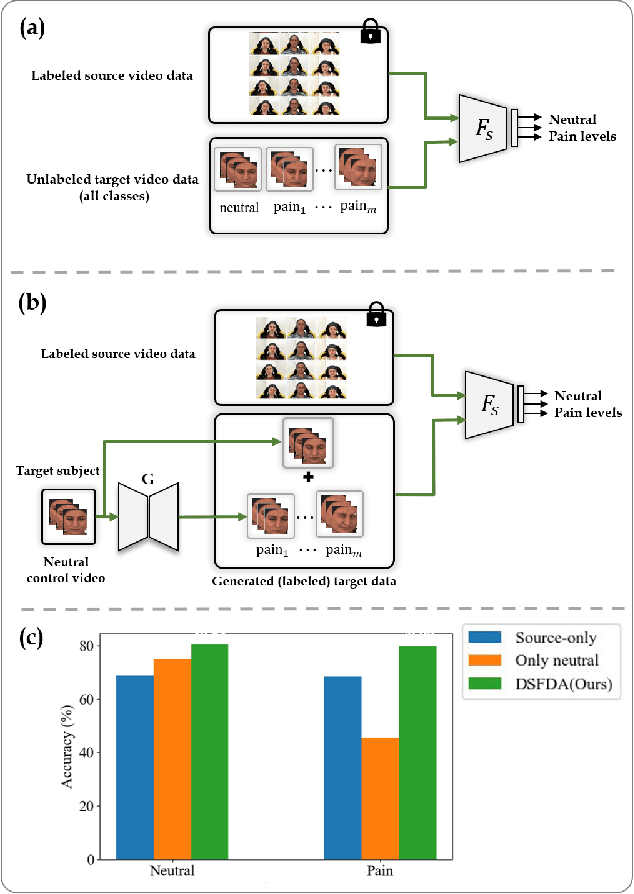
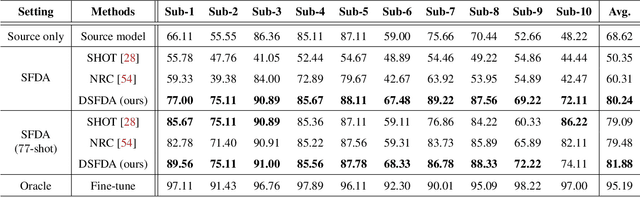
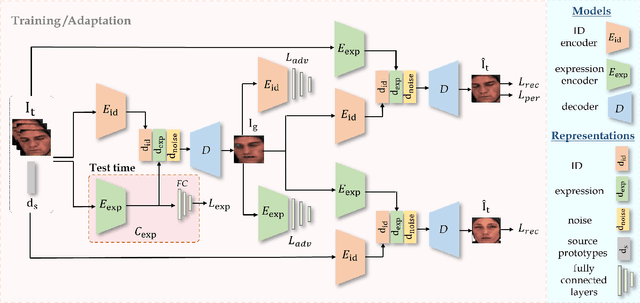
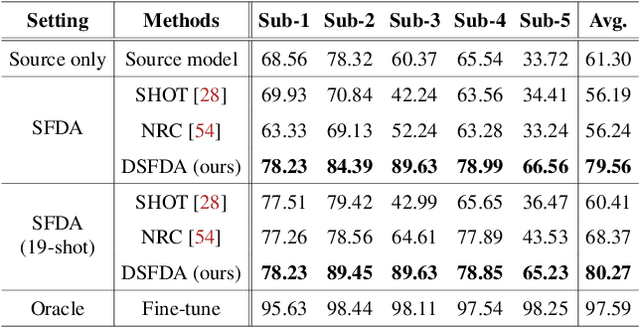
Facial Expression Recognition (FER) from videos is a crucial task in various application areas, such as human-computer interaction and health monitoring (e.g., pain, depression, fatigue, and stress). Beyond the challenges of recognizing subtle emotional or health states, the effectiveness of deep FER models is often hindered by the considerable variability of expressions among subjects. Source-free domain adaptation (SFDA) methods are employed to adapt a pre-trained source model using only unlabeled target domain data, thereby avoiding data privacy and storage issues. Typically, SFDA methods adapt to a target domain dataset corresponding to an entire population and assume it includes data from all recognition classes. However, collecting such comprehensive target data can be difficult or even impossible for FER in healthcare applications. In many real-world scenarios, it may be feasible to collect a short neutral control video (displaying only neutral expressions) for target subjects before deployment. These videos can be used to adapt a model to better handle the variability of expressions among subjects. This paper introduces the Disentangled Source-Free Domain Adaptation (DSFDA) method to address the SFDA challenge posed by missing target expression data. DSFDA leverages data from a neutral target control video for end-to-end generation and adaptation of target data with missing non-neutral data. Our method learns to disentangle features related to expressions and identity while generating the missing non-neutral target data, thereby enhancing model accuracy. Additionally, our self-supervision strategy improves model adaptation by reconstructing target images that maintain the same identity and source expression.
Music Genre Classification using Large Language Models
Oct 10, 2024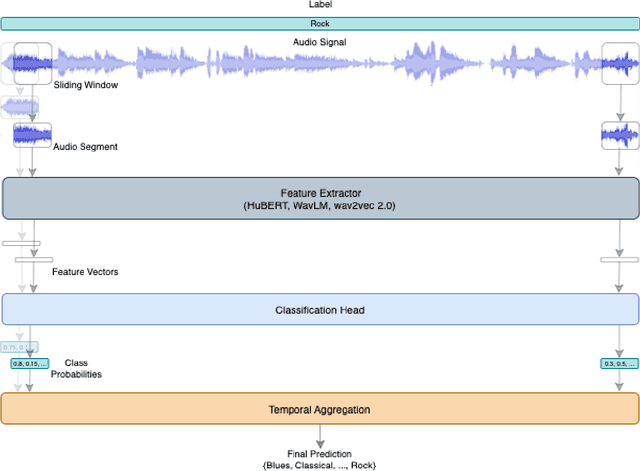
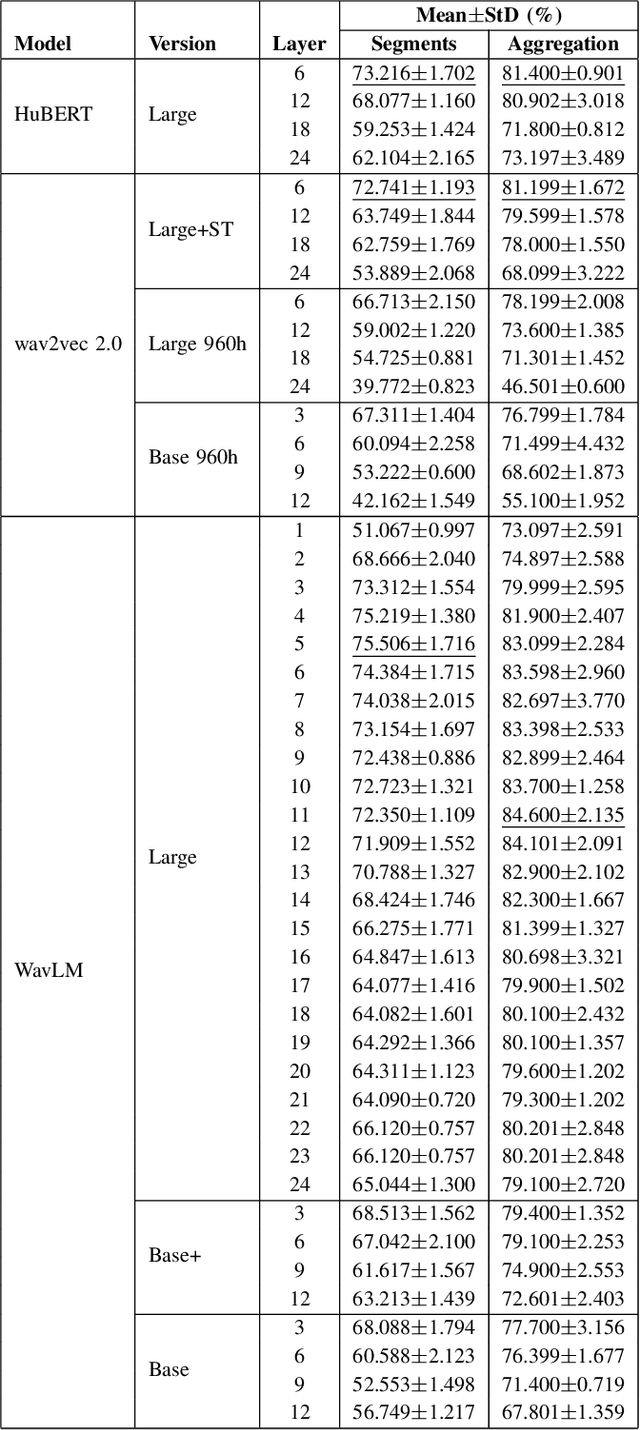
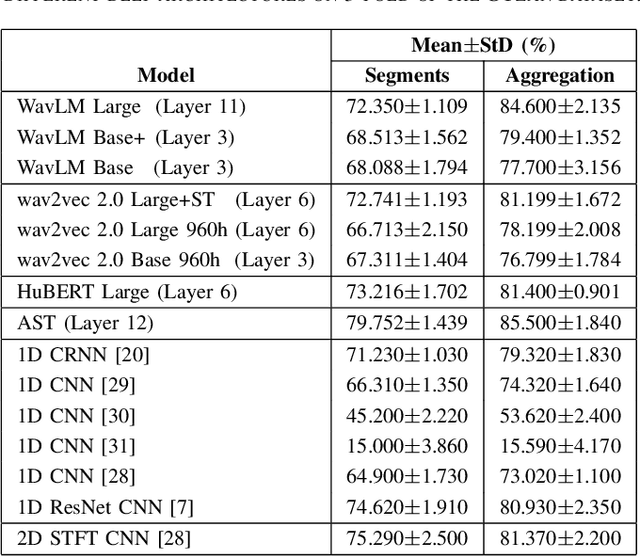
This paper exploits the zero-shot capabilities of pre-trained large language models (LLMs) for music genre classification. The proposed approach splits audio signals into 20 ms chunks and processes them through convolutional feature encoders, a transformer encoder, and additional layers for coding audio units and generating feature vectors. The extracted feature vectors are used to train a classification head. During inference, predictions on individual chunks are aggregated for a final genre classification. We conducted a comprehensive comparison of LLMs, including WavLM, HuBERT, and wav2vec 2.0, with traditional deep learning architectures like 1D and 2D convolutional neural networks (CNNs) and the audio spectrogram transformer (AST). Our findings demonstrate the superior performance of the AST model, achieving an overall accuracy of 85.5%, surpassing all other models evaluated. These results highlight the potential of LLMs and transformer-based architectures for advancing music information retrieval tasks, even in zero-shot scenarios.
Multi Teacher Privileged Knowledge Distillation for Multimodal Expression Recognition
Aug 16, 2024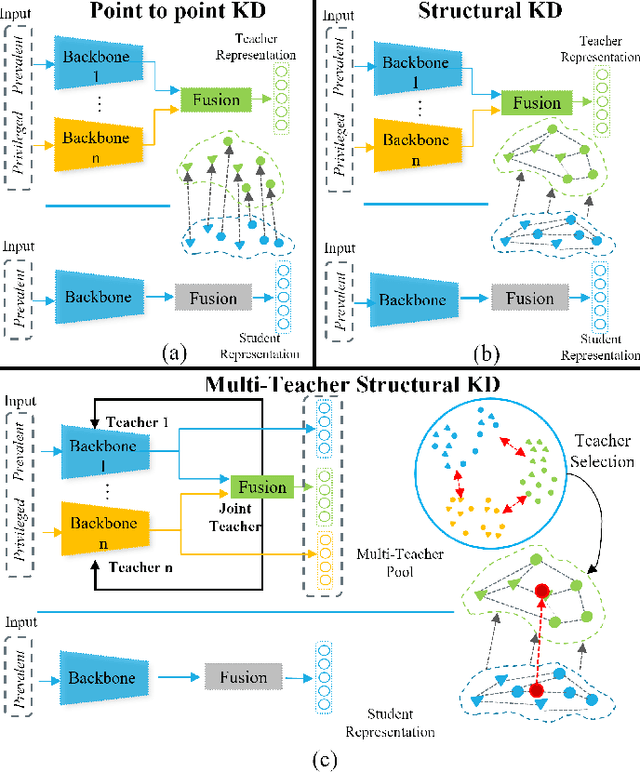
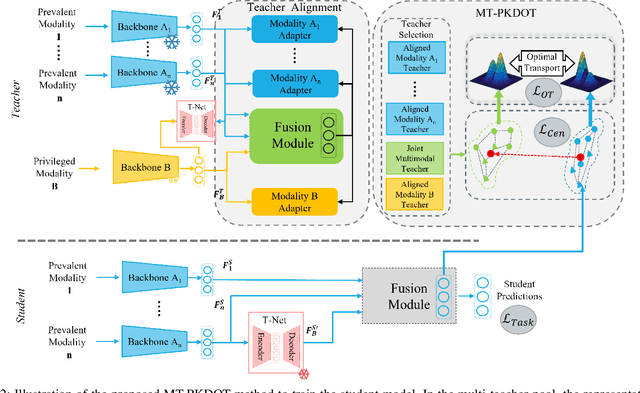
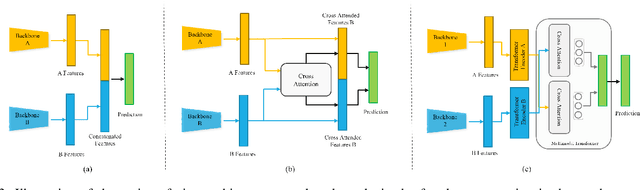
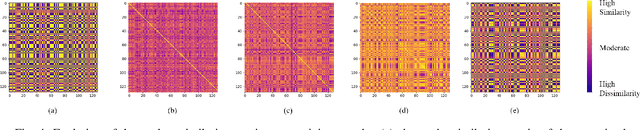
Human emotion is a complex phenomenon conveyed and perceived through facial expressions, vocal tones, body language, and physiological signals. Multimodal emotion recognition systems can perform well because they can learn complementary and redundant semantic information from diverse sensors. In real-world scenarios, only a subset of the modalities employed for training may be available at test time. Learning privileged information allows a model to exploit data from additional modalities that are only available during training. SOTA methods for PKD have been proposed to distill information from a teacher model (with privileged modalities) to a student model (without privileged modalities). However, such PKD methods utilize point-to-point matching and do not explicitly capture the relational information. Recently, methods have been proposed to distill the structural information. However, PKD methods based on structural similarity are primarily confined to learning from a single joint teacher representation, which limits their robustness, accuracy, and ability to learn from diverse multimodal sources. In this paper, a multi-teacher PKD (MT-PKDOT) method with self-distillation is introduced to align diverse teacher representations before distilling them to the student. MT-PKDOT employs a structural similarity KD mechanism based on a regularized optimal transport (OT) for distillation. The proposed MT-PKDOT method was validated on the Affwild2 and Biovid datasets. Results indicate that our proposed method can outperform SOTA PKD methods. It improves the visual-only baseline on Biovid data by 5.5%. On the Affwild2 dataset, the proposed method improves 3% and 5% over the visual-only baseline for valence and arousal respectively. Allowing the student to learn from multiple diverse sources is shown to increase the accuracy and implicitly avoids negative transfer to the student model.