 Add to Chrome
 Add to Firefox
 Add to Edge
Forecasting Conceptual Diffusion in Science: The Case of Quantum Computing
Jun 02, 2026
Understanding and anticipating scientific change requires models that distinguish between endogenous consolidation and exogenous diffusion of scientific concepts. Using the quantum computing subtree of concepts in OpenAlex, we construct a temporally resolved concept co-occurrence network and track each concept pair through its upstream citation lineage and downstream diffusion. We train LightGBM models on distributional and diversity-aware features to predict four outcomes: endogenous reinforcement, exogenous diffusion, their ratio, and diffusion entropy. After controlling for overall publication growth of the scientific body, endogenous reinforcement proves largely unpredictable in the primary quantum-computing benchmark. In contrast, exogenous diffusion and entropy are strongly predictable ($R^2$ up to $0.78à) and are driven by upstream heterogeneity, citation breadth, and distributional dispersion, as shown by SHAP analyses; replications on robotics, advanced materials, and neuro implants confirm that exogenous diffusion remains the top-ranked target across fields ($R^2_test \sim 0.60-0.87$), while endogenous predictability rises markedly in neuro implants (R^2_test = 0.83), indicating that the quantum-computing asymmetry does not generalise uniformly. Case studies reveal that sharp entropy increases coincide with the opening of new conceptual frontiers, while entropy collapses signal technological convergence or paradigm displacement. These results demonstrate that conceptual diffusion is governed by stable structural regularities embedded in semantic and citation environments. By identifying early diversity-based signals of cross-domain uptake, the approach provides a scalable foundation for anticipatory scientometrics, technology foresight, and innovation-oriented policy analysis in rapidly evolving research fields.

Explainable Forecasting of Scientific Breakthroughs from Concept Network Dynamics
Jun 02, 2026We introduce an explainable machine-learning approach that forecasts the structural precursors of scientific breakthroughs -- the emergence and intensification of links between research concepts -- by modelling how OpenAlex concept networks evolve over time. Using 59 semantic and topological features, a two-stage LightGBM model jointly predicts the formation and the future weight of concept pairs, adding a regression stage that quantifies expected intensity to prior link-existence forecasts. Relative to the state of the art, the approach improves accuracy and explainability at once: comparative validation across four technology and biomedical domains yields ROC-AUC in [0.954, 0.967] at all horizons without re-tuning, exceeding the roughly 0.90 of prior models, while every forecast rests on structural, auditable features rather than opaque embeddings. Classification performance is high (AUC about 0.95) and regression remains stable (RMSLE 0.45 to 0.6 over one to five years). Feature attribution shows that structural factors -- particularly Adamic-Adar similarity and degree-based Hadamard measures -- consistently drive accuracy, suggesting that breakthrough-relevant recombinations emerge in tightly connected sub-networks. Two expert-anchored cases, quantum annealing and AI-enabled quantum architectures, show the model surfacing technological convergence consistent with expert expectations. We then outline a three-layer decision architecture -- detection, expert translation, institutional integration -- that turns these forecasts into evidence-based research strategy and policy, anchored in open data and explainable features.
Measuring Technological Convergence in Encryption Technologies with Proximity Indices: A Text Mining and Bibliometric Analysis using OpenAlex
Mar 03, 2024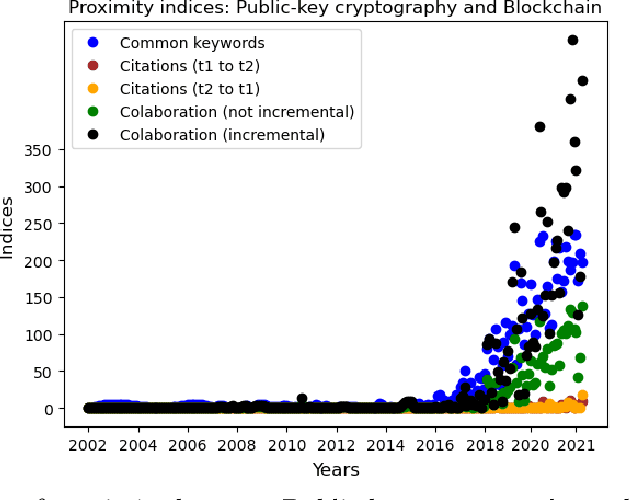
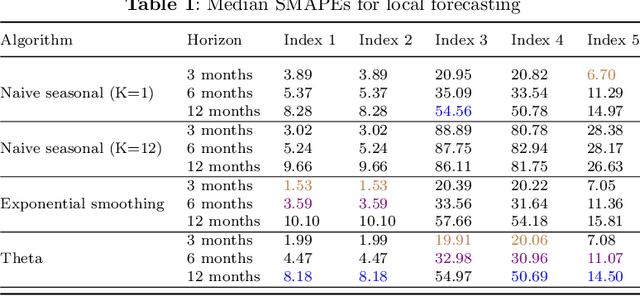
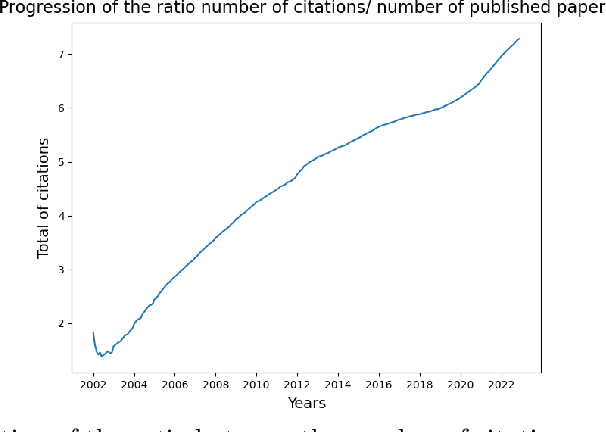

Identifying technological convergence among emerging technologies in cybersecurity is crucial for advancing science and fostering innovation. Unlike previous studies focusing on the binary relationship between a paper and the concept it attributes to technology, our approach utilizes attribution scores to enhance the relationships between research papers, combining keywords, citation rates, and collaboration status with specific technological concepts. The proposed method integrates text mining and bibliometric analyses to formulate and predict technological proximity indices for encryption technologies using the "OpenAlex" catalog. Our case study findings highlight a significant convergence between blockchain and public-key cryptography, evidenced by the increasing proximity indices. These results offer valuable strategic insights for those contemplating investments in these domains.
LLMs Perform Poorly at Concept Extraction in Cyber-security Research Literature
Dec 12, 2023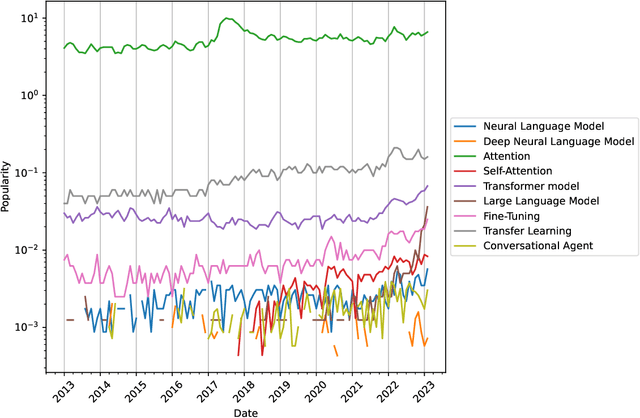
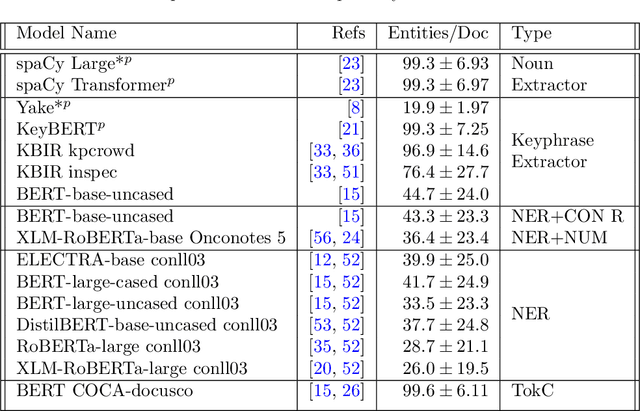
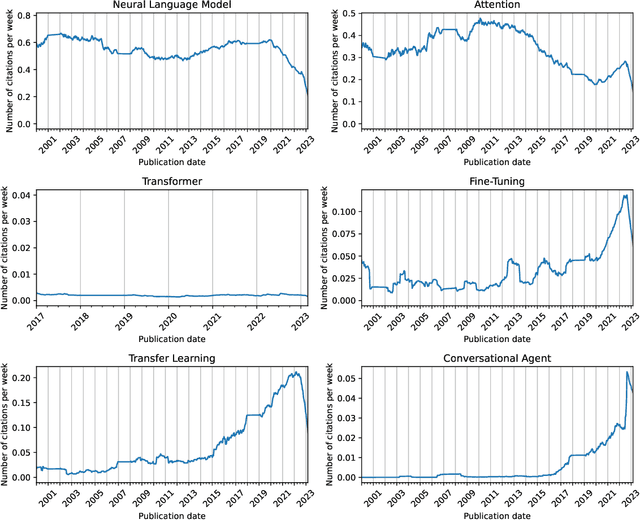
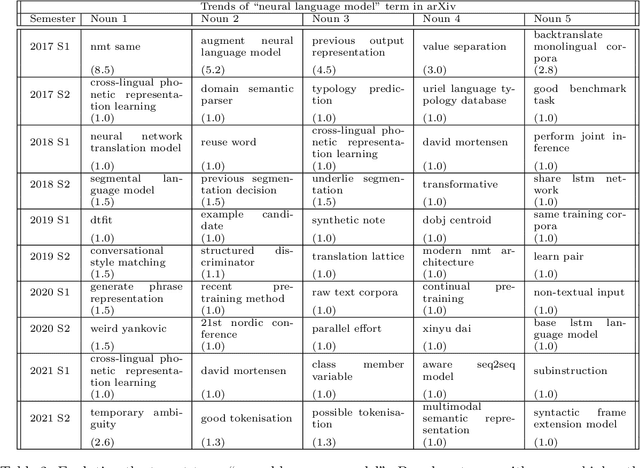
The cybersecurity landscape evolves rapidly and poses threats to organizations. To enhance resilience, one needs to track the latest developments and trends in the domain. It has been demonstrated that standard bibliometrics approaches show their limits in such a fast-evolving domain. For this purpose, we use large language models (LLMs) to extract relevant knowledge entities from cybersecurity-related texts. We use a subset of arXiv preprints on cybersecurity as our data and compare different LLMs in terms of entity recognition (ER) and relevance. The results suggest that LLMs do not produce good knowledge entities that reflect the cybersecurity context, but our results show some potential for noun extractors. For this reason, we developed a noun extractor boosted with some statistical analysis to extract specific and relevant compound nouns from the domain. Later, we tested our model to identify trends in the LLM domain. We observe some limitations, but it offers promising results to monitor the evolution of emergent trends.
Fundamentals of Generative Large Language Models and Perspectives in Cyber-Defense
Mar 21, 2023Generative Language Models gained significant attention in late 2022 / early 2023, notably with the introduction of models refined to act consistently with users' expectations of interactions with AI (conversational models). Arguably the focal point of public attention has been such a refinement of the GPT3 model -- the ChatGPT and its subsequent integration with auxiliary capabilities, including search as part of Microsoft Bing. Despite extensive prior research invested in their development, their performance and applicability to a range of daily tasks remained unclear and niche. However, their wider utilization without a requirement for technical expertise, made in large part possible through conversational fine-tuning, revealed the extent of their true capabilities in a real-world environment. This has garnered both public excitement for their potential applications and concerns about their capabilities and potential malicious uses. This review aims to provide a brief overview of the history, state of the art, and implications of Generative Language Models in terms of their principles, abilities, limitations, and future prospects -- especially in the context of cyber-defense, with a focus on the Swiss operational environment.
Case-Based Reasoning with Language Models for Classification of Logical Fallacies
Jan 27, 2023


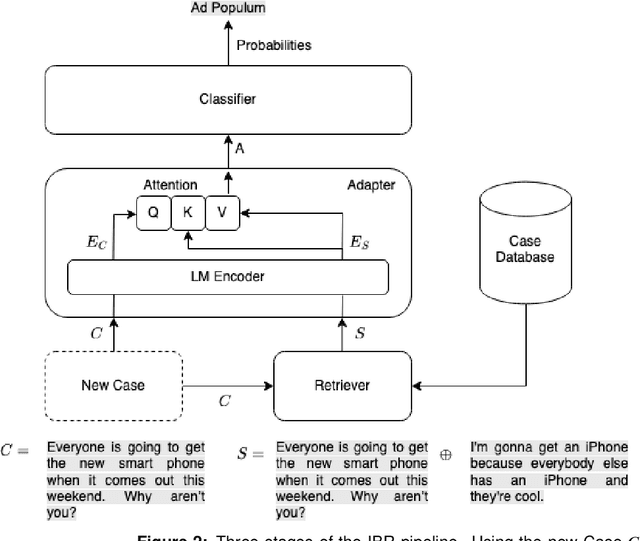
The ease and the speed of spreading misinformation and propaganda on the Web motivate the need to develop trustworthy technology for detecting fallacies in natural language arguments. However, state-of-the-art language modeling methods exhibit a lack of robustness on tasks like logical fallacy classification that require complex reasoning. In this paper, we propose a Case-Based Reasoning method that classifies new cases of logical fallacy by language-modeling-driven retrieval and adaptation of historical cases. We design four complementary strategies to enrich the input representation for our model, based on external information about goals, explanations, counterarguments, and argument structure. Our experiments in in-domain and out-of-domain settings indicate that Case-Based Reasoning improves the accuracy and generalizability of language models. Our ablation studies confirm that the representations of similar cases have a strong impact on the model performance, that models perform well with fewer retrieved cases, and that the size of the case database has a negligible effect on the performance. Finally, we dive deeper into the relationship between the properties of the retrieved cases and the model performance.
Robust and Explainable Identification of Logical Fallacies in Natural Language Arguments
Dec 12, 2022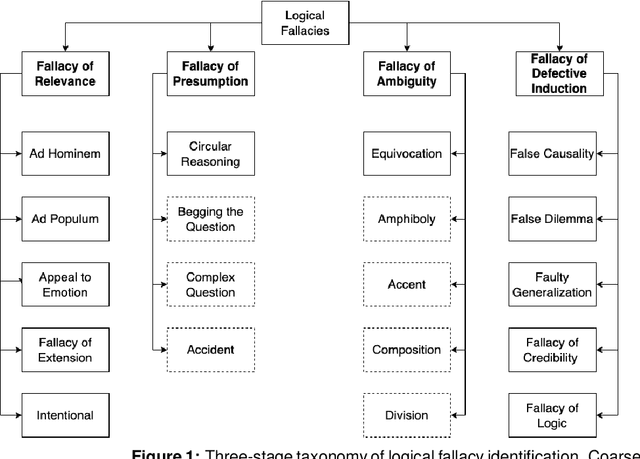
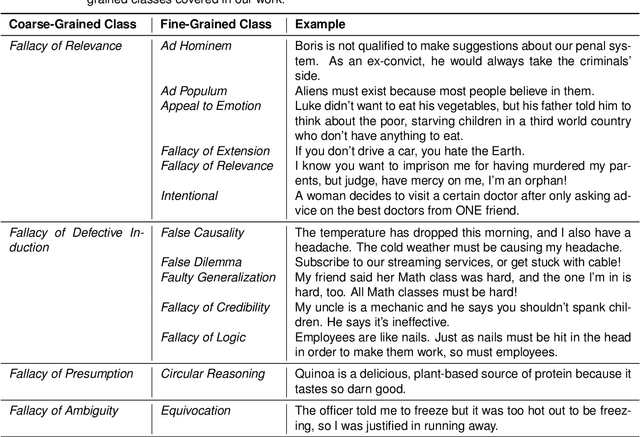
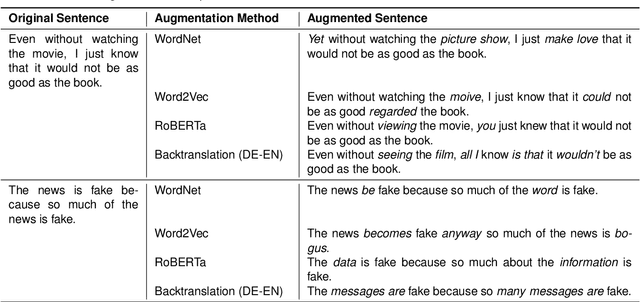
The spread of misinformation, propaganda, and flawed argumentation has been amplified in the Internet era. Given the volume of data and the subtlety of identifying violations of argumentation norms, supporting information analytics tasks, like content moderation, with trustworthy methods that can identify logical fallacies is essential. In this paper, we formalize prior theoretical work on logical fallacies into a comprehensive three-stage evaluation framework of detection, coarse-grained, and fine-grained classification. We adapt existing evaluation datasets for each stage of the evaluation. We devise three families of robust and explainable methods based on prototype reasoning, instance-based reasoning, and knowledge injection. The methods are designed to combine language models with background knowledge and explainable mechanisms. Moreover, we address data sparsity with strategies for data augmentation and curriculum learning. Our three-stage framework natively consolidates prior datasets and methods from existing tasks, like propaganda detection, serving as an overarching evaluation testbed. We extensively evaluate these methods on our datasets, focusing on their robustness and explainability. Our results provide insight into the strengths and weaknesses of the methods on different components and fallacy classes, indicating that fallacy identification is a challenging task that may require specialized forms of reasoning to capture various classes. We share our open-source code and data on GitHub to support further work on logical fallacy identification.
Multimodal and Explainable Internet Meme Classification
Dec 11, 2022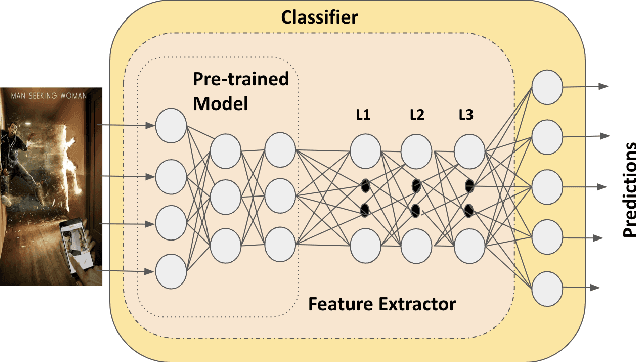

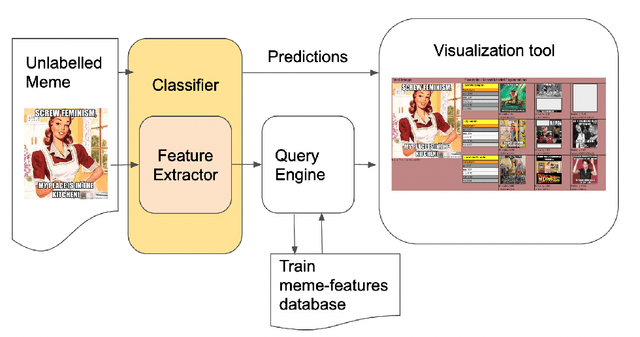

Warning: this paper contains content that may be offensive or upsetting. In the current context where online platforms have been effectively weaponized in a variety of geo-political events and social issues, Internet memes make fair content moderation at scale even more difficult. Existing work on meme classification and tracking has focused on black-box methods that do not explicitly consider the semantics of the memes or the context of their creation. In this paper, we pursue a modular and explainable architecture for Internet meme understanding. We design and implement multimodal classification methods that perform example- and prototype-based reasoning over training cases, while leveraging both textual and visual SOTA models to represent the individual cases. We study the relevance of our modular and explainable models in detecting harmful memes on two existing tasks: Hate Speech Detection and Misogyny Classification. We compare the performance between example- and prototype-based methods, and between text, vision, and multimodal models, across different categories of harmfulness (e.g., stereotype and objectification). We devise a user-friendly interface that facilitates the comparative analysis of examples retrieved by all of our models for any given meme, informing the community about the strengths and limitations of these explainable methods.
A Study of Slang Representation Methods
Dec 11, 2022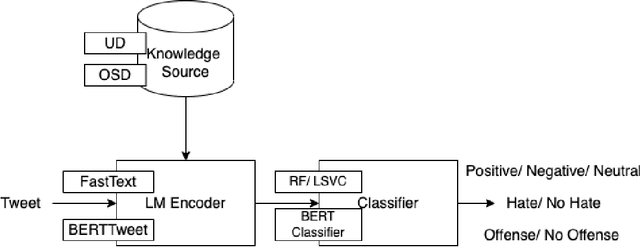
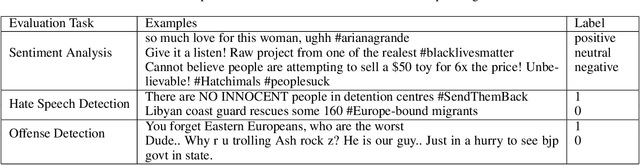
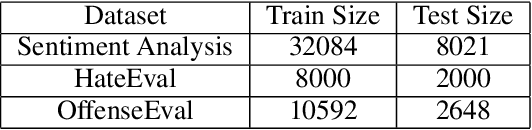
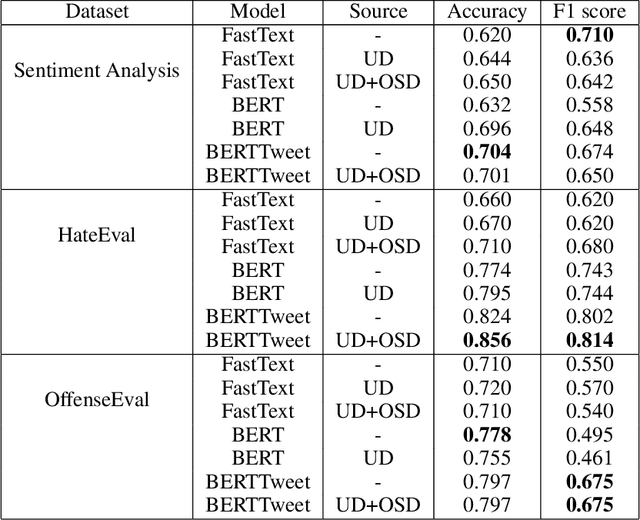
Warning: this paper contains content that may be offensive or upsetting. Considering the large amount of content created online by the minute, slang-aware automatic tools are critically needed to promote social good, and assist policymakers and moderators in restricting the spread of offensive language, abuse, and hate speech. Despite the success of large language models and the spontaneous emergence of slang dictionaries, it is unclear how far their combination goes in terms of slang understanding for downstream social good tasks. In this paper, we provide a framework to study different combinations of representation learning models and knowledge resources for a variety of downstream tasks that rely on slang understanding. Our experiments show the superiority of models that have been pre-trained on social media data, while the impact of dictionaries is positive only for static word embeddings. Our error analysis identifies core challenges for slang representation learning, including out-of-vocabulary words, polysemy, variance, and annotation disagreements, which can be traced to characteristics of slang as a quickly evolving and highly subjective language.
Beyond S-curves: Recurrent Neural Networks for Technology Forecasting
Nov 28, 2022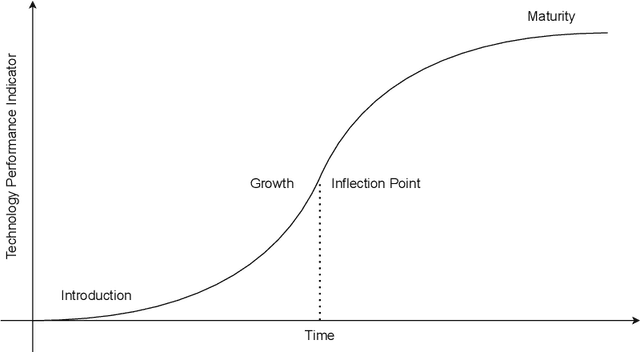
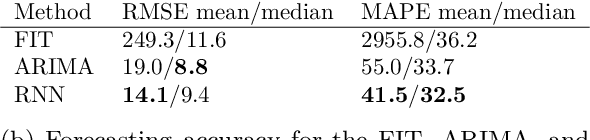
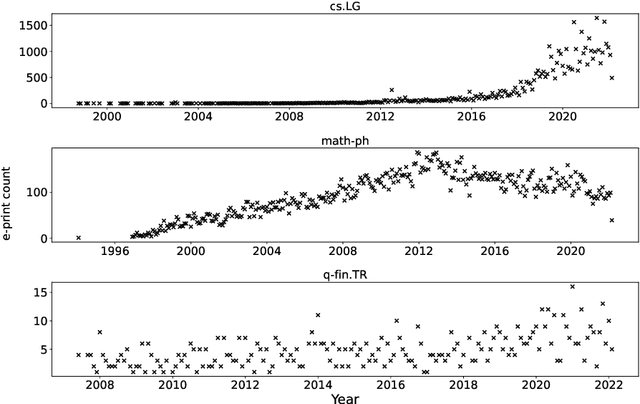

Because of the considerable heterogeneity and complexity of the technological landscape, building accurate models to forecast is a challenging endeavor. Due to their high prevalence in many complex systems, S-curves are a popular forecasting approach in previous work. However, their forecasting performance has not been directly compared to other technology forecasting approaches. Additionally, recent developments in time series forecasting that claim to improve forecasting accuracy are yet to be applied to technological development data. This work addresses both research gaps by comparing the forecasting performance of S-curves to a baseline and by developing an autencoder approach that employs recent advances in machine learning and time series forecasting. S-curves forecasts largely exhibit a mean average percentage error (MAPE) comparable to a simple ARIMA baseline. However, for a minority of emerging technologies, the MAPE increases by two magnitudes. Our autoencoder approach improves the MAPE by 13.5% on average over the second-best result. It forecasts established technologies with the same accuracy as the other approaches. However, it is especially strong at forecasting emerging technologies with a mean MAPE 18% lower than the next best result. Our results imply that a simple ARIMA model is preferable over the S-curve for technology forecasting. Practitioners looking for more accurate forecasts should opt for the presented autoencoder approach.