 Add to Chrome
 Add to Firefox
 Add to Edge
SimGym: A Framework for A/B Test Simulation in E-Commerce with Traffic-Grounded VLM Agents
May 19, 2026
A/B testing remains the gold standard for evaluating modifications to e-commerce storefronts, yet it diverts traffic, requires weeks to reach statistical significance, and risks degrading user experience. We present SimGym, a framework for simulating A/B tests on e-commerce storefronts using vision-language model (VLM) agents operating in a live browser. The framework comprises three key components: (a) a traffic-grounded persona generation pipeline that derives per-shop buyer archetypes and intents from production clickstream data; (b) a live-browser agent architecture that combines multimodal perception over visual and browser-structured observations with episodic memory and guardrails to conduct coherent shopping sessions across control and treatment storefronts; and (c) an evaluation protocol that compares simulated outcome shifts with observed shifts in real buyer behavior. We validate SimGym on A/B tests of visually driven UI theme changes from a major e-commerce platform across diverse storefronts and product categories. Empirical results show that SimGym agents achieve strong agreement with observed outcome shifts, attaining 77% directional alignment with add-to-cart shifts observed across interface variants in real-buyer traffic. It reduces experimental cycles from weeks to under an hour, enabling rapid experimentation without exposing real buyers to candidate variants.

SimGym: Traffic-Grounded Browser Agents for Offline A/B Testing in E-Commerce
Feb 01, 2026A/B testing remains the gold standard for evaluating e-commerce UI changes, yet it diverts traffic, takes weeks to reach significance, and risks harming user experience. We introduce SimGym, a scalable system for rapid offline A/B testing using traffic-grounded synthetic buyers powered by Large Language Model agents operating in a live browser. SimGym extracts per-shop buyer profiles and intents from production interaction data, identifies distinct behavioral archetypes, and simulates cohort-weighted sessions across control and treatment storefronts. We validate SimGym against real human outcomes from real UI changes on a major e-commerce platform under confounder control. Even without alignment post training, SimGym agents achieve state of the art alignment with observed outcome shifts and reduces experiment cycles from weeks to under an hour , enabling rapid experimentation without exposure to real buyers.
Sequential Advantage Selection for Optimal Treatment Regimes
May 20, 2014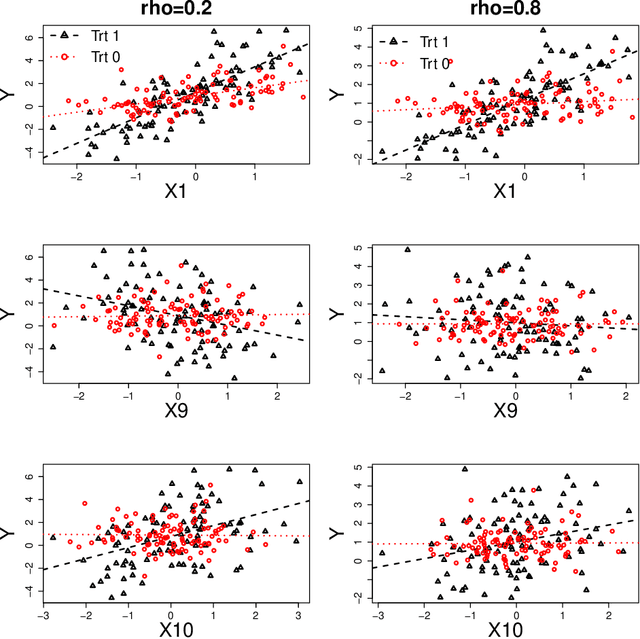
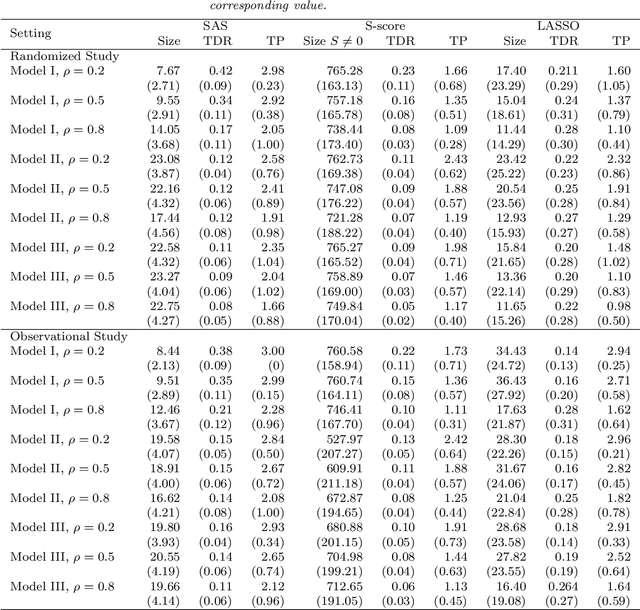
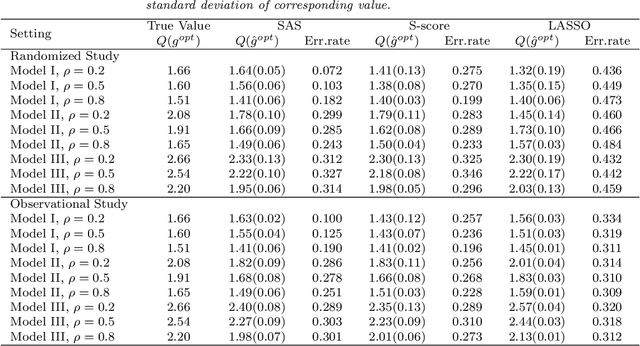
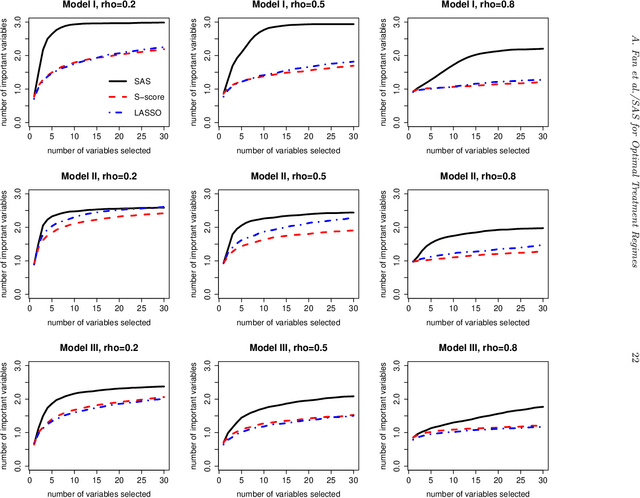
Variable selection for optimal treatment regime in a clinical trial or an observational study is getting more attention. Most existing variable selection techniques focused on selecting variables that are important for prediction, therefore some variables that are poor in prediction but are critical for decision-making may be ignored. A qualitative interaction of a variable with treatment arises when treatment effect changes direction as the value of this variable varies. The qualitative interaction indicates the importance of this variable for decision-making. Gunter et al. (2011) proposed S-score which characterizes the magnitude of qualitative interaction of each variable with treatment individually. In this article, we developed a sequential advantage selection method based on the modified S-score. Our method selects qualitatively interacted variables sequentially, and hence excludes marginally important but jointly unimportant variables {or vice versa}. The optimal treatment regime based on variables selected via joint model is more comprehensive and reliable. With the proposed stopping criteria, our method can handle a large amount of covariates even if sample size is small. Simulation results show our method performs well in practical settings. We further applied our method to data from a clinical trial for depression.