 Add to Chrome
 Add to Firefox
 Add to Edge
Accelerating Posterior Inference from Pulsar Light Curves via Learned Latent Representations and Local Simulator-Guided Optimization
Feb 16, 2026
Posterior inference from pulsar observations in the form of light curves is commonly performed using Markov chain Monte Carlo methods, which are accurate but computationally expensive. We introduce a framework that accelerates posterior inference while maintaining accuracy by combining learned latent representations with local simulator-guided optimization. A masked U-Net is first pretrained to reconstruct complete light curves from partial observations and to produce informative latent embeddings. Given a query light curve, we identify similar simulated light curves from the simulation bank by measuring similarity in the learned embedding space produced by pretrained U-Net encoder, yielding an initial empirical approximation to the posterior over parameters. This initialization is then refined using a local optimization procedure using hill-climbing updates, guided by a forward simulator, progressively shifting the empirical posterior toward higher-likelihood parameter regions. Experiments on the observed light curve of PSR J0030+0451, captured by NASA's Neutron Star Interior Composition Explorer (NICER), show that our method closely matches posterior estimates obtained using traditional MCMC methods while achieving 120 times reduction in inference time (from 24 hours to 12 minutes), demonstrating the effectiveness of learned representations and simulator-guided optimization for accelerated posterior inference.

SPUS: A Lightweight and Parameter-Efficient Foundation Model for PDEs
Oct 01, 2025We introduce Small PDE U-Net Solver (SPUS), a compact and efficient foundation model (FM) designed as a unified neural operator for solving a wide range of partial differential equations (PDEs). Unlike existing state-of-the-art PDE FMs-primarily based on large complex transformer architectures with high computational and parameter overhead-SPUS leverages a lightweight residual U-Net-based architecture that has been largely underexplored as a foundation model architecture in this domain. To enable effective learning in this minimalist framework, we utilize a simple yet powerful auto-regressive pretraining strategy which closely replicates the behavior of numerical solvers to learn the underlying physics. SPUS is pretrained on a diverse set of fluid dynamics PDEs and evaluated across 6 challenging unseen downstream PDEs spanning various physical systems. Experimental results demonstrate that SPUS using residual U-Net based architecture achieves state-of-the-art generalization on these downstream tasks while requiring significantly fewer parameters and minimal fine-tuning data, highlighting its potential as a highly parameter-efficient FM for solving diverse PDE systems.
Estimation of non-uniform blur using a patch-based regression convolutional neural network
Feb 12, 2024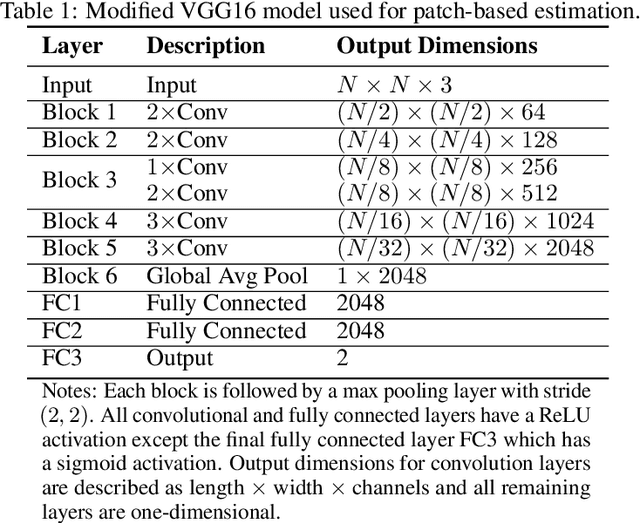
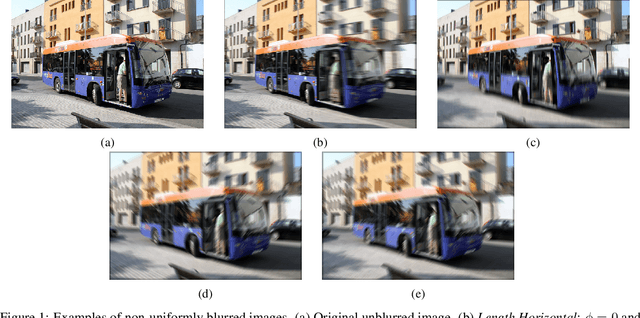
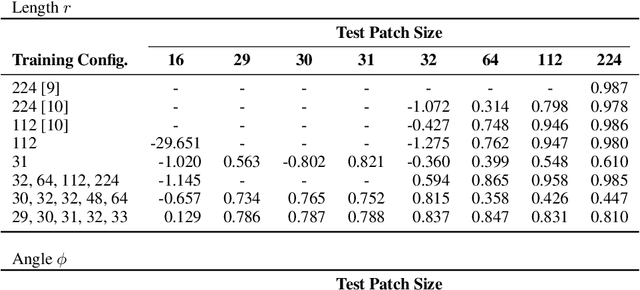
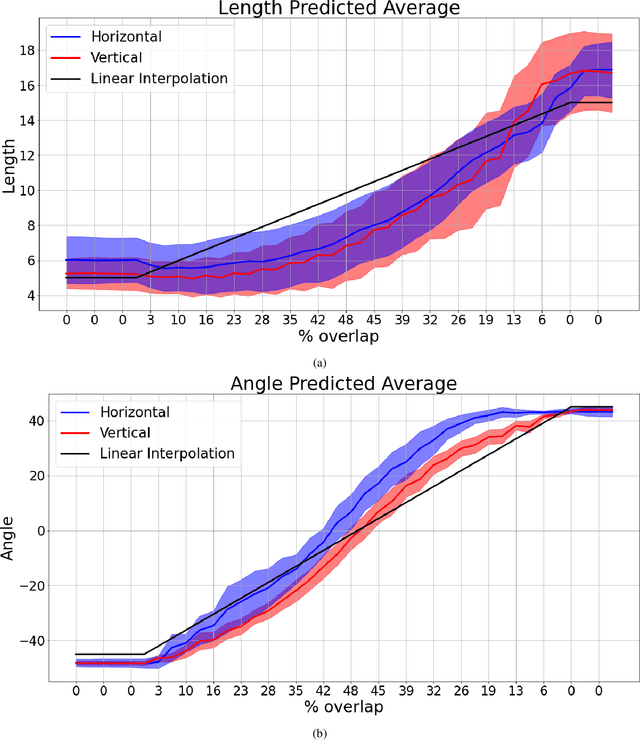
The non-uniform blur of atmospheric turbulence can be modeled as a superposition of linear motion blur kernels at a patch level. We propose a regression convolutional neural network (CNN) to predict angle and length of a linear motion blur kernel for varying sized patches. We analyze the robustness of the network for different patch sizes and the performance of the network in regions where the characteristics of the blur are transitioning. Alternating patch sizes per epoch in training, we find coefficient of determination scores across a range of patch sizes of $R^2>0.78$ for length and $R^2>0.94$ for angle prediction. We find that blur predictions in regions overlapping two blur characteristics transition between the two characteristics as overlap changes. These results validate the use of such a network for prediction of non-uniform blur characteristics at a patch level.
Estimation of motion blur kernel parameters using regression convolutional neural networks
Aug 02, 2023Many deblurring and blur kernel estimation methods use MAP or classification deep learning techniques to sharpen an image and predict the blur kernel. We propose a regression approach using neural networks to predict the parameters of linear motion blur kernels. These kernels can be parameterized by its length of blur and the orientation of the blur.This paper will analyze the relationship between length and angle of linear motion blur. This analysis will help establish a foundation to using regression prediction in uniformed motion blur images.
Deep learning estimation of modified Zernike coefficients for image point spread functions
Apr 05, 2023Recovering the turbulence-degraded point spread function from a single intensity image is important for a variety of imaging applications. Here, a deep learning model based on a convolution neural network is applied to intensity images to predict a modified set of Zernike polynomial coefficients corresponding to wavefront aberrations in the pupil due to turbulence. The modified set assigns an absolute value to coefficients of even radial orders due to a sign ambiguity associated with this problem and is shown to be sufficient for specifying the intensity point spread function. Simulated image data of a point object and simple extended objects over a range of turbulence and detection noise levels are created for the learning model. The MSE results for the learning model show that the best prediction is found when observing a point object, but it is possible to recover a useful set of modified Zernike coefficients from an extended object image that is subject to detection noise and turbulence.
WIDEFT: A Corpus of Radio Frequency Signals for Wireless Device Fingerprint Research
Aug 10, 2021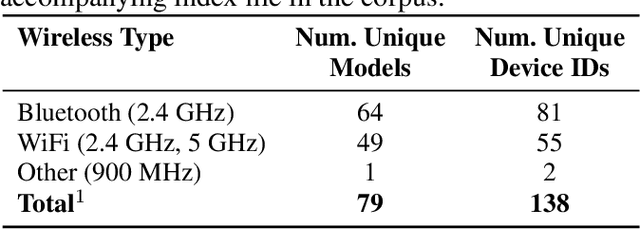
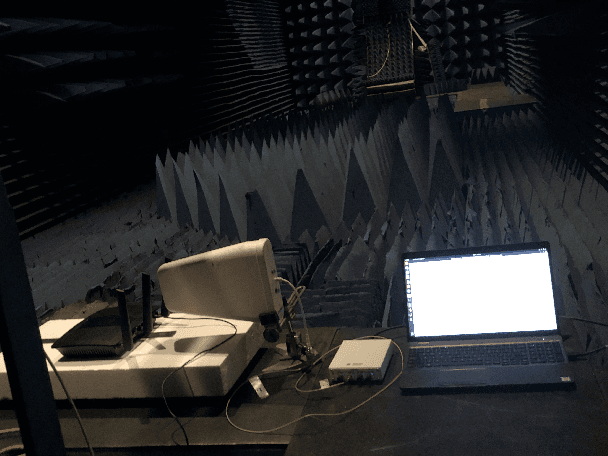
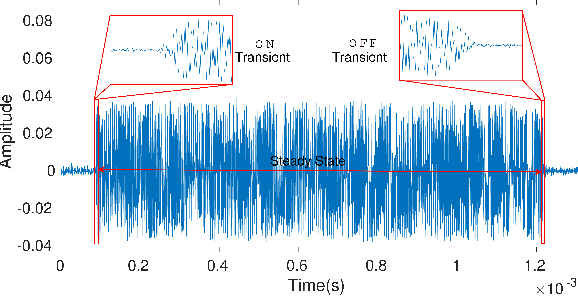
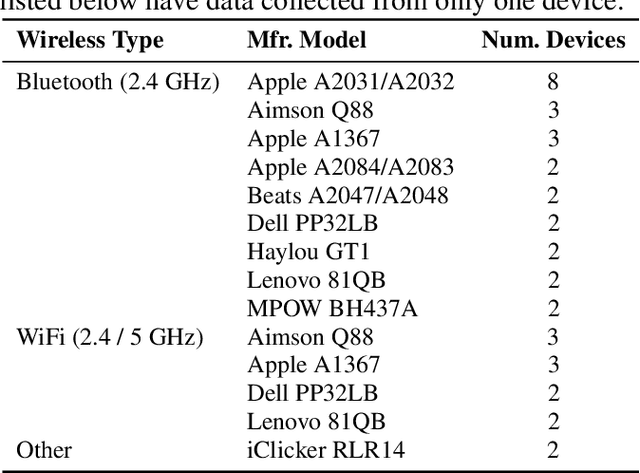
Wireless network security may be improved by identifying networked devices via traits that are tied to hardware differences, typically related to unique variations introduced in the manufacturing process. One way these variations manifest is through unique transient events when a radio transmitter is activated or deactivated. Features extracted from these signal bursts have in some cases, shown to provide a unique "fingerprint" for a wireless device. However, only recently have researchers made such data available for research and comparison. Herein, we describe a publicly-available corpus of radio frequency signals that can be used for wireless device fingerprint research. The WIDEFT corpus contains signal bursts from 138 unique devices (100 bursts per device), including Bluetooth- and WiFi-enabled devices, from 79 unique models. Additionally, to demonstrate the utility of the WIDEFT corpus, we provide four baseline evaluations using a minimal subset of previously-proposed features and a simple ensemble classifier.