 Add to Chrome
 Add to Firefox
 Add to Edge
Vibe Coding in Practice: Flow, Technical Debt, and Guidelines for Sustainable Use
Dec 11, 2025
Vibe Coding (VC) is a form of software development assisted by generative AI, in which developers describe the intended functionality or logic via natural language prompts, and the AI system generates the corresponding source code. VC can be leveraged for rapid prototyping or developing the Minimum Viable Products (MVPs); however, it may introduce several risks throughout the software development life cycle. Based on our experience from several internally developed MVPs and a review of recent industry reports, this article analyzes the flow-debt tradeoffs associated with VC. The flow-debt trade-off arises when the seamless code generation occurs, leading to the accumulation of technical debt through architectural inconsistencies, security vulnerabilities, and increased maintenance overhead. These issues originate from process-level weaknesses, biases in model training data, a lack of explicit design rationale, and a tendency to prioritize quick code generation over human-driven iterative development. Based on our experiences, we identify and explain how current model, platform, and hardware limitations contribute to these issues, and propose countermeasures to address them, informing research and practice towards more sustainable VC approaches.

Towards Human-Bot Collaborative Software Architecting with ChatGPT
Feb 26, 2023

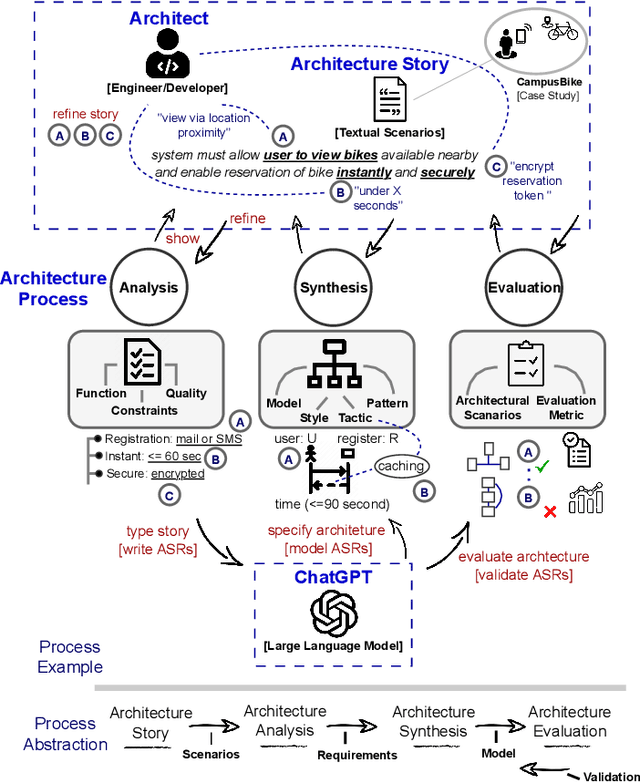

Architecting software-intensive systems can be a complex process. It deals with the daunting tasks of unifying stakeholders' perspectives, designers' intellect, tool-based automation, pattern-driven reuse, and so on, to sketch a blueprint that guides software implementation and evaluation. Despite its benefits, architecture-centric software engineering (ACSE) inherits a multitude of challenges. ACSE challenges could stem from a lack of standardized processes, socio-technical limitations, and scarcity of human expertise etc. that can impede the development of existing and emergent classes of software (e.g., IoTs, blockchain, quantum systems). Software Development Bots (DevBots) trained on large language models can help synergise architects' knowledge with artificially intelligent decision support to enable rapid architecting in a human-bot collaborative ACSE. An emerging solution to enable this collaboration is ChatGPT, a disruptive technology not primarily introduced for software engineering, but is capable of articulating and refining architectural artifacts based on natural language processing. We detail a case study that involves collaboration between a novice software architect and ChatGPT for architectural analysis, synthesis, and evaluation of a services-driven software application. Preliminary results indicate that ChatGPT can mimic an architect's role to support and often lead ACSE, however; it requires human oversight and decision support for collaborative architecting. Future research focuses on harnessing empirical evidence about architects' productivity and exploring socio-technical aspects of architecting with ChatGPT to tackle emerging and futuristic challenges of ACSE.
An Overview of Ontologies and Tool Support for COVID-19 Analytics
Oct 12, 2021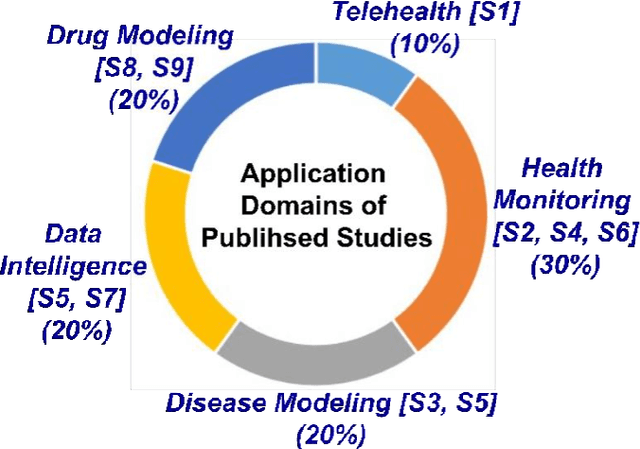
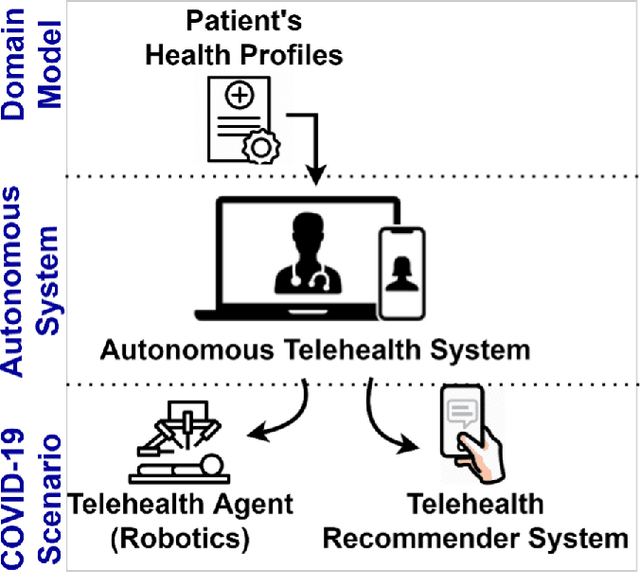
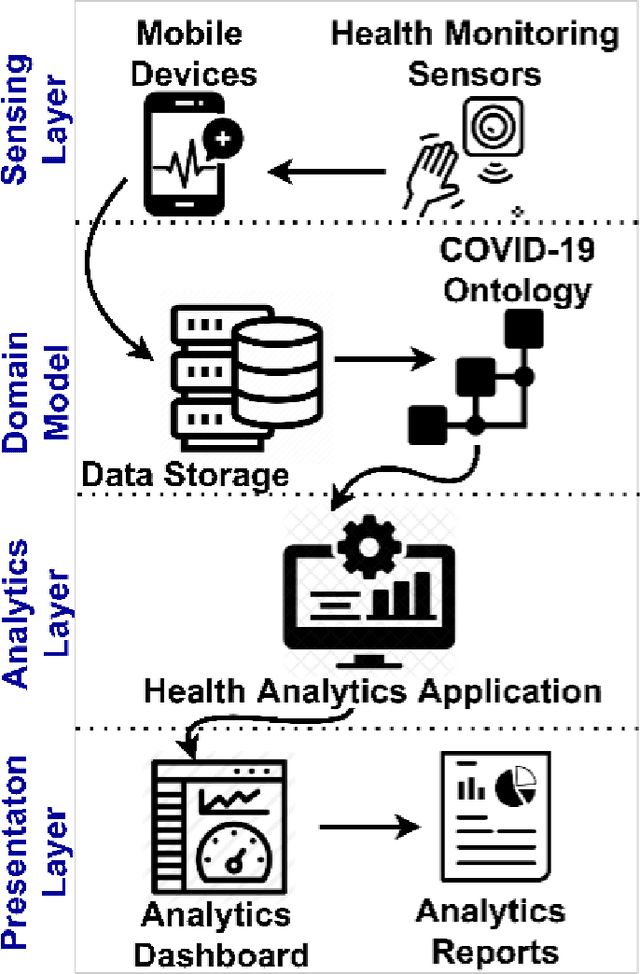
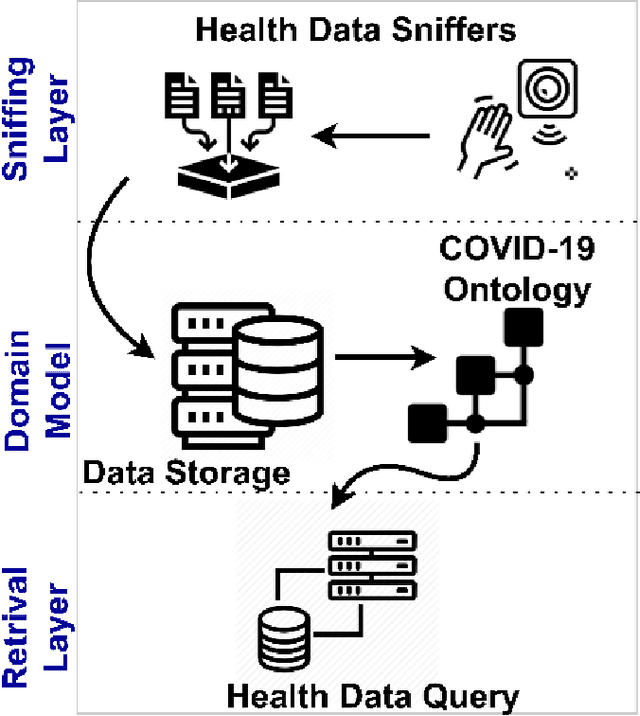
The outbreak of the SARS-CoV-2 pandemic of the new COVID-19 disease (COVID-19 for short) demands empowering existing medical, economic, and social emergency backend systems with data analytics capabilities. An impediment in taking advantages of data analytics in these systems is the lack of a unified framework or reference model. Ontologies are highlighted as a promising solution to bridge this gap by providing a formal representation of COVID-19 concepts such as symptoms, infections rate, contact tracing, and drug modelling. Ontology-based solutions enable the integration of diverse data sources that leads to a better understanding of pandemic data, management of smart lockdowns by identifying pandemic hotspots, and knowledge-driven inference, reasoning, and recommendations to tackle surrounding issues.