 Add to Chrome
 Add to Firefox
 Add to Edge
Stock Price Prediction
Stock Price Prediction is the task of forecasting future stock prices based on historical data and various market indicators. It involves using statistical models and machine learning algorithms to analyze financial data and make predictions about the future performance of a stock. The goal of stock price prediction is to help investors make informed investment decisions by providing a forecast of future stock prices.
Papers and Code
Impact of LLMs news Sentiment Analysis on Stock Price Movement Prediction
Jan 22, 2026
This paper addresses stock price movement prediction by leveraging LLM-based news sentiment analysis. Earlier works have largely focused on proposing and assessing sentiment analysis models and stock movement prediction methods, however, separately. Although promising results have been achieved, a clear and in-depth understanding of the benefit of the news sentiment to this task, as well as a comprehensive assessment of different architecture types in this context, is still lacking. Herein, we conduct an evaluation study that compares 3 different LLMs, namely, DeBERTa, RoBERTa and FinBERT, for sentiment-driven stock prediction. Our results suggest that DeBERTa outperforms the other two models with an accuracy of 75% and that an ensemble model that combines the three models can increase the accuracy to about 80%. Also, we see that sentiment news features can benefit (slightly) some stock market prediction models, i.e., LSTM-, PatchTST- and tPatchGNN-based classifiers and PatchTST- and TimesNet-based regression tasks models.

Stock Market Price Prediction using Neural Prophet with Deep Neural Network
Jan 08, 2026Stock market price prediction is a significant interdisciplinary research domain that depends at the intersection of finance, statistics, and economics. Forecasting Accurately predicting stock prices has always been a focal point for various researchers. However, existing statistical approaches for time-series prediction often fail to effectively forecast the probability range of future stock prices. Hence, to solve this problem, the Neural Prophet with a Deep Neural Network (NP-DNN) is proposed to predict stock market prices. The preprocessing technique used in this research is Z-score normalization, which normalizes stock price data by removing scale differences, making patterns easier to detect. Missing value imputation fills gaps in historical data, enhancing the models use of complete information for more accurate predictions. The Multi-Layer Perceptron (MLP) learns complex nonlinear relationships among stock market prices and extracts hidden patterns from the input data, thereby creating meaningful feature representations for better prediction accuracy. The proposed NP-DNN model achieved an accuracy of 99.21% compared with other approaches using the Fused Large Language Model. Keywords: deep neural network, forecasting stock prices, multi-layer perceptron, neural prophet, stock market price prediction.
Adaptive Financial Sentiment Analysis for NIFTY 50 via Instruction-Tuned LLMs , RAG and Reinforcement Learning Approaches
Dec 24, 2025Financial sentiment analysis plays a crucial role in informing investment decisions, assessing market risk, and predicting stock price trends. Existing works in financial sentiment analysis have not considered the impact of stock prices or market feedback on sentiment analysis. In this paper, we propose an adaptive framework that integrates large language models (LLMs) with real-world stock market feedback to improve sentiment classification in the context of the Indian stock market. The proposed methodology fine-tunes the LLaMA 3.2 3B model using instruction-based learning on the SentiFin dataset. To enhance sentiment predictions, a retrieval-augmented generation (RAG) pipeline is employed that dynamically selects multi-source contextual information based on the cosine similarity of the sentence embeddings. Furthermore, a feedback-driven module is introduced that adjusts the reliability of the source by comparing predicted sentiment with actual next-day stock returns, allowing the system to iteratively adapt to market behavior. To generalize this adaptive mechanism across temporal data, a reinforcement learning agent trained using proximal policy optimization (PPO) is incorporated. The PPO agent learns to optimize source weighting policies based on cumulative reward signals from sentiment-return alignment. Experimental results on NIFTY 50 news headlines collected from 2024 to 2025 demonstrate that the proposed system significantly improves classification accuracy, F1-score, and market alignment over baseline models and static retrieval methods. The results validate the potential of combining instruction-tuned LLMs with dynamic feedback and reinforcement learning for robust, market-aware financial sentiment modeling.
XGBoost Forecasting of NEPSE Index Log Returns with Walk Forward Validation
Jan 13, 2026This study develops a robust machine learning framework for one-step-ahead forecasting of daily log-returns in the Nepal Stock Exchange (NEPSE) Index using the XGBoost regressor. A comprehensive feature set is engineered, including lagged log-returns (up to 30 days) and established technical indicators such as short- and medium-term rolling volatility measures and the 14-period Relative Strength Index. Hyperparameter optimization is performed using Optuna with time-series cross-validation on the initial training segment. Out-of-sample performance is rigorously assessed via walk-forward validation under both expanding and fixed-length rolling window schemes across multiple lag configurations, simulating real-world deployment and avoiding lookahead bias. Predictive accuracy is evaluated using root mean squared error, mean absolute error, coefficient of determination (R-squared), and directional accuracy on both log-returns and reconstructed closing prices. Empirical results show that the optimal configuration, an expanding window with 20 lags, outperforms tuned ARIMA and Ridge regression benchmarks, achieving the lowest log-return RMSE (0.013450) and MAE (0.009814) alongside a directional accuracy of 65.15%. While the R-squared remains modest, consistent with the noisy nature of financial returns, primary emphasis is placed on relative error reduction and directional prediction. Feature importance analysis and visual inspection further enhance interpretability. These findings demonstrate the effectiveness of gradient boosting ensembles in modeling nonlinear dynamics in volatile emerging market time series and establish a reproducible benchmark for NEPSE Index forecasting.
Gold Price Prediction Using Long Short-Term Memory and Multi-Layer Perceptron with Gray Wolf Optimizer
Dec 27, 2025The global gold market, by its fundamentals, has long been home to many financial institutions, banks, governments, funds, and micro-investors. Due to the inherent complexity and relationship between important economic and political components, accurate forecasting of financial markets has always been challenging. Therefore, providing a model that can accurately predict the future of the markets is very important and will be of great benefit to their developers. In this paper, an artificial intelligence-based algorithm for daily and monthly gold forecasting is presented. Two Long short-term memory (LSTM) networks are responsible for daily and monthly forecasting, the results of which are integrated into a Multilayer perceptrons (MLP) network and provide the final forecast of the next day prices. The algorithm forecasts the highest, lowest, and closing prices on the daily and monthly time frame. Based on these forecasts, a trading strategy for live market trading was developed, according to which the proposed model had a return of 171% in three months. Also, the number of internal neurons in each network is optimized by the Gray Wolf optimization (GWO) algorithm based on the least RMSE error. The dataset was collected between 2010 and 2021 and includes data on macroeconomic, energy markets, stocks, and currency status of developed countries. Our proposed LSTM-MLP model predicted the daily closing price of gold with the Mean absolute error (MAE) of $ 0.21 and the next month's price with $ 22.23.
StockBot 2.0: Vanilla LSTMs Outperform Transformer-based Forecasting for Stock Prices
Jan 01, 2026Accurate forecasting of financial markets remains a long-standing challenge due to complex temporal and often latent dependencies, non-linear dynamics, and high volatility. Building on our earlier recurrent neural network framework, we present an enhanced StockBot architecture that systematically evaluates modern attention-based, convolutional, and recurrent time-series forecasting models within a unified experimental setting. While attention-based and transformer-inspired models offer increased modeling flexibility, extensive empirical evaluation reveals that a carefully constructed vanilla LSTM consistently achieves superior predictive accuracy and more stable buy/sell decision-making when trained under a common set of default hyperparameters. These results highlight the robustness and data efficiency of recurrent sequence models for financial time-series forecasting, particularly in the absence of extensive hyperparameter tuning or the availability of sufficient data when discretized to single-day intervals. Additionally, these results underscore the importance of architectural inductive bias in data-limited market prediction tasks.
Adaptive Weighted Genetic Algorithm-Optimized SVR for Robust Long-Term Forecasting of Global Stock Indices for investment decisions
Dec 17, 2025Long-term price forecasting remains a formidable challenge due to the inherent uncertainty over the long term, despite some success in short-term predictions. Nonetheless, accurate long-term forecasts are essential for high-net-worth individuals, institutional investors, and traders. The proposed improved genetic algorithm-optimized support vector regression (IGA-SVR) model is specifically designed for long-term price prediction of global indices. The performance of the IGA-SVR model is rigorously evaluated and compared against the state-of-the-art baseline models, the Long Short-Term Memory (LSTM), and the forward-validating genetic algorithm optimized support vector regression (OGA-SVR). Extensive testing was conducted on the five global indices, namely Nifty, Dow Jones Industrial Average (DJI), DAX Performance Index (DAX), Nikkei 225 (N225), and Shanghai Stock Exchange Composite Index (SSE) from 2021 to 2024 of daily price prediction up to a year. Overall, the proposed IGA-SVR model achieved a reduction in MAPE by 19.87% compared to LSTM and 50.03% compared to OGA-SVR, demonstrating its superior performance in long-term daily price forecasting of global indices. Further, the execution time for LSTM was approximately 20 times higher than that of IGA-SVR, highlighting the high accuracy and computational efficiency of the proposed model. The genetic algorithm selects the optimal hyperparameters of SVR by minimizing the arithmetic mean of the Mean Absolute Percentage Error (MAPE) calculated over the full training dataset and the most recent five years of training data. This purposefully designed training methodology adjusts for recent trends while retaining long-term trend information, thereby offering enhanced generalization compared to the LSTM and rolling-forward validation approach employed by OGA-SVR, which forgets long-term trends and suffers from recency bias.
Stock Pattern Assistant (SPA): A Deterministic and Explainable Framework for Structural Price Run Extraction and Event Correlation in Equity Markets
Dec 17, 2025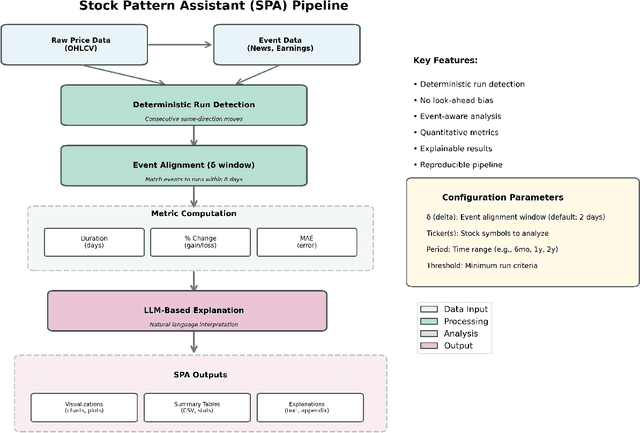
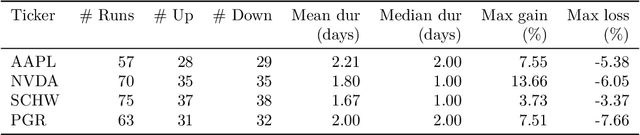
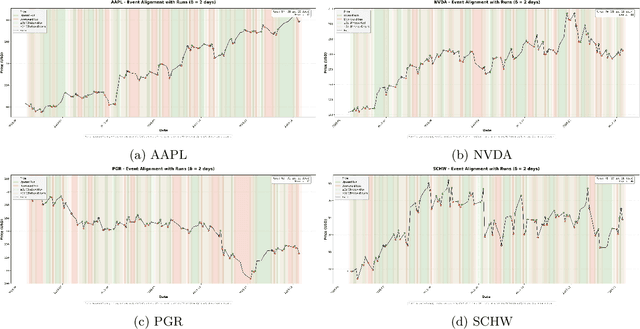

Understanding how prices evolve over time often requires peeling back the layers of market noise to identify clear, structural behavior. Many of the tools commonly used for this purpose technical indicators, chart heuristics, or even sophisticated predictive models leave important questions unanswered. Technical indicators depend on platform-specific rules, and predictive systems typically offer little in terms of explanation. In settings that demand transparency or auditability, this poses a significant challenge. We introduce the Stock Pattern Assistant (SPA), a deterministic framework designed to extract monotonic price runs, attach relevant public events through a symmetric correlation window, and generate explanations that are factual, historical, and guardrailed. SPA relies only on daily OHLCV data and a normalized event stream, making the pipeline straight-forward to audit and easy to reproduce. To illustrate SPA's behavior in practice, we evaluate it across four equities-AAPL, NVDA, SCHW, and PGR-chosen to span a range of volatility regimes and sector characteristics. Although the evaluation period is modest, the results demonstrate how SPA consistently produces stable structural decompositions and contextual narratives. Ablation experiments further show how deterministic segmentation, event alignment, and constrained explanation each contribute to interpretability. SPA is not a forecasting system, nor is it intended to produce trading signals. Its value lies in offering a transparent, reproducible view of historical price structure that can complement analyst workflows, risk reviews, and broader explainable-AI pipelines.
Interpretable Deep Learning for Stock Returns: A Consensus-Bottleneck Asset Pricing Model
Dec 23, 2025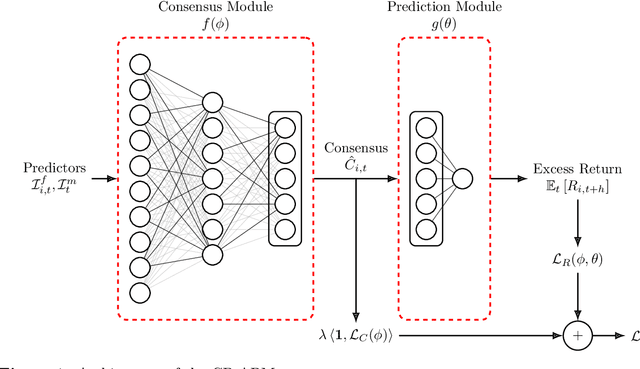
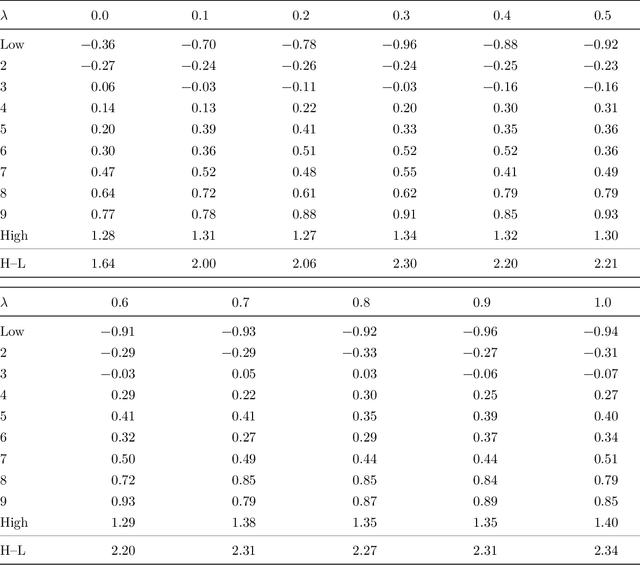
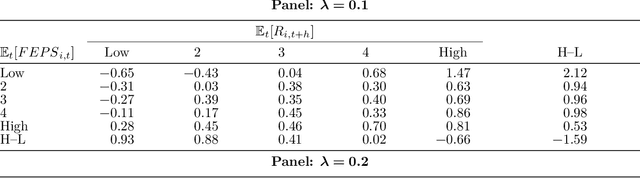
We introduce the Consensus-Bottleneck Asset Pricing Model (CB-APM), a partially interpretable neural network that replicates the reasoning processes of sell-side analysts by capturing how dispersed investor beliefs are compressed into asset prices through a consensus formation process. By modeling this "bottleneck" to summarize firm- and macro-level information, CB-APM not only predicts future risk premiums of U.S. equities but also links belief aggregation to expected returns in a structurally interpretable manner. The model improves long-horizon return forecasts and outperforms standard deep learning approaches in both predictive accuracy and explanatory power. Comprehensive portfolio analyses show that CB-APM's out-of-sample predictions translate into economically meaningful payoffs, with monotonic return differentials and stable long-short performance across regularization settings. Empirically, CB-APM leverages consensus as a regularizer to amplify long-horizon predictability and yields interpretable consensus-based components that clarify how information is priced in returns. Moreover, regression and Gibbons-Ross-Shanken (GRS)-based pricing diagnostics reveal that the learned consensus representations capture priced variation only partially spanned by traditional factor models, demonstrating that CB-APM uncovers belief-driven structure in expected returns beyond the canonical factor space. Overall, CB-APM provides an interpretable and empirically grounded framework for understanding belief-driven return dynamics.
A Hybrid Model for Stock Market Forecasting: Integrating News Sentiment and Time Series Data with Graph Neural Networks
Dec 09, 2025Stock market prediction is a long-standing challenge in finance, as accurate forecasts support informed investment decisions. Traditional models rely mainly on historical prices, but recent work shows that financial news can provide useful external signals. This paper investigates a multimodal approach that integrates companies' news articles with their historical stock data to improve prediction performance. We compare a Graph Neural Network (GNN) model with a baseline LSTM model. Historical data for each company is encoded using an LSTM, while news titles are embedded with a language model. These embeddings form nodes in a heterogeneous graph, and GraphSAGE is used to capture interactions between articles, companies, and industries. We evaluate two targets: a binary direction-of-change label and a significance-based label. Experiments on the US equities and Bloomberg datasets show that the GNN outperforms the LSTM baseline, achieving 53% accuracy on the first target and a 4% precision gain on the second. Results also indicate that companies with more associated news yield higher prediction accuracy. Moreover, headlines contain stronger predictive signals than full articles, suggesting that concise news summaries play an important role in short-term market reactions.
* 11 pages, 6 figures. Published in the Proceedings of the 5th International Conference on Artificial Intelligence Research (ICAIR 2025). Published version available at: https://papers.academic-conferences.org/index.php/icair/article/view/4294