 Add to Chrome
 Add to Firefox
 Add to Edge
Anomaly Detection In Network Traffic Using Recurrent Neural Networks
Papers and Code
Big data analysis and distributed deep learning for next-generation intrusion detection system optimization
Sep 28, 2022
With the growing use of information technology in all life domains, hacking has become more negatively effective than ever before. Also with developing technologies, attacks numbers are growing exponentially every few months and become more sophisticated so that traditional IDS becomes inefficient detecting them. This paper proposes a solution to detect not only new threats with higher detection rate and lower false positive than already used IDS, but also it could detect collective and contextual security attacks. We achieve those results by using Networking Chatbot, a deep recurrent neural network: Long Short Term Memory (LSTM) on top of Apache Spark Framework that has an input of flow traffic and traffic aggregation and the output is a language of two words, normal or abnormal. We propose merging the concepts of language processing, contextual analysis, distributed deep learning, big data, anomaly detection of flow analysis. We propose a model that describes the network abstract normal behavior from a sequence of millions of packets within their context and analyzes them in near real-time to detect point, collective and contextual anomalies. Experiments are done on MAWI dataset, and it shows better detection rate not only than signature IDS, but also better than traditional anomaly IDS. The experiment shows lower false positive, higher detection rate and better point anomalies detection. As for prove of contextual and collective anomalies detection, we discuss our claim and the reason behind our hypothesis. But the experiment is done on random small subsets of the dataset because of hardware limitations, so we share experiment and our future vision thoughts as we wish that full prove will be done in future by other interested researchers who have better hardware infrastructure than ours.

Deep Sequence Modeling for Anomalous ISP Traffic Prediction
May 03, 2022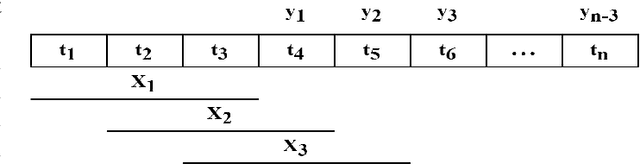
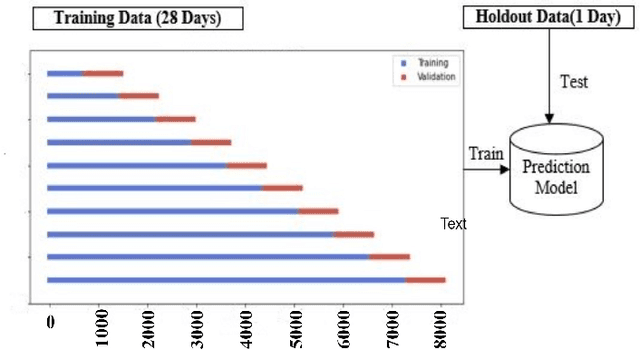
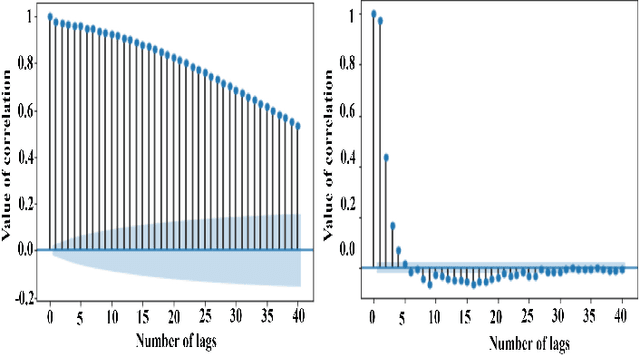
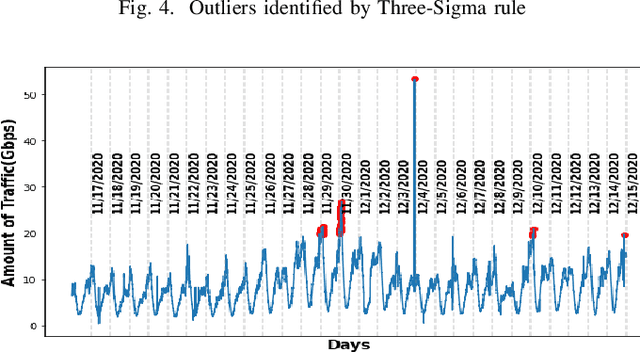
Internet traffic in the real world is susceptible to various external and internal factors which may abruptly change the normal traffic flow. Those unexpected changes are considered outliers in traffic. However, deep sequence models have been used to predict complex IP traffic, but their comparative performance for anomalous traffic has not been studied extensively. In this paper, we investigated and evaluated the performance of different deep sequence models for anomalous traffic prediction. Several deep sequences models were implemented to predict real traffic without and with outliers and show the significance of outlier detection in real-world traffic prediction. First, two different outlier detection techniques, such as the Three-Sigma rule and Isolation Forest, were applied to identify the anomaly. Second, we adjusted those abnormal data points using the Backward Filling technique before training the model. Finally, the performance of different models was compared for abnormal and adjusted traffic. LSTM_Encoder_Decoder (LSTM_En_De) is the best prediction model in our experiment, reducing the deviation between actual and predicted traffic by more than 11\% after adjusting the outliers. All other models, including Recurrent Neural Network (RNN), Long Short-Term Memory (LSTM), LSTM_En_De with Attention layer (LSTM_En_De_Atn), Gated Recurrent Unit (GRU), show better prediction after replacing the outliers and decreasing prediction error by more than 29%, 24%, 19%, and 10% respectively. Our experimental results indicate that the outliers in the data can significantly impact the quality of the prediction. Thus, outlier detection and mitigation assist the deep sequence model in learning the general trend and making better predictions.
Leveraging Evidential Deep Learning Uncertainties with Graph-based Clustering to Detect Anomalies
Jul 04, 2021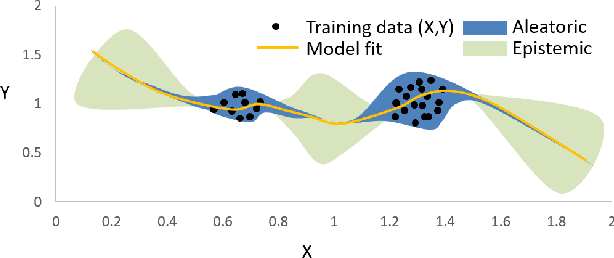
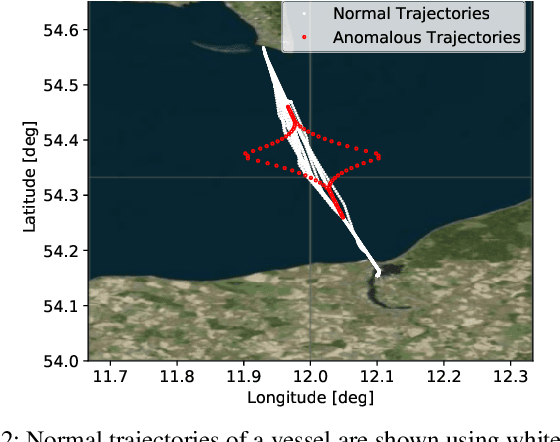
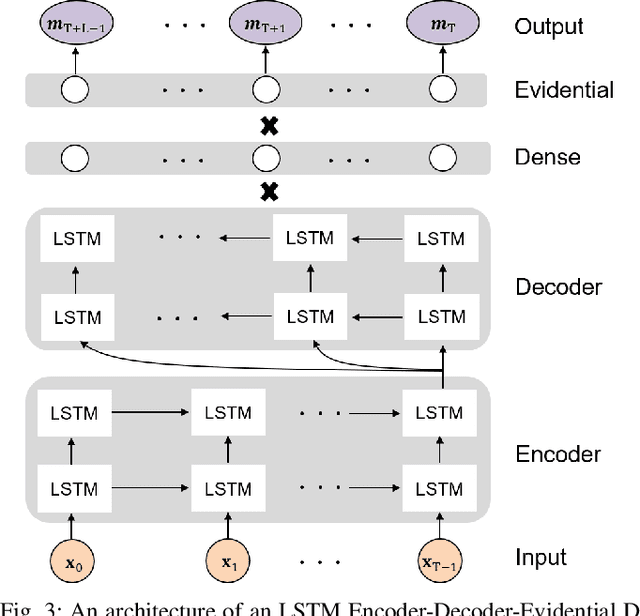
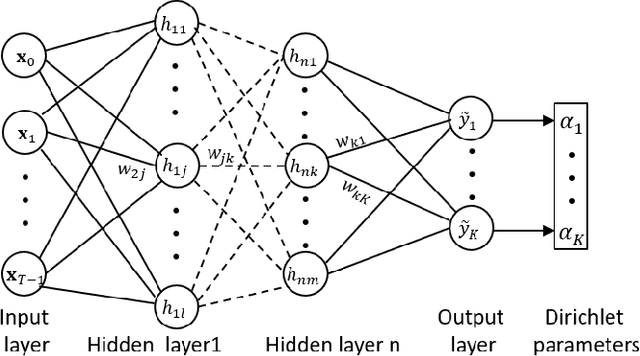
Understanding and representing traffic patterns are key to detecting anomalies in the maritime domain. To this end, we propose a novel graph-based traffic representation and association scheme to cluster trajectories of vessels using automatic identification system (AIS) data. We utilize the (un)clustered data to train a recurrent neural network (RNN)-based evidential regression model, which can predict a vessel's trajectory at future timesteps with its corresponding prediction uncertainty. This paper proposes the usage of a deep learning (DL)-based uncertainty estimation in detecting maritime anomalies, such as unusual vessel maneuvering. Furthermore, we utilize the evidential deep learning classifiers to detect unusual turns of vessels and the loss of AIS signal using predicted class probabilities with associated uncertainties. Our experimental results suggest that using graph-based clustered data improves the ability of the DL models to learn the temporal-spatial correlation of data and associated uncertainties. Using different AIS datasets and experiments, we demonstrate that the estimated prediction uncertainty yields fundamental information for the detection of traffic anomalies in the maritime and, possibly in other domains.
Intrusion Detection System in Smart Home Network Using Bidirectional LSTM and Convolutional Neural Networks Hybrid Model
May 27, 2021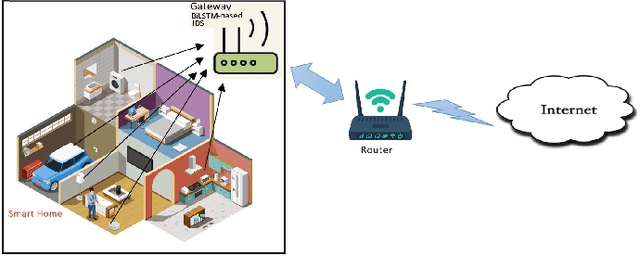
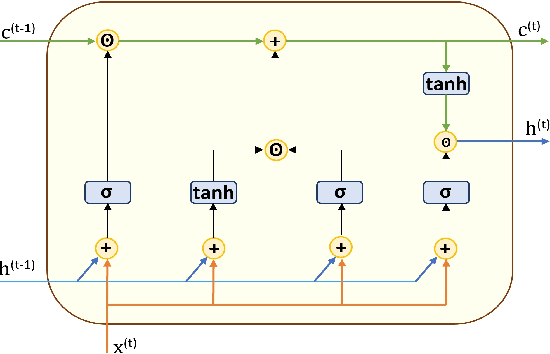
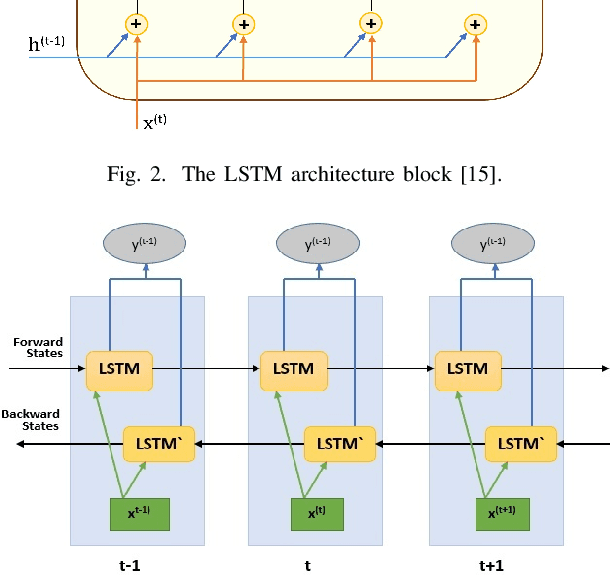
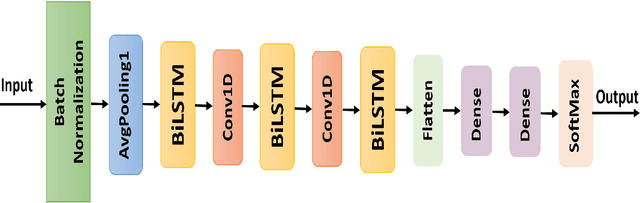
Internet of Things (IoT) allowed smart homes to improve the quality and the comfort of our daily lives. However, these conveniences introduced several security concerns that increase rapidly. IoT devices, smart home hubs, and gateway raise various security risks. The smart home gateways act as a centralized point of communication between the IoT devices, which can create a backdoor into network data for hackers. One of the common and effective ways to detect such attacks is intrusion detection in the network traffic. In this paper, we proposed an intrusion detection system (IDS) to detect anomalies in a smart home network using a bidirectional long short-term memory (BiLSTM) and convolutional neural network (CNN) hybrid model. The BiLSTM recurrent behavior provides the intrusion detection model to preserve the learned information through time, and the CNN extracts perfectly the data features. The proposed model can be applied to any smart home network gateway.
Spatial-Temporal Conv-sequence Learning with Accident Encoding for Traffic Flow Prediction
May 21, 2021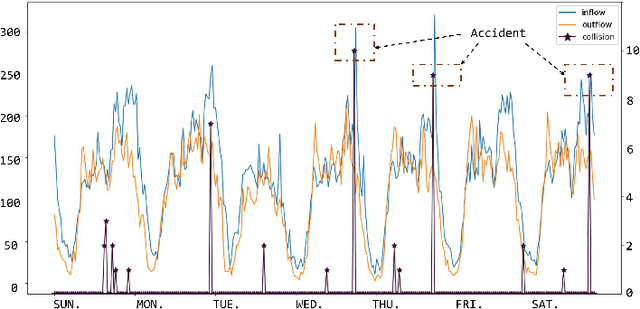
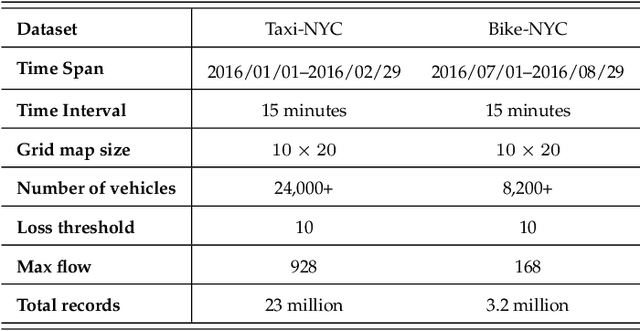
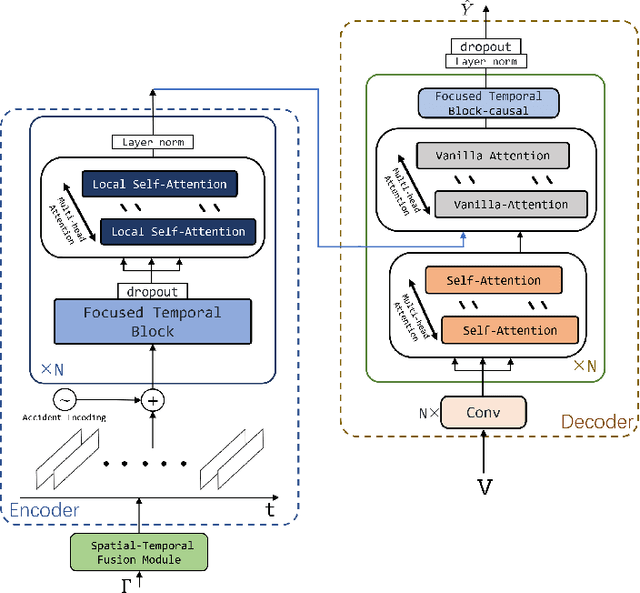
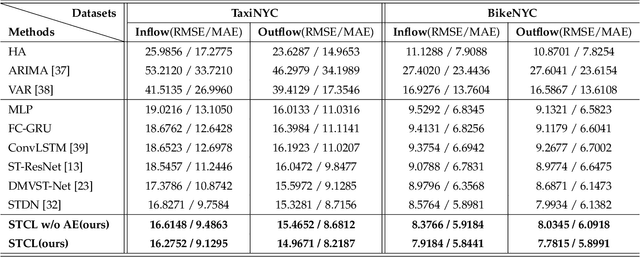
In intelligent transportation system, the key problem of traffic forecasting is how to extract the periodic temporal dependencies and complex spatial correlation. Current state-of-the-art methods for traffic flow prediction are based on graph architectures and sequence learning models, but they do not fully exploit spatial-temporal dynamic information in traffic system. Specifically, the temporal dependence of short-range is diluted by recurrent neural networks, and existing sequence model ignores local spatial information because the convolution operation uses global average pooling. Besides, there will be some traffic accidents during the transitions of objects causing congestion in the real world that trigger increased prediction deviation. To overcome these challenges, we propose the Spatial-Temporal Conv-sequence Learning (STCL), in which a focused temporal block uses unidirectional convolution to effectively capture short-term periodic temporal dependence, and a spatial-temporal fusion module is able to extract the dependencies of both interactions and decrease the feature dimensions. Moreover, the accidents features impact on local traffic congestion and position encoding is employed to detect anomalies in complex traffic situations. We conduct extensive experiments on large-scale real-world tasks and verify the effectiveness of our proposed method.
SALAD: Self-Adaptive Lightweight Anomaly Detection for Real-time Recurrent Time Series
May 04, 2021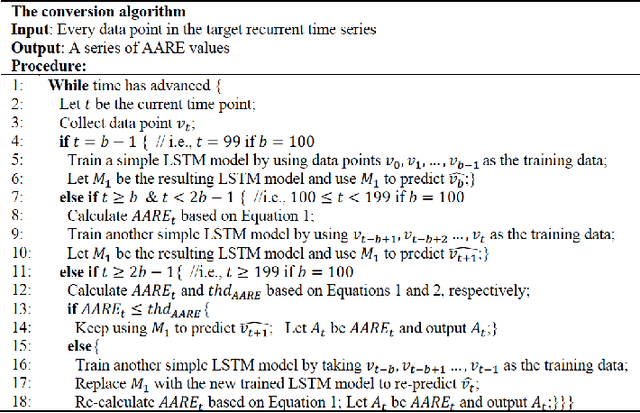
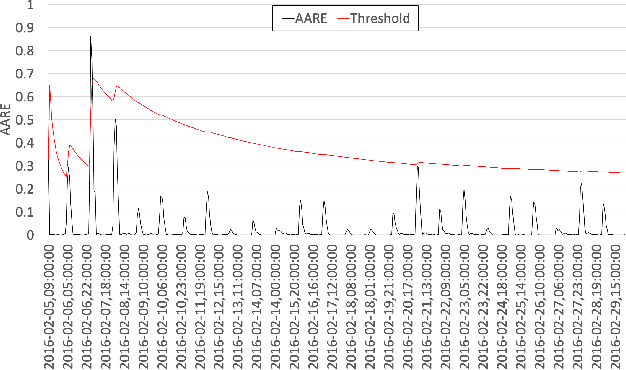
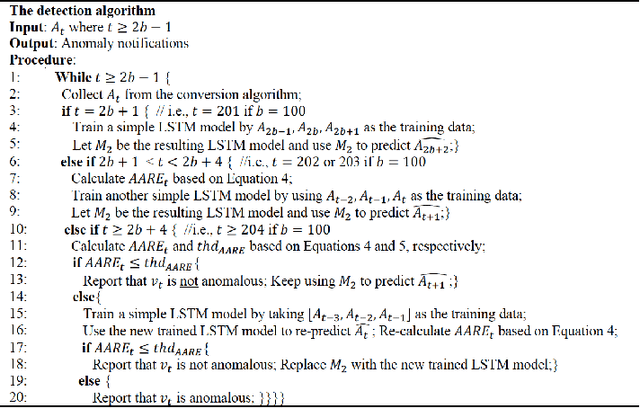
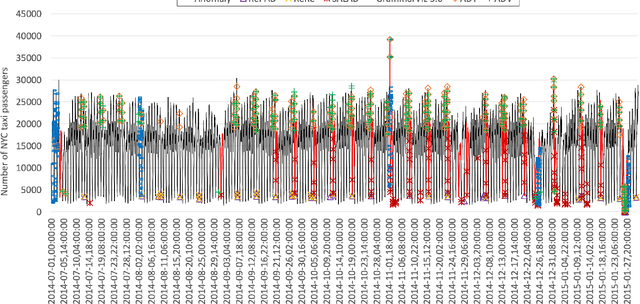
Real-world time series data often present recurrent or repetitive patterns and it is often generated in real time, such as transportation passenger volume, network traffic, system resource consumption, energy usage, and human gait. Detecting anomalous events based on machine learning approaches in such time series data has been an active research topic in many different areas. However, most machine learning approaches require labeled datasets, offline training, and may suffer from high computation complexity, consequently hindering their applicability. Providing a lightweight self-adaptive approach that does not need offline training in advance and meanwhile is able to detect anomalies in real time could be highly beneficial. Such an approach could be immediately applied and deployed on any commodity machine to provide timely anomaly alerts. To facilitate such an approach, this paper introduces SALAD, which is a Self-Adaptive Lightweight Anomaly Detection approach based on a special type of recurrent neural networks called Long Short-Term Memory (LSTM). Instead of using offline training, SALAD converts a target time series into a series of average absolute relative error (AARE) values on the fly and predicts an AARE value for every upcoming data point based on short-term historical AARE values. If the difference between a calculated AARE value and its corresponding forecast AARE value is higher than a self-adaptive detection threshold, the corresponding data point is considered anomalous. Otherwise, the data point is considered normal. Experiments based on two real-world open-source time series datasets demonstrate that SALAD outperforms five other state-of-the-art anomaly detection approaches in terms of detection accuracy. In addition, the results also show that SALAD is lightweight and can be deployed on a commodity machine.
Network Traffic Anomaly Detection Using Recurrent Neural Networks
Mar 28, 2018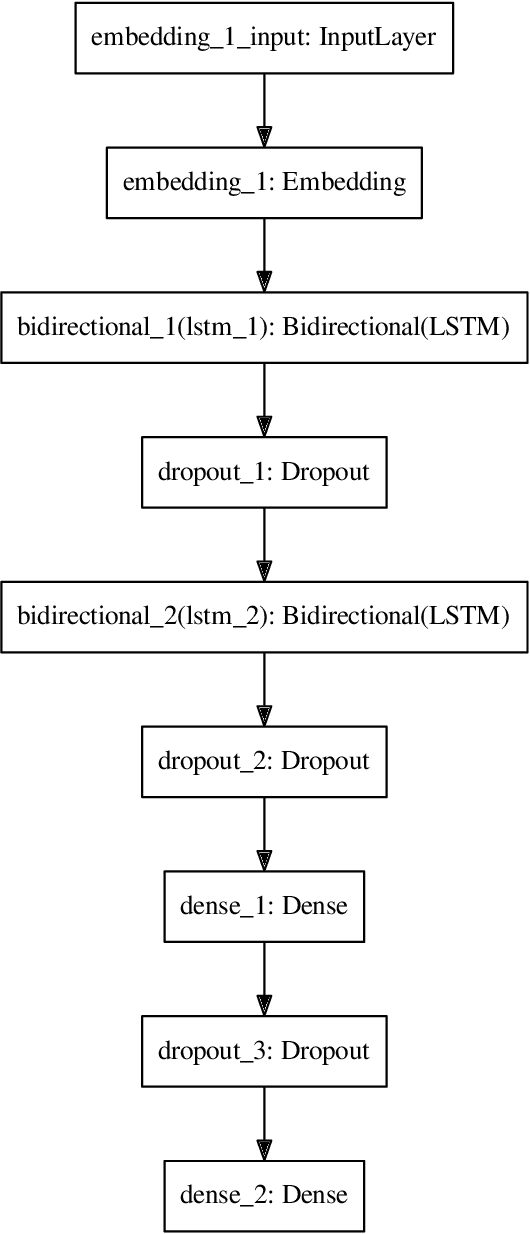
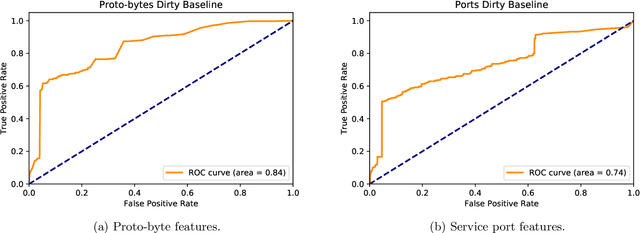
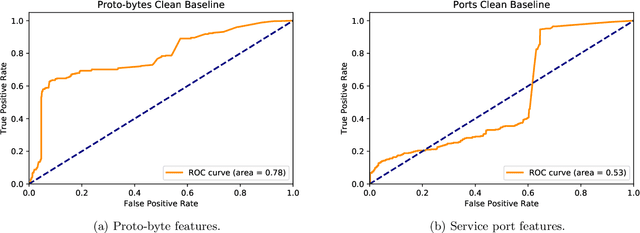
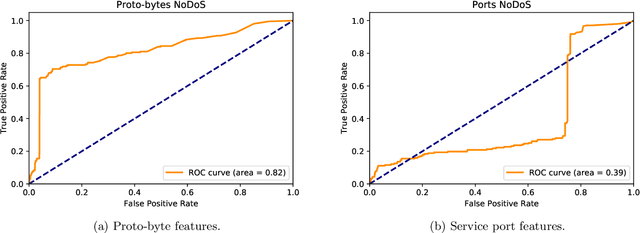
We show that a recurrent neural network is able to learn a model to represent sequences of communications between computers on a network and can be used to identify outlier network traffic. Defending computer networks is a challenging problem and is typically addressed by manually identifying known malicious actor behavior and then specifying rules to recognize such behavior in network communications. However, these rule-based approaches often generalize poorly and identify only those patterns that are already known to researchers. An alternative approach that does not rely on known malicious behavior patterns can potentially also detect previously unseen patterns. We tokenize and compress netflow into sequences of "words" that form "sentences" representative of a conversation between computers. These sentences are then used to generate a model that learns the semantic and syntactic grammar of the newly generated language. We use Long-Short-Term Memory (LSTM) cell Recurrent Neural Networks (RNN) to capture the complex relationships and nuances of this language. The language model is then used predict the communications between two IPs and the prediction error is used as a measurement of how typical or atyptical the observed communication are. By learning a model that is specific to each network, yet generalized to typical computer-to-computer traffic within and outside the network, a language model is able to identify sequences of network activity that are outliers with respect to the model. We demonstrate positive unsupervised attack identification performance (AUC 0.84) on the ISCX IDS dataset which contains seven days of network activity with normal traffic and four distinct attack patterns.
GeoTrackNet-A Maritime Anomaly Detector using Probabilistic Neural Network Representation of AIS Tracks and A Contrario Detection
Dec 02, 2019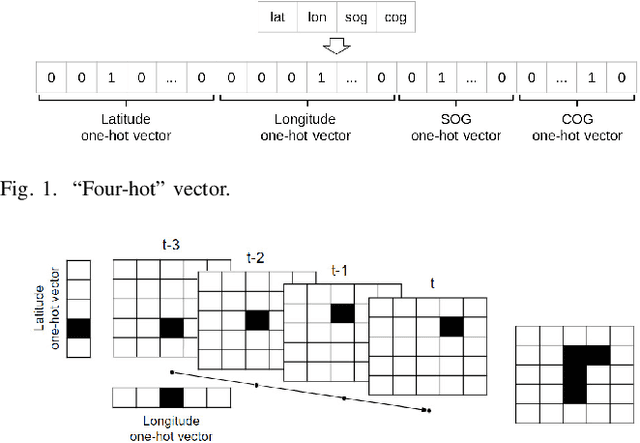
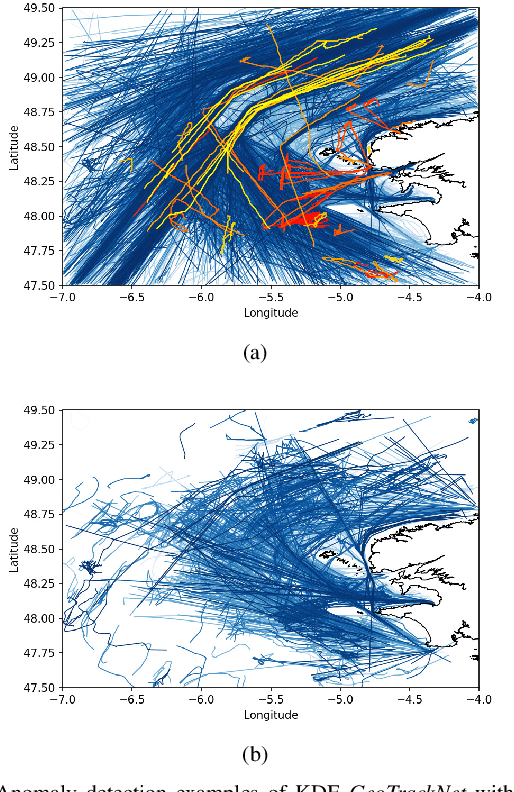
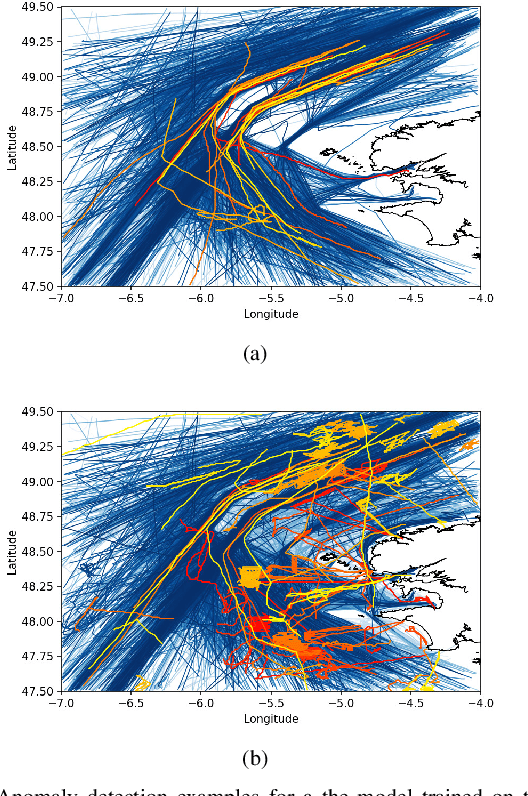
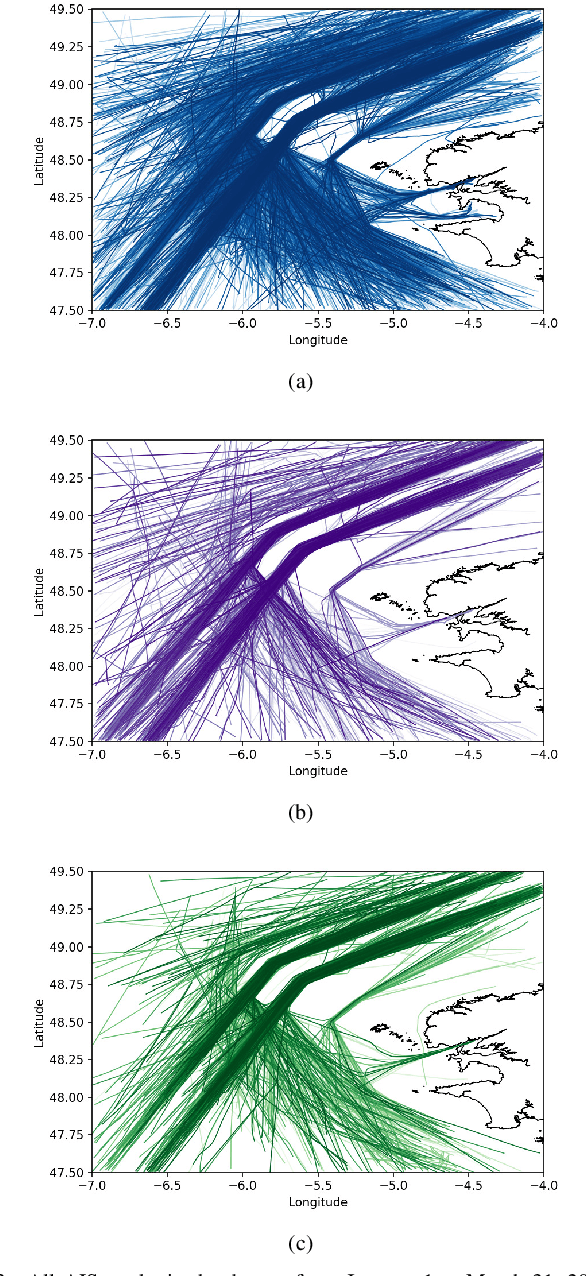
Representing maritime traffic patterns and detecting anomalies from them are key to vessel monitoring and maritime situational awareness. We propose a novel approach-referred to as GeoTrackNet-for maritime anomaly detection from AIS data streams. Our model exploits state-of-the-art neural network schemes to learn a probabilistic representation of AIS tracks, then uses a contrario detection to detect abnormal events. The neural network helps us capture complex and heterogeneous patterns in vessels' behaviors, while the a contrario detection takes into account the fact that the learned distribution may be location-dependent. Experiments on a real AIS dataset comprising more than 4.2 million AIS messages demonstrate the relevance of the proposed method. Keywords: AIS, maritime surveillance, deep learning, anomaly detection, variational recurrent neural networks, a contrario detection.
Deep RAN: A Scalable Data-driven platform to Detect Anomalies in Live Cellular Network Using Recurrent Convolutional Neural Network
Nov 10, 2019


In this paper, we propose a novel algorithm to detect anomaly in terms of Key Parameter Indicators (KPI)s over live cellular networks based on the combination of Recurrent Neural Networks (RNN), and Convolutional Neural Networks (CNN), as Recurrent Convolutional Neural Networks (R-CNN). CNN models the spatial correlations and information, whereas, RNN models the temporal correlations and information. In this paper, the studied cellular network consists of 2G, 3G, 4G, and 4.5G technologies, and the KPIs include Voice and data traffic of the cells. The data and voice traffic are extremely important for the owner of wireless networks because it is directly related to the revenue and quality of service that users experience. These traffic changes happen due to a couple of reasons: the subscriber behavior changes due to special events, making neighbor sites on-air or down, or by shifting the traffic to the other technologies, e.g. shifting the traffic from 3G to 4G. Traditionally, in order to keep the network stable, the traffic should be observed layer by layer during each interval to detect major changes in KPIs, in large scale telecommunication networks it will be too time-consuming with the low accuracy of anomaly detection. However, the proposed algorithm is capable of detecting the abnormal KPIs for each element of the network in a time-efficient and accurate manner. It observes the traffic layer trends and classifies them into 8 traffic categories: Normal, Suddenly Increasing, Gradually Increasing, Suddenly Decreasing, Gradually Decreasing, Faulty Site, New Site, and Down Site. This classification task enables the vendors and operators to detect anomalies in their live networks in order to keep the KPIs in a normal trend. The algorithm is trained and tested on the real dataset over a cellular network with more than 25000 cells.
Anomaly Detection on Graph Time Series
Nov 01, 2017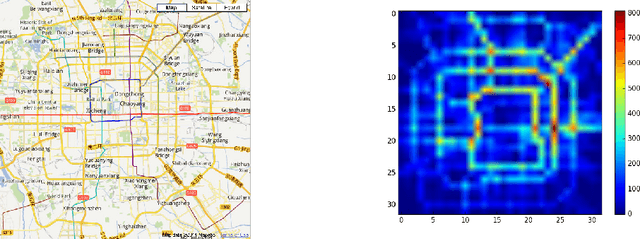
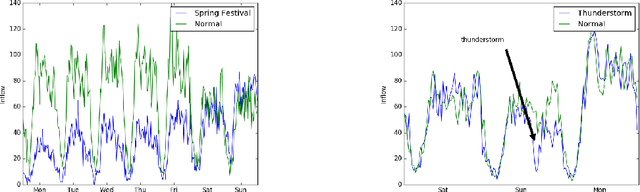
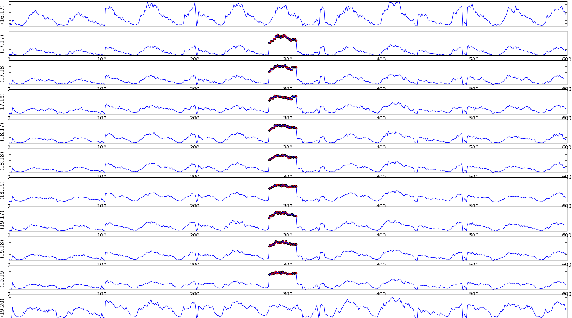
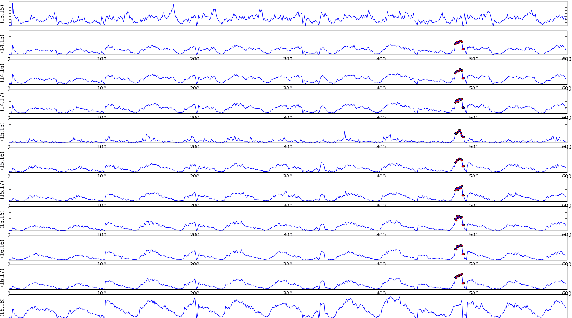
In this paper, we use variational recurrent neural network to investigate the anomaly detection problem on graph time series. The temporal correlation is modeled by the combination of recurrent neural network (RNN) and variational inference (VI), while the spatial information is captured by the graph convolutional network. In order to incorporate external factors, we use feature extractor to augment the transition of latent variables, which can learn the influence of external factors. With the target function as accumulative ELBO, it is easy to extend this model to on-line method. The experimental study on traffic flow data shows the detection capability of the proposed method.