 Add to Chrome
 Add to Firefox
 Add to Edge
When Shared Rollouts Fail in Defensive Driving Evaluation: A NAVSIM Score Basis Audit
Aug 05, 2026
Defensive driving scores are useful only when they preserve distinctions between policies that observe surrounding actors and those that do not. Re-simulation benchmarks may use reference-conditioned forgiveness, under which an agent receives credit when the logged human reference fails a compliance channel. When agent and reference share an unstable rollout transformation, this rule can propagate shared reference failures into broad compliance credit. We audit this risk in NAVSIM v2.2 original scene single-stage scoring. Under the affected documented-stack condition on the audited numerical backend, the route-blind Ignore-All probe and a route-aware actor-blind probe outrank human replay and PDM-Closed over the complete 12,146-token navtest split. A fresh installation following the public specification reproduces rollout divergence on a fixed 32-token diagnostic set. A same-source dependency stack control and an exact-input diagnostic isolate dependency-sensitive numerical behavior in the shared velocity refit. On a 450-token control pool, replacing only the solver eliminates rollout divergence and restores blind-last ordering while keeping forgiveness enabled. Thus, the numerical instability is the direct trigger. Reference-conditioned forgiveness propagates the resulting shared reference failures into compliance credit. We contribute an audit protocol requiring score basis and stack disclosure, blind probes, overwrite reporting, and rollout stability tests before using such scores for defensive driving claims.

Open-Sora 2.0: Training a Commercial-Level Video Generation Model in $200k
Mar 12, 2025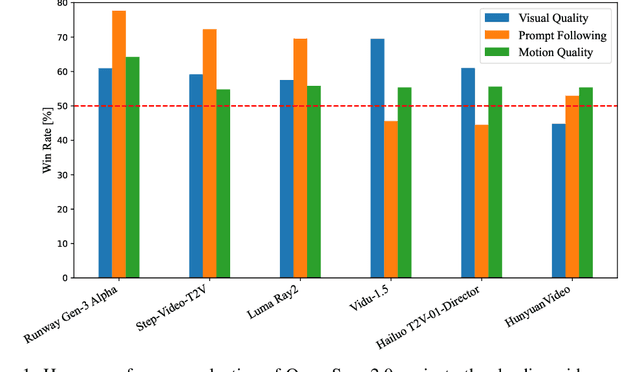
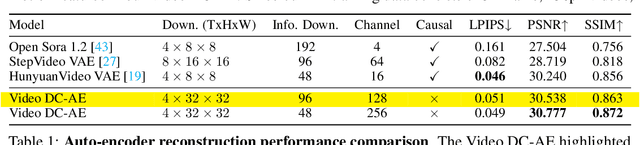
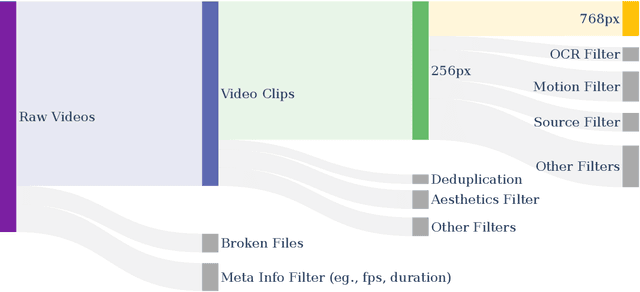

Video generation models have achieved remarkable progress in the past year. The quality of AI video continues to improve, but at the cost of larger model size, increased data quantity, and greater demand for training compute. In this report, we present Open-Sora 2.0, a commercial-level video generation model trained for only $200k. With this model, we demonstrate that the cost of training a top-performing video generation model is highly controllable. We detail all techniques that contribute to this efficiency breakthrough, including data curation, model architecture, training strategy, and system optimization. According to human evaluation results and VBench scores, Open-Sora 2.0 is comparable to global leading video generation models including the open-source HunyuanVideo and the closed-source Runway Gen-3 Alpha. By making Open-Sora 2.0 fully open-source, we aim to democratize access to advanced video generation technology, fostering broader innovation and creativity in content creation. All resources are publicly available at: https://github.com/hpcaitech/Open-Sora.