 Add to Chrome
 Add to Firefox
 Add to Edge
From Failure Taxonomy to Intervention: A Diagnostic Methodology for Industry-Scale AVLM in Video and Live-Streaming Platform Moderation
Jun 29, 2026
Industry-scale video and live-streaming moderation imposes requirements that are difficult to satisfy with generic pretrained public models or external APIs, including adaptation to platform-specific data distributions, policy-specific objectives, and product-level safety constraints. As a result, platforms must undertake internal model development, naturally turning to shared public research for guidance. However, existing multimodal foundation-model studies primarily report architectures, training recipes, data scaling strategies, and benchmark results, but provide less systematic guidance on how failures should be localized and translated into targeted model-development interventions. Interventions are essential because deployment failures are rarely self-explanatory. Similar failures can originate from different causes. Without targeted interventions, improvement reduces to heuristic trial-and-error, where benchmark improvements are weakly attributable, and failures are difficult to trace to their underlying causes. To address this gap, we present a diagnostic methodology for industry-scale Audio-Visual-Language Models AVLM development. The methodology maps model failures into a taxonomy of observable failure signatures and links each class of failure to an intervention space. We instantiate this methodology across the development and alignment lifecycle of an AVLM foundation model for a large-scale video and live-streaming platform. The resulting system supports over 100 regions and is designed for noisy, ambiguous, and highly diverse content drawn from global platform traffic.

Addressing Training Bias via Automated Image Annotation
Oct 10, 2018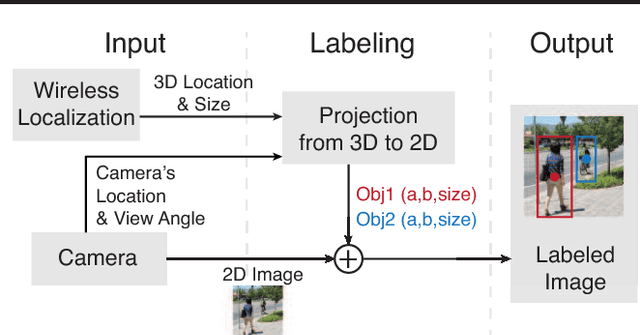
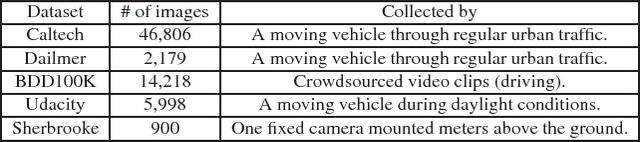
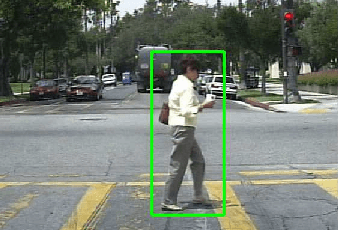

Build accurate DNN models requires training on large labeled, context specific datasets, especially those matching the target scenario. We believe advances in wireless localization, working in unison with cameras, can produce automated annotation of targets on images and videos captured in the wild. Using pedestrian and vehicle detection as examples, we demonstrate the feasibility, benefits, and challenges of an automatic image annotation system. Our work calls for new technical development on passive localization, mobile data analytics, and error-resilient ML models, as well as design issues in user privacy policies.