 Add to Chrome
 Add to Firefox
 Add to Edge
CodeCircuit: Toward Inferring LLM-Generated Code Correctness via Attribution Graphs
Feb 06, 2026
Current paradigms for code verification rely heavily on external mechanisms-such as execution-based unit tests or auxiliary LLM judges-which are often labor-intensive or limited by the judging model's own capabilities. This raises a fundamental, yet unexplored question: Can an LLM's functional correctness be assessed purely from its internal computational structure? Our primary objective is to investigate whether the model's neural dynamics encode internally decodable signals that are predictive of logical validity during code generation. Inspired by mechanistic interpretability, we propose to treat code verification as a mechanistic diagnostic task, mapping the model's explicit algorithmic trajectory into line-level attribution graphs. By decomposing complex residual flows, we aim to identify the structural signatures that distinguish sound reasoning from logical failure within the model's internal circuits. Analysis across Python, C++, and Java confirms that intrinsic correctness signals are robust across diverse syntaxes. Topological features from these internal graphs predict correctness more reliably than surface heuristics and enable targeted causal interventions to fix erroneous logic. These findings establish internal introspection as a decodable property for verifying generated code. Our code is at https:// github.com/bruno686/CodeCircuit.

Understanding Embedding Scaling in Collaborative Filtering
Sep 19, 2025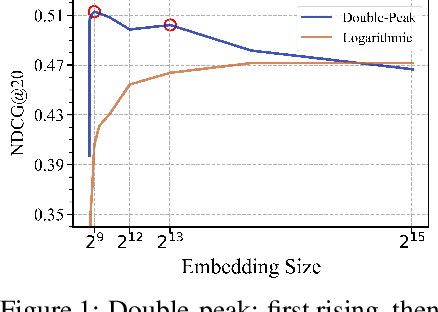
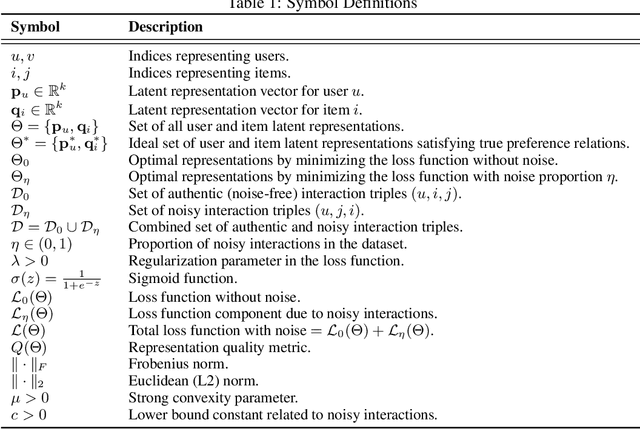
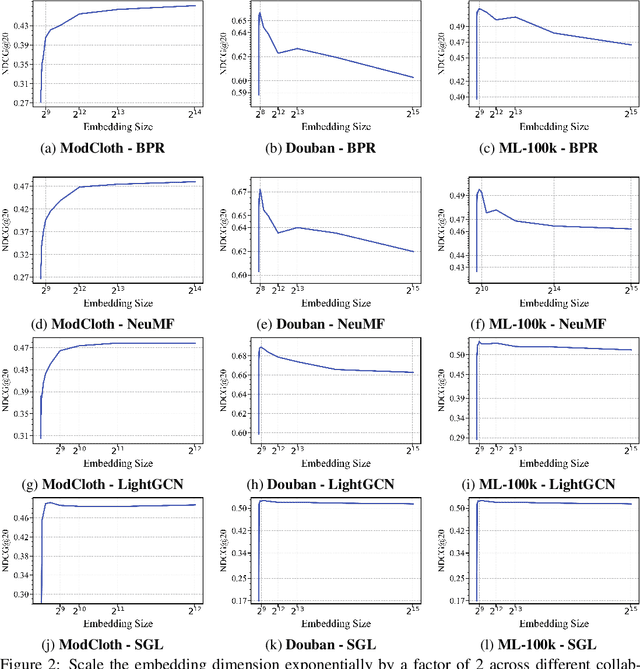
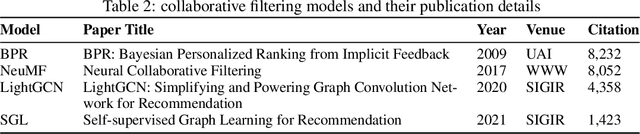
Scaling recommendation models into large recommendation models has become one of the most widely discussed topics. Recent efforts focus on components beyond the scaling embedding dimension, as it is believed that scaling embedding may lead to performance degradation. Although there have been some initial observations on embedding, the root cause of their non-scalability remains unclear. Moreover, whether performance degradation occurs across different types of models and datasets is still an unexplored area. Regarding the effect of embedding dimensions on performance, we conduct large-scale experiments across 10 datasets with varying sparsity levels and scales, using 4 representative classical architectures. We surprisingly observe two novel phenomenon: double-peak and logarithmic. For the former, as the embedding dimension increases, performance first improves, then declines, rises again, and eventually drops. For the latter, it exhibits a perfect logarithmic curve. Our contributions are threefold. First, we discover two novel phenomena when scaling collaborative filtering models. Second, we gain an understanding of the underlying causes of the double-peak phenomenon. Lastly, we theoretically analyze the noise robustness of collaborative filtering models, with results matching empirical observations.