 Add to Chrome
 Add to Firefox
 Add to Edge
Behavioral and Representational Evidence of Binomial Ordering Preferences in Large Language Models
Jun 19, 2026
Large language models (LLMs) can readily reproduce conventional expressions, yet their ability to model gradient frequency distributions remains underexplored. We investigate this using linguistic binomials, such as men and women, where both word permutations are grammatically valid but exhibit distinct, cross-linguistic variations in conventionality. We formalize binomial ordering as a distributional alignment problem, and construct a multilingual dataset of 600 binomial pairs across 8 languages. With categorical and distributional metrics, we measure and compare the corpus-derived preferences with model-induced ordering probabilities of 6 open-weight LLMs. While models often behaviorally recover the dominant corpus-preferred order, particularly for strongly conventionalized pairs, they align less well with the exact corpus preference distributions. This suggests that apparent directional order overstates how faithfully LLMs capture the statistical nuances of language use. Sparse probing verifies that the concept of preference strength is partially encoded among middle-to-late layers, and steering along probe-derived directions alters model-induced ordering distributions, demonstrating that the statistical behavioral preference of LLMs can be mechanistically measured and manipulated via internal representations.

Combined optimization ghost imaging based on random speckle field
Mar 06, 2024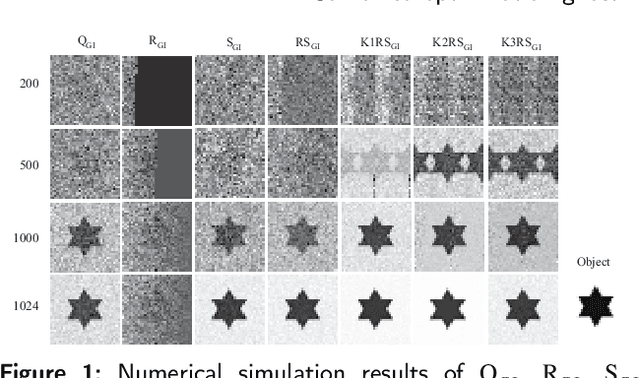
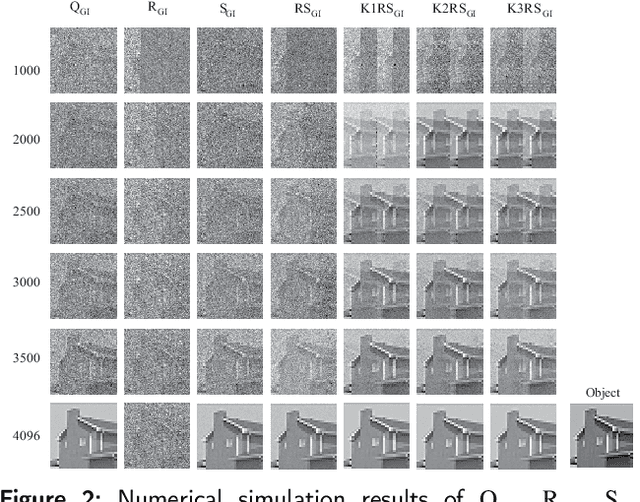
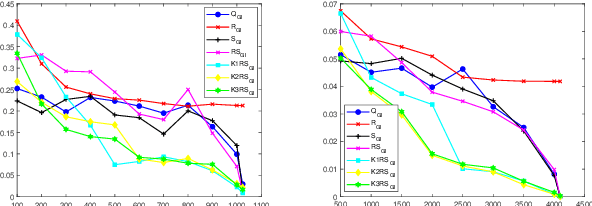
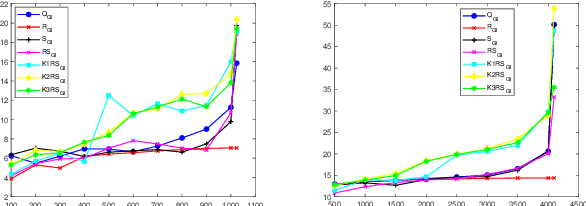
Ghost imaging is a non local imaging technology, which can obtain target information by measuring the second-order intensity correlation between the reference light field and the target detection light field. However, the current imaging environment requires a large number of measurement data, and the imaging results also have the problems of low image resolution and long reconstruction time. Therefore, using orthogonal methods such as QR decomposition, a variety of optimization methods for speckle patterns are designed combined with Kronecker product,which can help to shorten the imaging time, improve the imaging quality and image noise resistance.