 Add to Chrome
 Add to Firefox
 Add to Edge
Transferable Expertise for Autonomous Agents via Real-World Case-Based Learning
Apr 14, 2026
LLM-based autonomous agents perform well on general reasoning tasks but still struggle to reliably use task structure, key constraints, and prior experience in complex real-world settings. We propose a case-based learning framework that converts experience from past tasks into reusable knowledge assets, allowing agents to transfer prior case experience to new tasks and perform more structured analysis. Unlike methods based mainly on pretrained knowledge or static prompts, our framework emphasizes extracting and reusing task-relevant knowledge, analytical prompts, and operational skills from real cases. We evaluate the method on a unified benchmark of six complex task categories and compare it with Zero-Shot, Few-Shot, Checklist Prompt, and Rule Memory baselines. Results show that our method achieves consistently strong performance across all tasks and matches or outperforms the best baseline in every case, with especially clear gains on more complex tasks. Further analysis shows that the advantage of case-based learning increases with task complexity, and that practical knowledge acquired by one agent can be reused by others. These findings suggest that case-based learning offers a promising path for building professional agents for real-world work.

A Safety-Oriented Self-Learning Algorithm for Autonomous Driving: Evolution Starting from a Basic Model
Aug 22, 2024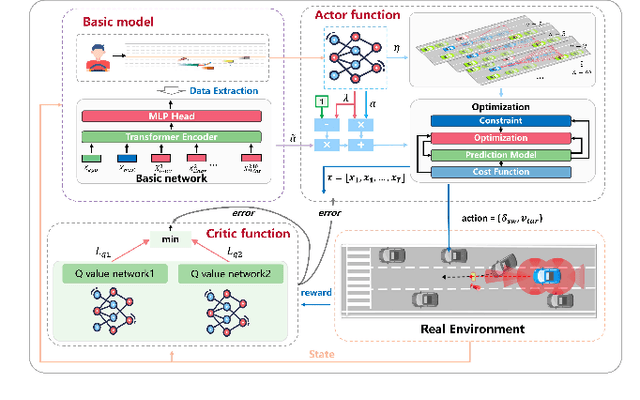
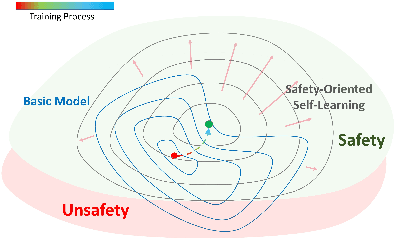
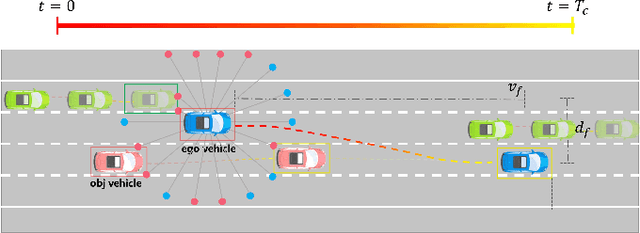
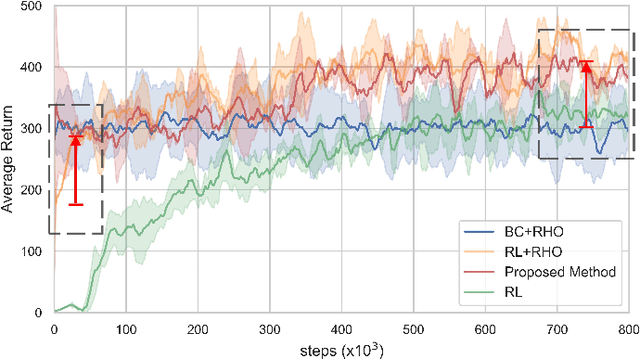
Autonomous driving vehicles with self-learning capabilities are expected to evolve in complex environments to improve their ability to cope with different scenarios. However, most self-learning algorithms suffer from low learning efficiency and lacking safety, which limits their applications. This paper proposes a safety-oriented self-learning algorithm for autonomous driving, which focuses on how to achieve evolution from a basic model. Specifically, a basic model based on the transformer encoder is designed to extract and output policy features from a small number of demonstration trajectories. To improve the learning efficiency, a policy mixed approach is developed. The basic model provides initial values to improve exploration efficiency, and the self-learning algorithm enhances the adaptability and generalization of the model, enabling continuous improvement without external intervention. Finally, an actor approximator based on receding horizon optimization is designed considering the constraints of the environmental input to ensure safety. The proposed method is verified in a challenging mixed traffic environment with pedestrians and vehicles. Simulation and real-vehicle test results show that the proposed method can safely and efficiently learn appropriate autonomous driving behaviors. Compared reinforcement learning and behavior cloning methods, it can achieve comprehensive improvement in learning efficiency and performance under the premise of ensuring safety.