 Add to Chrome
 Add to Firefox
 Add to Edge
APPLV: Adaptive Planner Parameter Learning from Vision-Language-Action Model
Mar 09, 2026
Autonomous navigation in highly constrained environments remains challenging for mobile robots. Classical navigation approaches offer safety assurances but require environment-specific parameter tuning; end-to-end learning bypasses parameter tuning but struggles with precise control in constrained spaces. To this end, recent robot learning approaches automate parameter tuning while retaining classical systems' safety, yet still face challenges in generalizing to unseen environments. Recently, Vision-Language-Action (VLA) models have shown promise by leveraging foundation models' scene understanding capabilities, but still struggle with precise control and inference latency in navigation tasks. In this paper, we propose Adaptive Planner Parameter Learning from Vision-Language-Action Model (\textsc{applv}). Unlike traditional VLA models that directly output actions, \textsc{applv} leverages pre-trained vision-language models with a regression head to predict planner parameters that configure classical planners. We develop two training strategies: supervised learning fine-tuning from collected navigation trajectories and reinforcement learning fine-tuning to further optimize navigation performance. We evaluate \textsc{applv} across multiple motion planners on the simulated Benchmark Autonomous Robot Navigation (BARN) dataset and in physical robot experiments. Results demonstrate that \textsc{applv} outperforms existing methods in both navigation performance and generalization to unseen environments.

Inference of Utilities and Time Preference in Sequential Decision-Making
May 24, 2024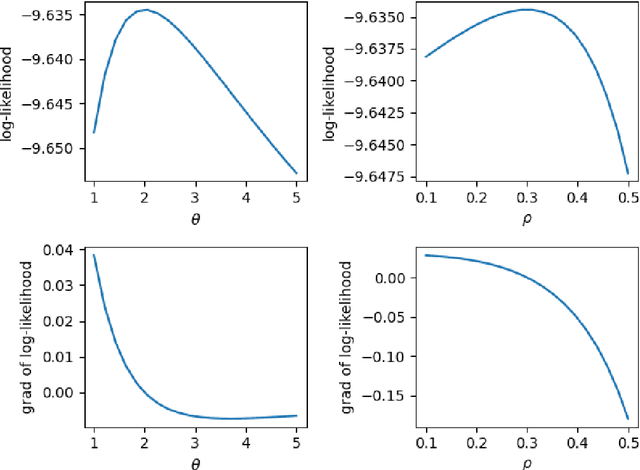
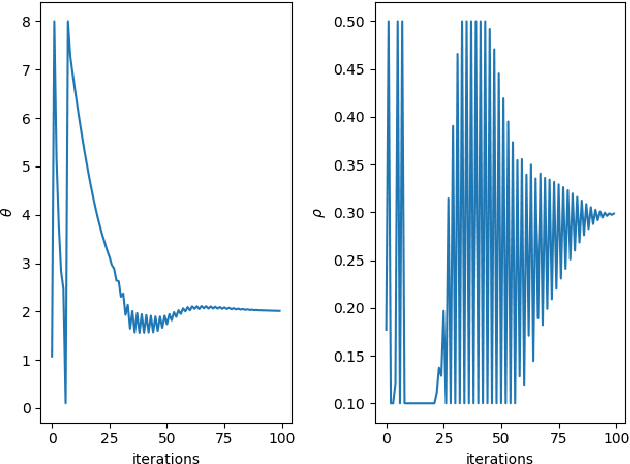
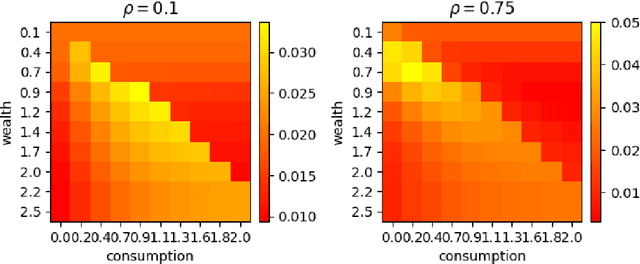
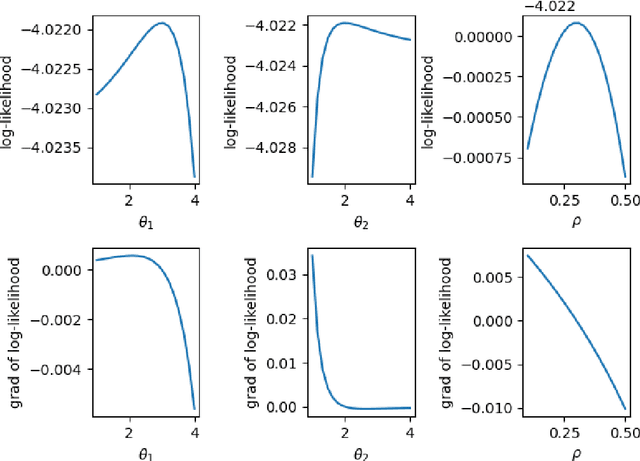
This paper introduces a novel stochastic control framework to enhance the capabilities of automated investment managers, or robo-advisors, by accurately inferring clients' investment preferences from past activities. Our approach leverages a continuous-time model that incorporates utility functions and a generic discounting scheme of a time-varying rate, tailored to each client's risk tolerance, valuation of daily consumption, and significant life goals. We address the resulting time inconsistency issue through state augmentation and the establishment of the dynamic programming principle and the verification theorem. Additionally, we provide sufficient conditions for the identifiability of client investment preferences. To complement our theoretical developments, we propose a learning algorithm based on maximum likelihood estimation within a discrete-time Markov Decision Process framework, augmented with entropy regularization. We prove that the log-likelihood function is locally concave, facilitating the fast convergence of our proposed algorithm. Practical effectiveness and efficiency are showcased through two numerical examples, including Merton's problem and an investment problem with unhedgeable risks. Our proposed framework not only advances financial technology by improving personalized investment advice but also contributes broadly to other fields such as healthcare, economics, and artificial intelligence, where understanding individual preferences is crucial.
Risk-sensitive Markov Decision Process and Learning under General Utility Functions
Nov 22, 2023Reinforcement Learning (RL) has gained substantial attention across diverse application domains and theoretical investigations. Existing literature on RL theory largely focuses on risk-neutral settings where the decision-maker learns to maximize the expected cumulative reward. However, in practical scenarios such as portfolio management and e-commerce recommendations, decision-makers often persist in heterogeneous risk preferences subject to outcome uncertainties, which can not be well-captured by the risk-neural framework. Incorporating these preferences can be approached through utility theory, yet the development of risk-sensitive RL under general utility functions remains an open question for theoretical exploration. In this paper, we consider a scenario where the decision-maker seeks to optimize a general utility function of the cumulative reward in the framework of a Markov decision process (MDP). To facilitate the Dynamic Programming Principle and Bellman equation, we enlarge the state space with an additional dimension that accounts for the cumulative reward. We propose a discretized approximation scheme to the MDP under enlarged state space, which is tractable and key for algorithmic design. We then propose a modified value iteration algorithm that employs an epsilon-covering over the space of cumulative reward. When a simulator is accessible, our algorithm efficiently learns a near-optimal policy with guaranteed sample complexity. In the absence of a simulator, our algorithm, designed with an upper-confidence-bound exploration approach, identifies a near-optimal policy while ensuring a guaranteed regret bound. For both algorithms, we match the theoretical lower bounds for the risk-neutral setting.