 Add to Chrome
 Add to Firefox
 Add to Edge
Fair Bayesian Data Selection via Generalized Discrepancy Measures
Nov 10, 2025
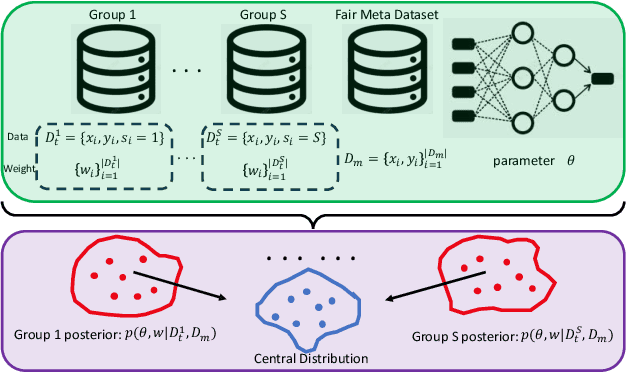
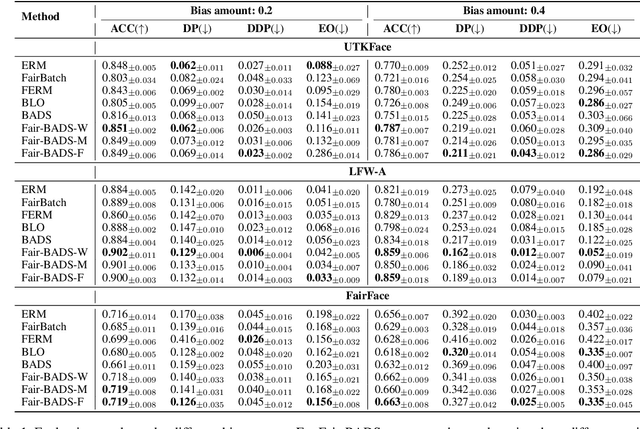

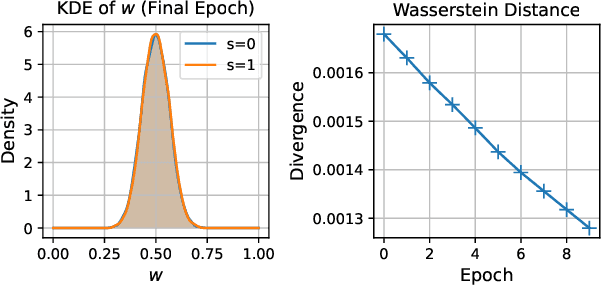
Fairness concerns are increasingly critical as machine learning models are deployed in high-stakes applications. While existing fairness-aware methods typically intervene at the model level, they often suffer from high computational costs, limited scalability, and poor generalization. To address these challenges, we propose a Bayesian data selection framework that ensures fairness by aligning group-specific posterior distributions of model parameters and sample weights with a shared central distribution. Our framework supports flexible alignment via various distributional discrepancy measures, including Wasserstein distance, maximum mean discrepancy, and $f$-divergence, allowing geometry-aware control without imposing explicit fairness constraints. This data-centric approach mitigates group-specific biases in training data and improves fairness in downstream tasks, with theoretical guarantees. Experiments on benchmark datasets show that our method consistently outperforms existing data selection and model-based fairness methods in both fairness and accuracy.

Counting Cycles with Deepseek
May 23, 2025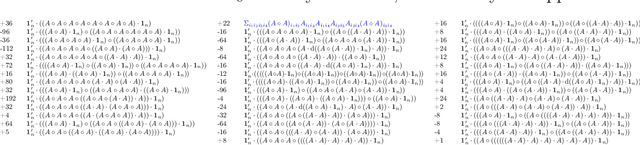
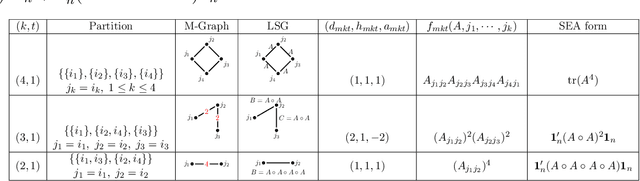


Despite recent progress, AI still struggles on advanced mathematics. We consider a difficult open problem: How to derive a Computationally Efficient Equivalent Form (CEEF) for the cycle count statistic? The CEEF problem does not have known general solutions, and requires delicate combinatorics and tedious calculations. Such a task is hard to accomplish by humans but is an ideal example where AI can be very helpful. We solve the problem by combining a novel approach we propose and the powerful coding skills of AI. Our results use delicate graph theory and contain new formulas for general cases that have not been discovered before. We find that, while AI is unable to solve the problem all by itself, it is able to solve it if we provide it with a clear strategy, a step-by-step guidance and carefully written prompts. For simplicity, we focus our study on DeepSeek-R1 but we also investigate other AI approaches.