 Add to Chrome
 Add to Firefox
 Add to Edge
Toward User Preference Alignment in LLM Recommendation via Explicit Context Feedback
May 27, 2026
Traditional recommender systems (RecSys) primarily infer user preferences from implicit signals (such as clicks, watches, and purchases), often neglecting the rich explicit contextual feedback users provide through verbal text, like comments and reviews. This explicit context feedback captures the nuanced reasons behind user decisions regarding their preferences. In addition, it offers critical heterogeneous information for user preference alignment and more explainable recommendations. Overlooking such signals can lead to misaligned user preferences and further reinforce filter bubbles, as algorithms fail to understand the "semantic context" behind user choices. Recent advances in Large Language Models (LLMs) present new opportunities to harness user-generated content for more accurate and diverse recommendations, yet current LLM-based recommendations still focus on using item meta-data and underutilize this resource. In this paper, we advocate for prioritizing explicit context feedback in the next generation of LLM-based RecSys. We review the evolution of recommendation paradigms, highlight the value of context-rich feedback, call for new benchmarks and metrics, and introduce frameworks for integrating explicit user signals into scalable LLM-driven RecSys. Centering on user-preference modeling, we aim to foster more personalized, transparent, and explainable RecSys online platforms.

A wearable Gait Assessment Method for Lumbar Disc Herniation Based on Adaptive Kalman Filtering
Dec 15, 2023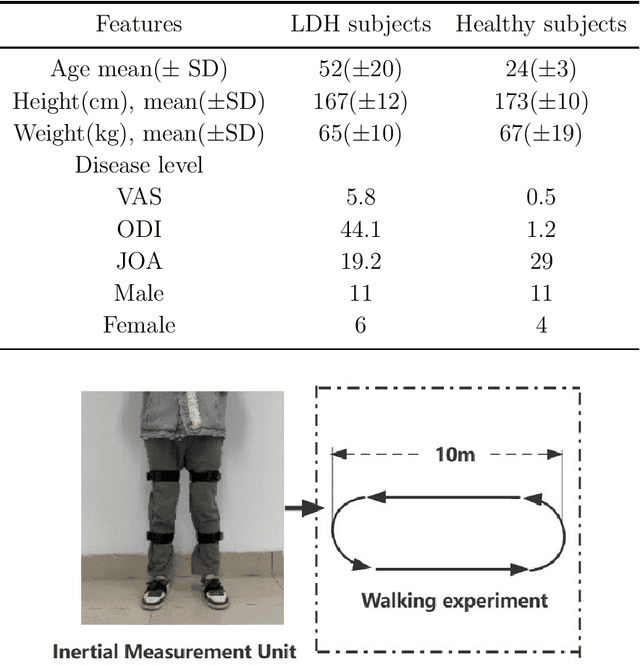
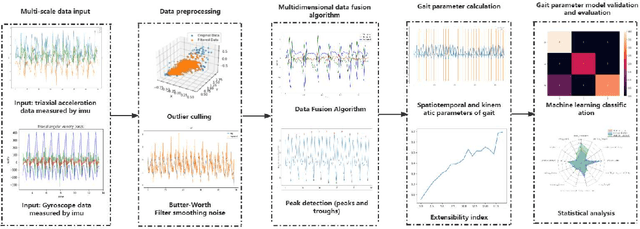
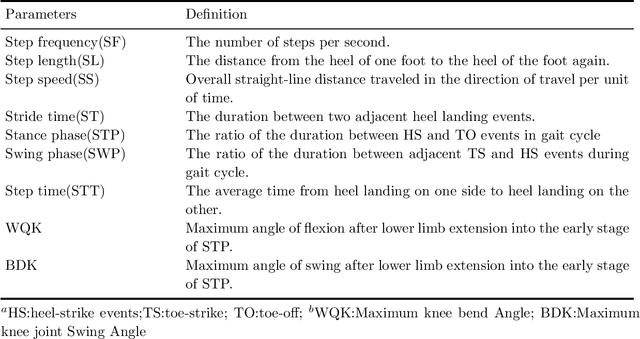
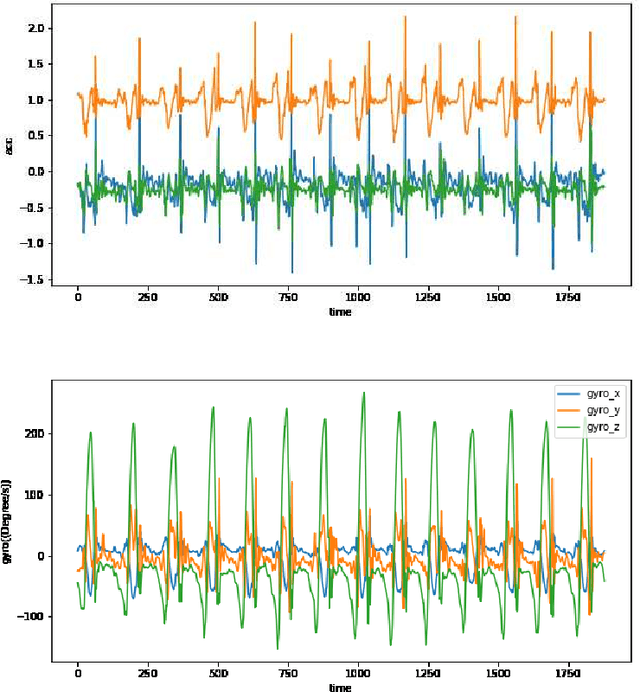
Lumbar disc herniation (LDH) is a prevalent orthopedic condition in clinical practice. Inertial measurement unit sensors (IMUs) are an effective tool for monitoring and assessing gait impairment in patients with lumbar disc herniation (LDH). However, the current gait assessment of LDH focuses solely on single-source acceleration signal data, without considering the diversity of sensor data. It also overlooks the individual differences in motor function deterioration between the healthy and affected lower limbs in patients with LDH. To address this issue, we developed an LDH gait feature model that relies on multi-source adaptive Kalman data fusion of acceleration and angular velocity. We utilized an adaptive Kalman data fusion algorithm for acceleration and angular velocity to estimate the attitude angle and segment the gait phase. Two Inertial Measurement Units (IMUs) were used to analyze the gait characteristics of patients with lumbar disc issues and healthy individuals. This analysis included 12 gait characteristics, such as gait spatiotemporal parameters, kinematic parameters, and expansibility index numbers. Statistical methods were employed to analyze the characteristic model and confirm the biological differences between the healthy affected side of LDH and healthy subjects. Finally, a classifier based on feature engineering was utilized to classify the gait patterns of the affected side of patients with lumbar disc disease and healthy subjects. This approach achieved a classification accuracy of 95.50%, enhancing the recognition of LDH and healthy gait patterns. It also provided effective gait feature sets and methods for assessing LDH clinically.