 Add to Chrome
 Add to Firefox
 Add to Edge
GraphLoom: Reliability-Calibrated Graph Evidence Routing for Multimodal KG-RAG
Aug 15, 2026
Multimodal retrieval-augmented generation (RAG) systems often rely on long unstructured contexts or aggressively expanded evidence graphs, which can introduce noisy evidence, weaken multi-hop reasoning, and increase unsupported generation. We present GraphLoom, a reliability-calibrated multimodal knowledge-graph RAG framework for compact and faithful evidence routing. Given a question and its associated multimodal input, GraphLoom constructs an instance-level multimodal knowledge graph from grounded scene descriptions, extracted relational triples, and external commonsense knowledge. Instead of injecting all retrieved evidence into the generator, GraphLoom performs reliability-aware subgraph retrieval with bounded expansion and selectively routes high-utility evidence through hierarchical graph memory slots and joint graph-sequence attention in a frozen language model. To improve robustness in complex reasoning settings, GraphLoom further combines interleaved retrieval with budgeted corrective retrieval, enabling adaptive multi-hop evidence refinement under noisy retrieval conditions. We evaluate GraphLoom on ScienceQA, MultiModalQA, and OK-VQA, including large distractor evidence pools that approximate noisy external knowledge retrieval. Experimental results show consistent gains in answer quality and evidence faithfulness over strong multimodal RAG, graph-retrieval, and open-source vision-language baselines, with improved retrieval quality on MultiModalQA and stable performance under noisy evidence pools. Additional analyses using MiniCheck-based verification, human evaluation, and latency profiling show that reliability-calibrated graph evidence routing provides an effective alternative to long-context multimodal evidence injection.

The Role of LLMs in Sustainable Smart Cities: Applications, Challenges, and Future Directions
Feb 07, 2024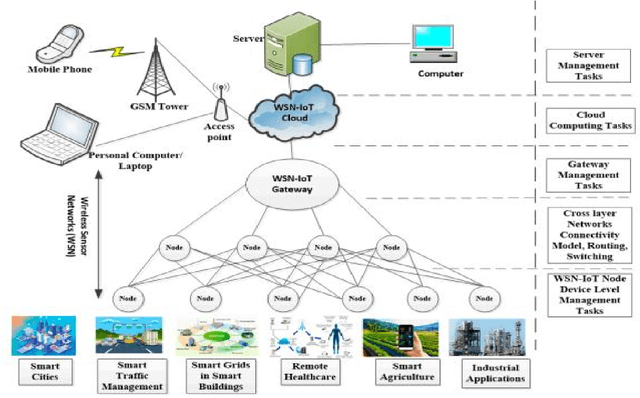

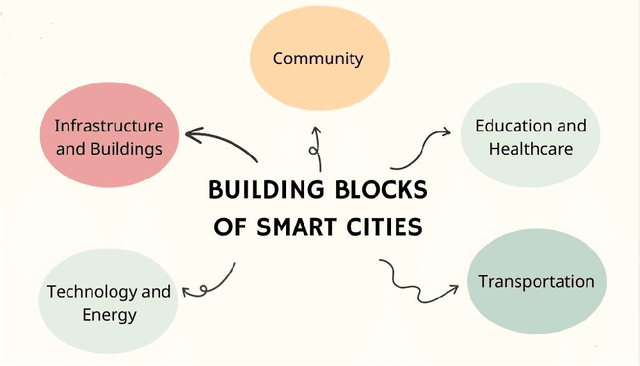
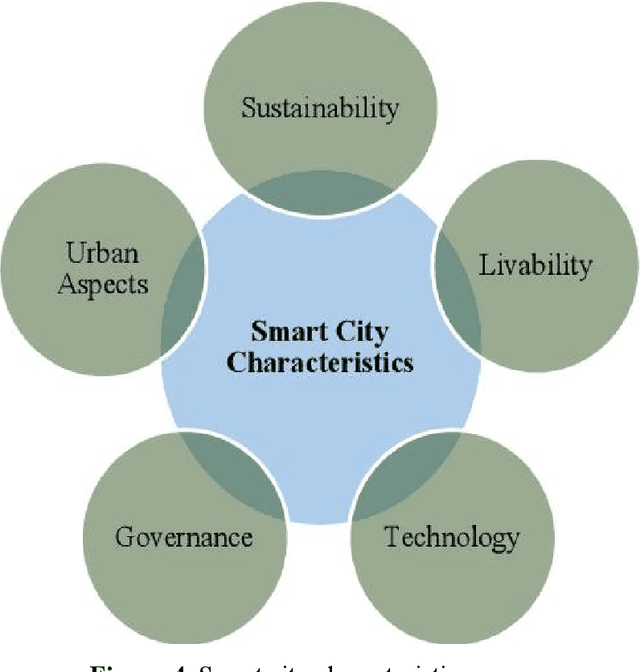
Smart cities stand as pivotal components in the ongoing pursuit of elevating urban living standards, facilitating the rapid expansion of urban areas while efficiently managing resources through sustainable and scalable innovations. In this regard, as emerging technologies like Artificial Intelligence (AI), the Internet of Things (IoT), big data analytics, and fog and edge computing have become increasingly prevalent, smart city applications grapple with various challenges, including the potential for unauthorized disclosure of confidential and sensitive data. The seamless integration of emerging technologies has played a vital role in sustaining the dynamic pace of their development. This paper explores the substantial potential and applications of Deep Learning (DL), Federated Learning (FL), IoT, Blockchain, Natural Language Processing (NLP), and large language models (LLMs) in optimizing ICT processes within smart cities. We aim to spotlight the vast potential of these technologies as foundational elements that technically strengthen the realization and advancement of smart cities, underscoring their significance in driving innovation within this transformative urban milieu. Our discourse culminates with an exploration of the formidable challenges that DL, FL, IoT, Blockchain, NLP, and LLMs face within these contexts, and we offer insights into potential future directions.
An Empirical Study of Pre-trained Language Models in Simple Knowledge Graph Question Answering
Mar 18, 2023Large-scale pre-trained language models (PLMs) such as BERT have recently achieved great success and become a milestone in natural language processing (NLP). It is now the consensus of the NLP community to adopt PLMs as the backbone for downstream tasks. In recent works on knowledge graph question answering (KGQA), BERT or its variants have become necessary in their KGQA models. However, there is still a lack of comprehensive research and comparison of the performance of different PLMs in KGQA. To this end, we summarize two basic KGQA frameworks based on PLMs without additional neural network modules to compare the performance of nine PLMs in terms of accuracy and efficiency. In addition, we present three benchmarks for larger-scale KGs based on the popular SimpleQuestions benchmark to investigate the scalability of PLMs. We carefully analyze the results of all PLMs-based KGQA basic frameworks on these benchmarks and two other popular datasets, WebQuestionSP and FreebaseQA, and find that knowledge distillation techniques and knowledge enhancement methods in PLMs are promising for KGQA. Furthermore, we test ChatGPT, which has drawn a great deal of attention in the NLP community, demonstrating its impressive capabilities and limitations in zero-shot KGQA. We have released the code and benchmarks to promote the use of PLMs on KGQA.