 Add to Chrome
 Add to Firefox
 Add to Edge
AerialYield-B2D: A Greenhouse Blueberry Dataset with Five-Stage Ripeness Masks and Fruit Counts
Aug 17, 2026
Blueberry ripeness is judged by berry colour, cluster composition, and the distribution of maturity stages within a plant, however, public green house image resources with dense ripeness-stage masks remain limited. We present AerialYield-B2D, where B2D denotes BlueBerry Dataset, acurated real-image resource containing 514 RGB images and 30,195 annotated blueberry instances across five ripeness stages: green immature, pale pink, pink-turns-purple, fully ripe and over-ripe. The release provides class-specific binary masks, overall berry masks, semantic label maps, image-level count tables, SHA-256 hashes, source metadata, recommended train/validation/test splits and technical validations. AerialYield is the broader project name; this release does not provide harvest weight, fruit mass or per-area yield measurements, and the count labels should therefore be interpreted as image-level berry counts rather than yield estimates. The images include 424 smartphone greenhouse images, 67 video-derived frames, and 23 DJI Fly video-frame samples, providing a reproducible dataset for ripeness segmentation, berry counting, and class-imbalance analysis in controlled-environment blueberry production.

Vision-Language Based Expert Reporting for Painting Authentication and Defect Detection
Mar 13, 2026Authenticity and condition assessment are central to conservation decision-making, yet interpretation and reporting of thermographic output remain largely bespoke and expert-dependent, complicating comparison across collections and limiting systematic integration into conservation documentation. Pulsed Active Infrared Thermography (AIRT) is sensitive to subsurface features such as material heterogeneity, voids, and past interventions; however, its broader adoption is constrained by artifact misinterpretation, inter-laboratory variability, and the absence of standardized, explainable reporting frameworks. Although multi-modal thermographic processing techniques are established, their integration with structured natural-language interpretation has not been explored in cultural heritage. A fully automated thermography-vision-language model (VLM) framework is presented. It combines multi-modal AIRT analysis with modality-aware textual reporting, without human intervention during inference. Thermal sequences are processed using Principal Component Thermography (PCT), Thermographic Signal Reconstruction (TSR), and Pulsed Phase Thermography (PPT), and the resulting anomaly masks are fused into a consensus segmentation that emphasizes regions supported by multiple thermal indicators while mitigating boundary artifacts. The fused evidence is provided to a VLM, which generates structured reports describing the location of the anomaly, thermal behavior, and plausible physical interpretations while explicitly acknowledging the uncertainty and diagnostic limitations. Evaluation on two marquetries demonstrates consistent anomaly detection and stable structured interpretations, indicating reproducibility and generalizability across samples.
Towards Cognitive Defect Analysis in Active Infrared Thermography with Vision-Text Cues
Mar 11, 2026Active infrared thermography (AIRT) is currently witnessing a surge of artificial intelligence (AI) methodologies being deployed for automated subsurface defect analysis of high performance carbon fiber-reinforced polymers (CFRP). Deploying AI-based AIRT methodologies for inspecting CFRPs requires the creation of time consuming and expensive datasets of CFRP inspection sequences to train neural networks. To address this challenge, this work introduces a novel language-guided framework for cognitive defect analysis in CFRPs using AIRT and vision-language models (VLMs). Unlike conventional learning-based approaches, the proposed framework does not require developing training datasets for extensive training of defect detectors, instead it relies solely on pretrained multimodal VLM encoders coupled with a lightweight adapter to enable generative zero-shot understanding and localization of subsurface defects. By leveraging pretrained multimodal encoders, the proposed system enables generative zero-shot understanding of thermographic patterns and automatic detection of subsurface defects. Given the domain gap between thermographic data and natural images used to train VLMs, an AIRT-VLM Adapter is proposed to enhance the visibility of defects while aligning the thermographic domain with the learned representations of VLMs. The proposed framework is validated using three representative VLMs; specifically, GroundingDINO, Qwen-VL-Chat, and CogVLM. Validation is performed on 25 CFRP inspection sequences with impacts introduced at different energy levels, reflecting realistic defects encountered in industrial scenarios. Experimental results demonstrate that the AIRT-VLM adapter achieves signal-to-noise ratio (SNR) gains exceeding 10 dB compared with conventional thermographic dimensionality-reduction methods, while enabling zero-shot defect detection with intersection-over-union values reaching 70%.
A Blockchain-based Traceability System for AI-Driven Engine Blade Inspection
Mar 09, 2026Aircraft engine blade maintenance relies on inspection records shared across manufacturers, airlines, maintenance organizations, and regulators. Yet current systems are fragmented, difficult to audit, and vulnerable to tampering. This paper presents BladeChain, a blockchain-based system providing immutable traceability for blade inspections throughout the component life cycle. BladeChain is the first system to integrate multi-stakeholder endorsement, automated inspection scheduling, AI model provenance, and cryptographic evidence binding, delivering auditable maintenance traceability for aerospace deployments. Built on a four-stakeholder Hyperledger Fabric network (OEM, Airline, MRO, Regulator), BladeChain captures every life-cycle event in a tamper-evident ledger. A chaincode-enforced state machine governs blade status transitions and automatically triggers inspections when configurable flight hour, cycle, or calendar thresholds are exceeded, eliminating manual scheduling errors. Inspection artifacts are stored off-chain in IPFS and linked to on-chain records via SHA-256 hashes, with each inspection record capturing the AI model name and version used for defect detection. This enables regulators to audit both what defects were found and how they were found. The detection module is pluggable, allowing organizations to adopt or upgrade inspection models without modifying the ledger or workflows. We built a prototype and evaluated it on workloads of up to 100 blades, demonstrating 100% life cycle completion with consistent throughput of 26 operations per minute. A centralized SQL baseline quantifies the consensus overhead and highlights the security trade-off. Security validation confirms tamper detection within 17~ms through hash verification.
Masked Sequence Autoencoding for Enhanced Defect Visualization in Active Infrared Thermography
Dec 28, 2025Active infrared thermography (AIRT) became a crucial tool in aerospace non-destructive testing (NDT), enabling the detection of hidden defects and anomalies in materials by capturing thermal responses over time. In AIRT, autoencoders are widely used to enhance defect detection by reducing the dimensionality of thermal data and improving the signal-to-noise ratio. However, traditional AIRT autoencoders often struggle to disentangle subtle defect features from dominant background responses, leading to suboptimal defect analysis under varying material and inspection conditions. To overcome this challenge, this work proposes a Masked CNN-Attention Autoencoder (AIRT-Masked-CAAE) that integrates convolutional feature extraction with attention mechanisms to capture both local thermal patterns and global contextual dependencies. The AIRT-Masked-CAAE introduces a masked sequence autoencoding strategy, where the network learns to infer missing thermal responses from surrounding contextual cues, while suppressing background redundancy. In addition, the proposed masked sequence autoencoding approach enables training on only a subset of the thermal sequence, while providing generalizable latent representations and reducing training time by a factor of 30. The AIRT-Masked-CAAE framework was evaluated using specimens made of PVC, CFRP, and PLA. The results demonstrate that the AIRT-Masked-CAAE surpasses state-of-the-art AIRT autoencoders in terms of contrast, signal-to-noise ratio (SNR), and metrics based on neural networks.
PCA-Guided Autoencoding for Structured Dimensionality Reduction in Active Infrared Thermography
Aug 11, 2025Active Infrared thermography (AIRT) is a widely adopted non-destructive testing (NDT) technique for detecting subsurface anomalies in industrial components. Due to the high dimensionality of AIRT data, current approaches employ non-linear autoencoders (AEs) for dimensionality reduction. However, the latent space learned by AIRT AEs lacks structure, limiting their effectiveness in downstream defect characterization tasks. To address this limitation, this paper proposes a principal component analysis guided (PCA-guided) autoencoding framework for structured dimensionality reduction to capture intricate, non-linear features in thermographic signals while enforcing a structured latent space. A novel loss function, PCA distillation loss, is introduced to guide AIRT AEs to align the latent representation with structured PCA components while capturing the intricate, non-linear patterns in thermographic signals. To evaluate the utility of the learned, structured latent space, we propose a neural network-based evaluation metric that assesses its suitability for defect characterization. Experimental results show that the proposed PCA-guided AE outperforms state-of-the-art dimensionality reduction methods on PVC, CFRP, and PLA samples in terms of contrast, signal-to-noise ratio (SNR), and neural network-based metrics.
Anomaly Detection for Industrial Applications, Its Challenges, Solutions, and Future Directions: A Review
Jan 20, 2025


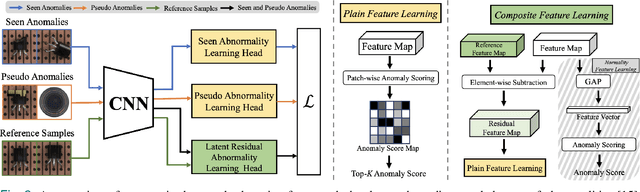
Anomaly detection from images captured using camera sensors is one of the mainstream applications at the industrial level. Particularly, it maintains the quality and optimizes the efficiency in production processes across diverse industrial tasks, including advanced manufacturing and aerospace engineering. Traditional anomaly detection workflow is based on a manual inspection by human operators, which is a tedious task. Advances in intelligent automated inspection systems have revolutionized the Industrial Anomaly Detection (IAD) process. Recent vision-based approaches can automatically extract, process, and interpret features using computer vision and align with the goals of automation in industrial operations. In light of the shift in inspection methodologies, this survey reviews studies published since 2019, with a specific focus on vision-based anomaly detection. The components of an IAD pipeline that are overlooked in existing surveys are presented, including areas related to data acquisition, preprocessing, learning mechanisms, and evaluation. In addition to the collected publications, several scientific and industry-related challenges and their perspective solutions are highlighted. Popular and relevant industrial datasets are also summarized, providing further insight into inspection applications. Finally, future directions of vision-based IAD are discussed, offering researchers insight into the state-of-the-art of industrial inspection.
Multi-Modal Attention Networks for Enhanced Segmentation and Depth Estimation of Subsurface Defects in Pulse Thermography
Jan 17, 2025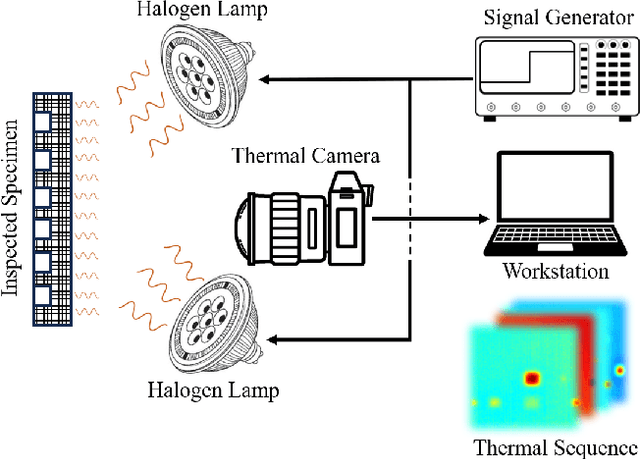
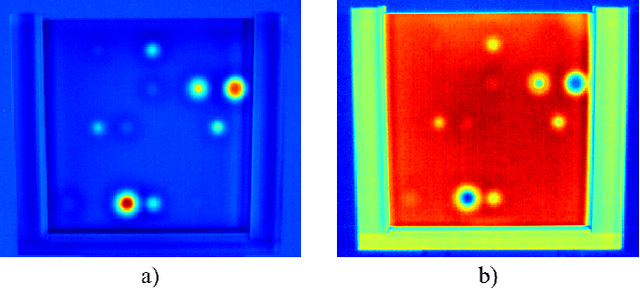
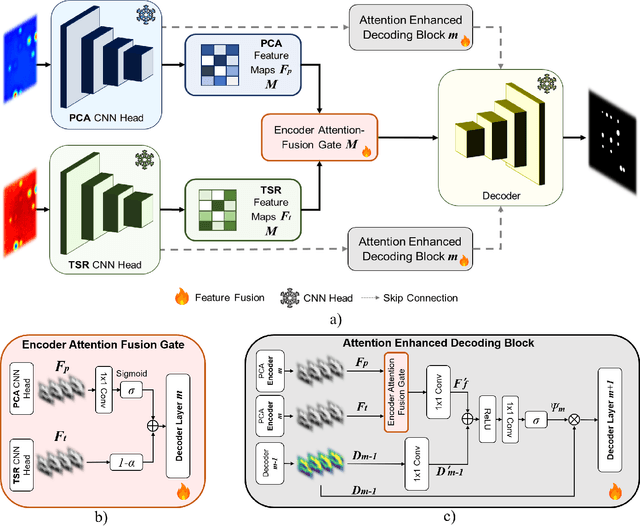
AI-driven pulse thermography (PT) has become a crucial tool in non-destructive testing (NDT), enabling automatic detection of hidden anomalies in various industrial components. Current state-of-the-art techniques feed segmentation and depth estimation networks compressed PT sequences using either Principal Component Analysis (PCA) or Thermographic Signal Reconstruction (TSR). However, treating these two modalities independently constrains the performance of PT inspection models as these representations possess complementary semantic features. To address this limitation, this work proposes PT-Fusion, a multi-modal attention-based fusion network that fuses both PCA and TSR modalities for defect segmentation and depth estimation of subsurface defects in PT setups. PT-Fusion introduces novel feature fusion modules, Encoder Attention Fusion Gate (EAFG) and Attention Enhanced Decoding Block (AEDB), to fuse PCA and TSR features for enhanced segmentation and depth estimation of subsurface defects. In addition, a novel data augmentation technique is proposed based on random data sampling from thermographic sequences to alleviate the scarcity of PT datasets. The proposed method is benchmarked against state-of-the-art PT inspection models, including U-Net, attention U-Net, and 3D-CNN on the Universit\'e Laval IRT-PVC dataset. The results demonstrate that PT-Fusion outperforms the aforementioned models in defect segmentation and depth estimation accuracies with a margin of 10%.
High Speed Neuromorphic Vision-Based Inspection of Countersinks in Automated Manufacturing Processes
Apr 08, 2023Countersink inspection is crucial in various automated assembly lines, especially in the aerospace and automotive sectors. Advancements in machine vision introduced automated robotic inspection of countersinks using laser scanners and monocular cameras. Nevertheless, the aforementioned sensing pipelines require the robot to pause on each hole for inspection due to high latency and measurement uncertainties with motion, leading to prolonged execution times of the inspection task. The neuromorphic vision sensor, on the other hand, has the potential to expedite the countersink inspection process, but the unorthodox output of the neuromorphic technology prohibits utilizing traditional image processing techniques. Therefore, novel event-based perception algorithms need to be introduced. We propose a countersink detection approach on the basis of event-based motion compensation and the mean-shift clustering principle. In addition, our framework presents a robust event-based circle detection algorithm to precisely estimate the depth of the countersink specimens. The proposed approach expedites the inspection process by a factor of 10$\times$ compared to conventional countersink inspection methods. The work in this paper was validated for over 50 trials on three countersink workpiece variants. The experimental results show that our method provides a precision of 0.025 mm for countersink depth inspection despite the low resolution of commercially available neuromorphic cameras.