 Add to Chrome
 Add to Firefox
 Add to Edge
More Isn't Always Better: Balancing Decision Accuracy and Conformity Pressures in Multi-AI Advice
Mar 23, 2026
Just as people improve decision-making by consulting diverse human advisors, they can now also consult with multiple AI systems. Prior work on group decision-making shows that advice aggregation creates pressure to conform, leading to overreliance. However, the conditions under which multi-AI consultation improves or undermines human decision-making remain unclear. We conducted experiments with three tasks in which participants received advice from panels of AIs. We varied panel size, within-panel consensus, and the human-likeness of presentation. Accuracy improved for small panels relative to a single AI; larger panels yielded no gains. The level of within-panel consensus affected participants' reliance on AI advice: High consensus fostered overreliance; a single dissent reduced pressure to conform; wide disagreement created confusion and undermined appropriate reliance. Human-like presentations increased perceived usefulness and agency in certain tasks, without raising conformity pressure. These findings yield design implications for presenting multi-AI advice that preserve accuracy while mitigating conformity.

Where-to-Unmask: Ground-Truth-Guided Unmasking Order Learning for Masked Diffusion Language Models
Feb 10, 2026Masked Diffusion Language Models (MDLMs) generate text by iteratively filling masked tokens, requiring two coupled decisions at each step: which positions to unmask (where-to-unmask) and which tokens to place (what-to-unmask). While standard MDLM training directly optimizes token prediction (what-to-unmask), inference-time unmasking orders (where-to-unmask) are typically determined by heuristic confidence measures or trained through reinforcement learning with costly on-policy rollouts. To address this, we introduce Gt-Margin, a position-wise score derived from ground-truth tokens, defined as the probability margin between the correct token and its strongest alternative. Gt-Margin yields an oracle unmasking order that prioritizes easier positions first under each partially masked state. We demonstrate that leveraging this oracle unmasking order significantly enhances final generation quality, particularly on logical reasoning benchmarks. Building on this insight, we train a supervised unmasking planner via learning-to-rank to imitate the oracle ordering from masked contexts. The resulting planner integrates into standard MDLM sampling to select where-to-unmask, improving reasoning accuracy without modifying the token prediction model.
Self Iterative Label Refinement via Robust Unlabeled Learning
Feb 18, 2025Recent advances in large language models (LLMs) have yielded impressive performance on various tasks, yet they often depend on high-quality feedback that can be costly. Self-refinement methods attempt to leverage LLMs' internal evaluation mechanisms with minimal human supervision; however, these approaches frequently suffer from inherent biases and overconfidence, especially in domains where the models lack sufficient internal knowledge, resulting in performance degradation. As an initial step toward enhancing self-refinement for broader applications, we introduce an iterative refinement pipeline that employs the Unlabeled-Unlabeled learning framework to improve LLM-generated pseudo-labels for classification tasks. By exploiting two unlabeled datasets with differing positive class ratios, our approach iteratively denoises and refines the initial pseudo-labels, thereby mitigating the adverse effects of internal biases with minimal human supervision. Evaluations on diverse datasets, including low-resource language corpora, patent classifications, and protein structure categorizations, demonstrate that our method consistently outperforms both initial LLM's classification performance and the self-refinement approaches by cutting-edge models (e.g., GPT-4o and DeepSeek-R1).
A Generalized Model for Multidimensional Intransitivity
Sep 28, 2024Intransitivity is a critical issue in pairwise preference modeling. It refers to the intransitive pairwise preferences between a group of players or objects that potentially form a cyclic preference chain and has been long discussed in social choice theory in the context of the dominance relationship. However, such multifaceted intransitivity between players and the corresponding player representations in high dimensions is difficult to capture. In this paper, we propose a probabilistic model that jointly learns each player's d-dimensional representation (d>1) and a dataset-specific metric space that systematically captures the distance metric in Rd over the embedding space. Interestingly, by imposing additional constraints in the metric space, our proposed model degenerates to former models used in intransitive representation learning. Moreover, we present an extensive quantitative investigation of the vast existence of intransitive relationships between objects in various real-world benchmark datasets. To our knowledge, this investigation is the first of this type. The predictive performance of our proposed method on different real-world datasets, including social choice, election, and online game datasets, shows that our proposed method outperforms several competing methods in terms of prediction accuracy.
Impact of Tone-Aware Explanations in Recommender Systems
May 08, 2024
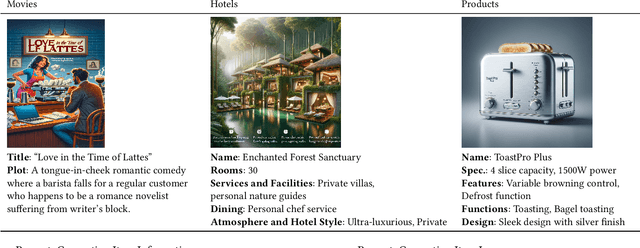
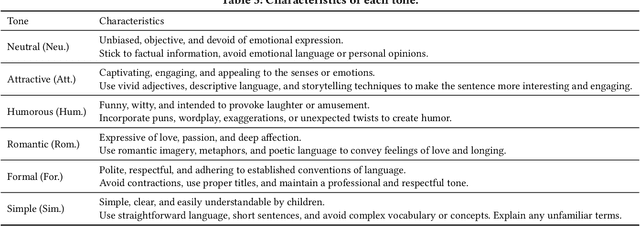
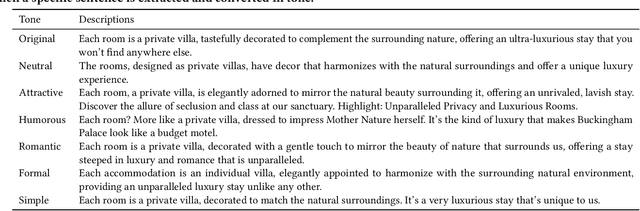
In recommender systems, the presentation of explanations plays a crucial role in supporting users' decision-making processes. Although numerous existing studies have focused on the effects (transparency or persuasiveness) of explanation content, explanation expression is largely overlooked. Tone, such as formal and humorous, is directly linked to expressiveness and is an important element in human communication. However, studies on the impact of tone on explanations within the context of recommender systems are insufficient. Therefore, this study investigates the effect of explanation tones through an online user study from three aspects: perceived effects, domain differences, and user attributes. We create a dataset using a large language model to generate fictional items and explanations with various tones in the domain of movies, hotels, and home products. Collected data analysis reveals different perceived effects of tones depending on the domains. Moreover, user attributes such as age and personality traits are found to influence the impact of tone. This research underscores the critical role of tones in explanations within recommender systems, suggesting that attention to tone can enhance user experience.
SwipeGANSpace: Swipe-to-Compare Image Generation via Efficient Latent Space Exploration
Apr 30, 2024Generating preferred images using generative adversarial networks (GANs) is challenging owing to the high-dimensional nature of latent space. In this study, we propose a novel approach that uses simple user-swipe interactions to generate preferred images for users. To effectively explore the latent space with only swipe interactions, we apply principal component analysis to the latent space of the StyleGAN, creating meaningful subspaces. We use a multi-armed bandit algorithm to decide the dimensions to explore, focusing on the preferences of the user. Experiments show that our method is more efficient in generating preferred images than the baseline methods. Furthermore, changes in preferred images during image generation or the display of entirely different image styles were observed to provide new inspirations, subsequently altering user preferences. This highlights the dynamic nature of user preferences, which our proposed approach recognizes and enhances.
An experimental framework for designing document structure for users' decision making -- An empirical study of recipes
May 02, 2023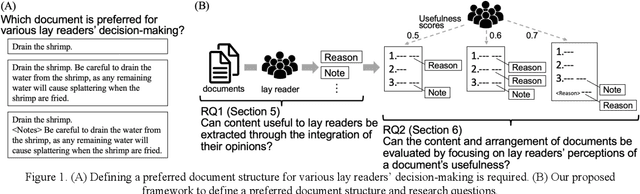

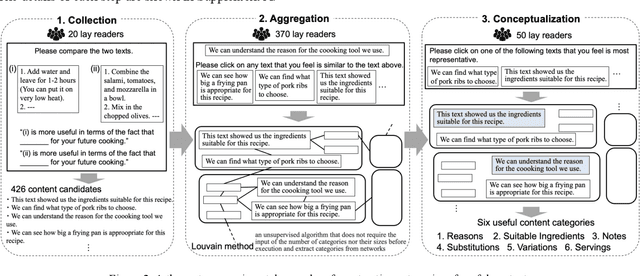
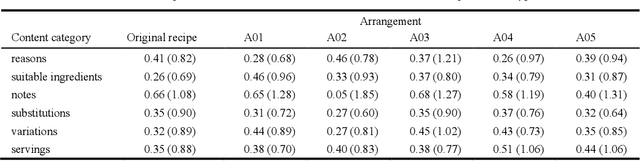
Textual documents need to be of good quality to ensure effective asynchronous communication in remote areas, especially during the COVID-19 pandemic. However, defining a preferred document structure (content and arrangement) for improving lay readers' decision-making is challenging. First, the types of useful content for various readers cannot be determined simply by gathering expert knowledge. Second, methodologies to evaluate the document's usefulness from the user's perspective have not been established. This study proposed the experimental framework to identify useful contents of documents by aggregating lay readers' insights. This study used 200 online recipes as research subjects and recruited 1,340 amateur cooks as lay readers. The proposed framework identified six useful contents of recipes. Multi-level modeling then showed that among the six identified contents, suitable ingredients or notes arranged with a subheading at the end of each cooking step significantly increased recipes' usefulness. Our framework contributes to the communication design via documents.
HumanACGAN: conditional generative adversarial network with human-based auxiliary classifier and its evaluation in phoneme perception
Feb 08, 2021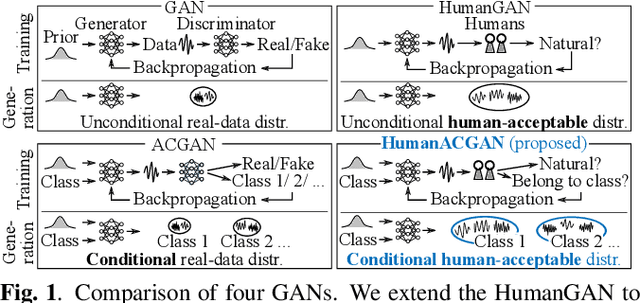
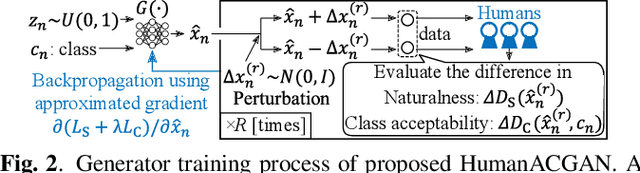
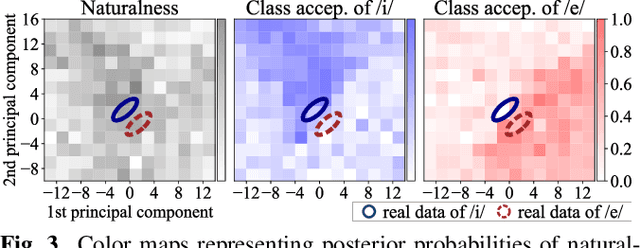
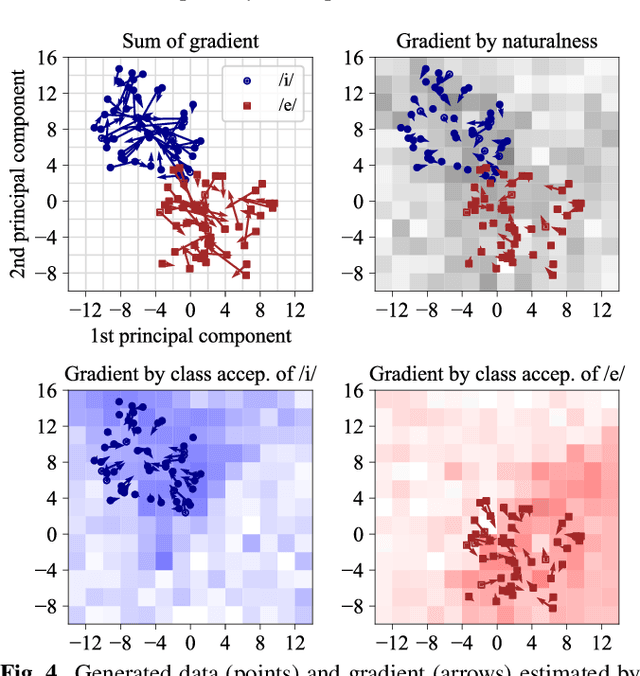
We propose a conditional generative adversarial network (GAN) incorporating humans' perceptual evaluations. A deep neural network (DNN)-based generator of a GAN can represent a real-data distribution accurately but can never represent a human-acceptable distribution, which are ranges of data in which humans accept the naturalness regardless of whether the data are real or not. A HumanGAN was proposed to model the human-acceptable distribution. A DNN-based generator is trained using a human-based discriminator, i.e., humans' perceptual evaluations, instead of the GAN's DNN-based discriminator. However, the HumanGAN cannot represent conditional distributions. This paper proposes the HumanACGAN, a theoretical extension of the HumanGAN, to deal with conditional human-acceptable distributions. Our HumanACGAN trains a DNN-based conditional generator by regarding humans as not only a discriminator but also an auxiliary classifier. The generator is trained by deceiving the human-based discriminator that scores the unconditioned naturalness and the human-based classifier that scores the class-conditioned perceptual acceptability. The training can be executed using the backpropagation algorithm involving humans' perceptual evaluations. Our experimental results in phoneme perception demonstrate that our HumanACGAN can successfully train this conditional generator.
CrowDEA: Multi-view Idea Prioritization with Crowds
Aug 17, 2020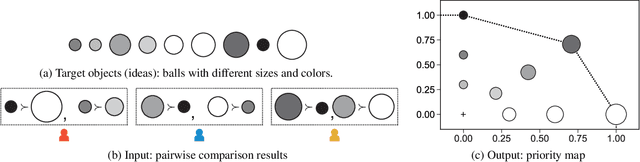
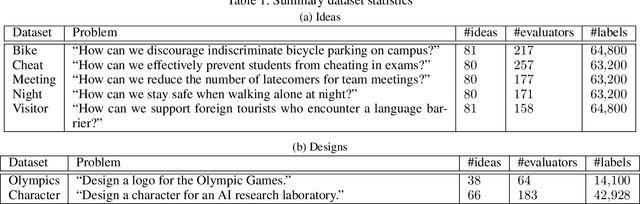
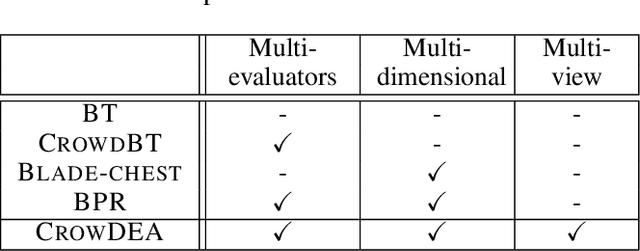
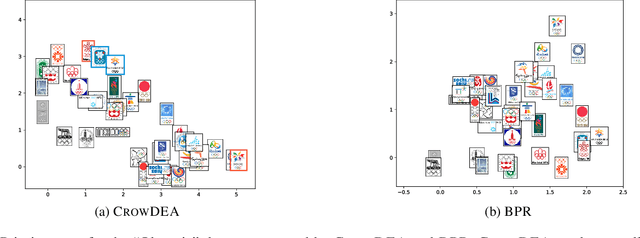
Given a set of ideas collected from crowds with regard to an open-ended question, how can we organize and prioritize them in order to determine the preferred ones based on preference comparisons by crowd evaluators? As there are diverse latent criteria for the value of an idea, multiple ideas can be considered as "the best". In addition, evaluators can have different preference criteria, and their comparison results often disagree. In this paper, we propose an analysis method for obtaining a subset of ideas, which we call frontier ideas, that are the best in terms of at least one latent evaluation criterion. We propose an approach, called CrowDEA, which estimates the embeddings of the ideas in the multiple-criteria preference space, the best viewpoint for each idea, and preference criterion for each evaluator, to obtain a set of frontier ideas. Experimental results using real datasets containing numerous ideas or designs demonstrate that the proposed approach can effectively prioritize ideas from multiple viewpoints, thereby detecting frontier ideas. The embeddings of ideas learned by the proposed approach provide a visualization that facilitates observation of the frontier ideas. In addition, the proposed approach prioritizes ideas from a wider variety of viewpoints, whereas the baselines tend to use to the same viewpoints; it can also handle various viewpoints and prioritize ideas in situations where only a limited number of evaluators or labels are available.
Iterative Machine Teaching without Teachers
Jun 27, 2020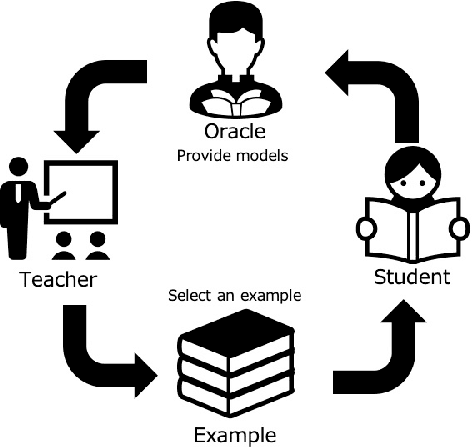
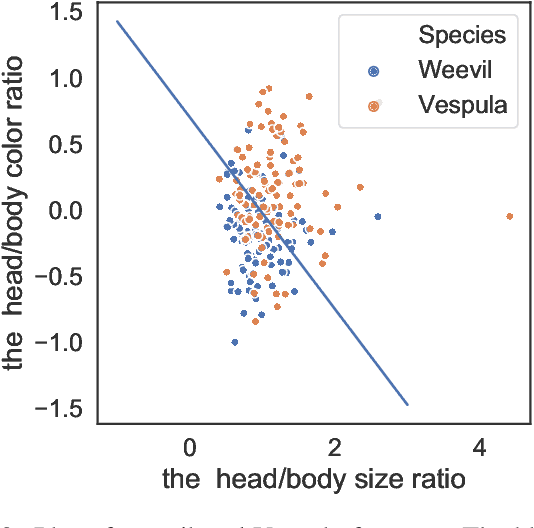
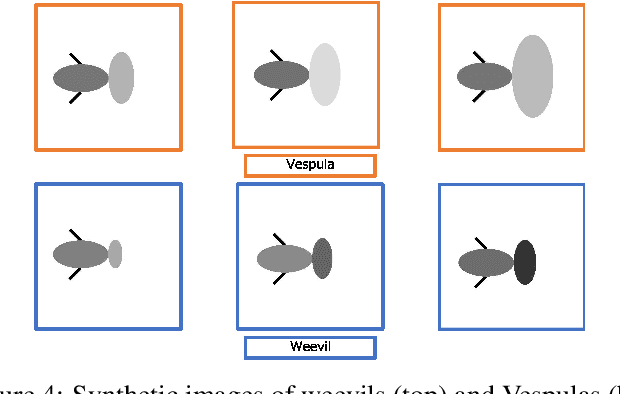
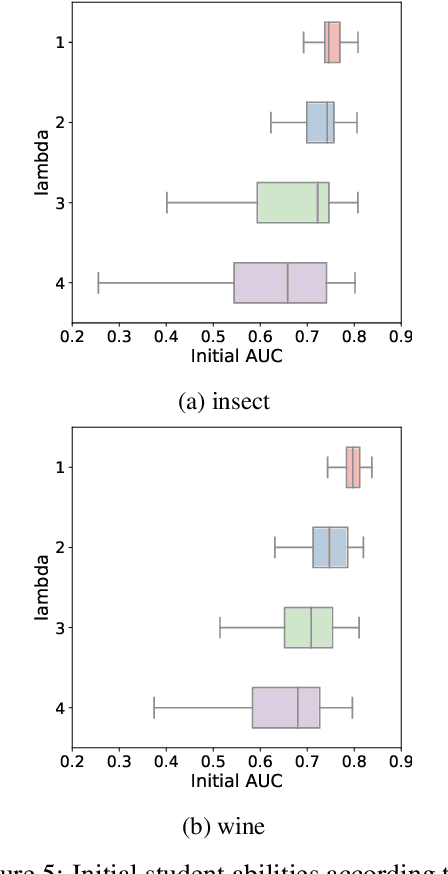
Iterative machine teaching is a method for selecting an optimal teaching example that enables a student to efficiently learn a target concept at each iteration. Existing studies on iterative machine teaching are based on supervised machine learning and assume that there are teachers who know the true answers of all teaching examples. In this study, we consider an unsupervised case where such teachers do not exist; that is, we cannot access the true answer of any teaching example. Students are given a teaching example at each iteration, but there is no guarantee if the corresponding label is correct. Recent studies on crowdsourcing have developed methods for estimating the true answers from crowdsourcing responses. In this study, we apply these to iterative machine teaching for estimating the true labels of teaching examples along with student models that are used for teaching. Our method supports the collaborative learning of students without teachers. The experimental results show that the teaching performance of our method is particularly effective for low-level students in particular.