 Add to Chrome
 Add to Firefox
 Add to Edge
Decoupling Numerical and Structural Parameters: An Empirical Study on Adaptive Genetic Algorithms via Deep Reinforcement Learning for the Large-Scale TSP
Mar 21, 2026
Proper parameter configuration is a prerequisite for the success of Evolutionary Algorithms (EAs). While various adaptive strategies have been proposed, it remains an open question whether all control dimensions contribute equally to algorithmic scalability. To investigate this, we categorize control variables into numerical parameters (e.g., crossover and mutation rates) and structural parameters (e.g., population size and operator switching), hypothesizing that they play distinct roles. This paper presents an empirical study utilizing a dual-level Deep Reinforcement Learning (DRL) framework to decouple and analyze the impact of these two dimensions on the Traveling Salesman Problem (TSP). We employ a Recurrent PPO agent to dynamically regulate these parameters, treating the DRL model as a probe to reveal evolutionary dynamics. Experimental results confirm the effectiveness of this approach: the learned policies outperform static baselines, reducing the optimality gap by approximately 45% on the largest tested instance (rl5915). Building on this validated framework, our ablation analysis reveals a fundamental insight: while numerical tuning offers local refinement, structural plasticity is the decisive factor in preventing stagnation and facilitating escape from local optima. These findings suggest that future automated algorithm design should prioritize dynamic structural reconfiguration over fine-grained probability adjustment. To facilitate reproducibility, the source code is available at https://github.com/StarDream1314/DRLGA-TSP

OIPR: Evaluation for Time-series Anomaly Detection Inspired by Operator Interest
Mar 03, 2025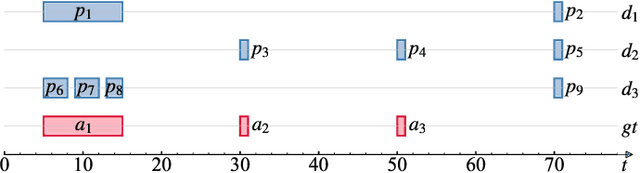
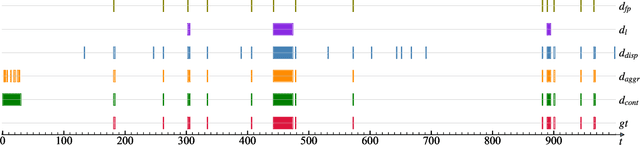
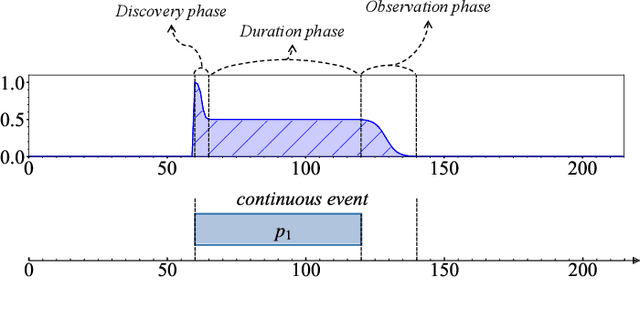
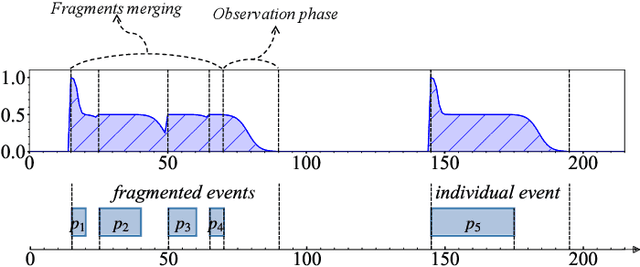
With the growing adoption of time-series anomaly detection (TAD) technology, numerous studies have employed deep learning-based detectors for analyzing time-series data in the fields of Internet services, industrial systems, and sensors. The selection and optimization of anomaly detectors strongly rely on the availability of an effective performance evaluation method for TAD. Since anomalies in time-series data often manifest as a sequence of points, conventional metrics that solely consider the detection of individual point are inadequate. Existing evaluation methods for TAD typically employ point-based or event-based metrics to capture the temporal context. However, point-based metrics tend to overestimate detectors that excel only in detecting long anomalies, while event-based metrics are susceptible to being misled by fragmented detection results. To address these limitations, we propose OIPR, a novel set of TAD evaluation metrics. It models the process of operators receiving detector alarms and handling faults, utilizing area under the operator interest curve to evaluate the performance of TAD algorithms. Furthermore, we build a special scenario dataset to compare the characteristics of different evaluation methods. Through experiments conducted on the special scenario dataset and five real-world datasets, we demonstrate the remarkable performance of OIPR in extreme and complex scenarios. It achieves a balance between point and event perspectives, overcoming their primary limitations and offering applicability to broader situations.