 Add to Chrome
 Add to Firefox
 Add to Edge
DeltaMIL: Gated Memory Integration for Efficient and Discriminative Whole Slide Image Analysis
Dec 22, 2025
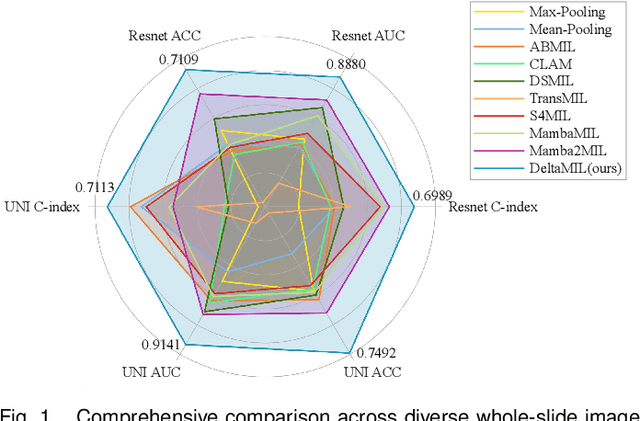
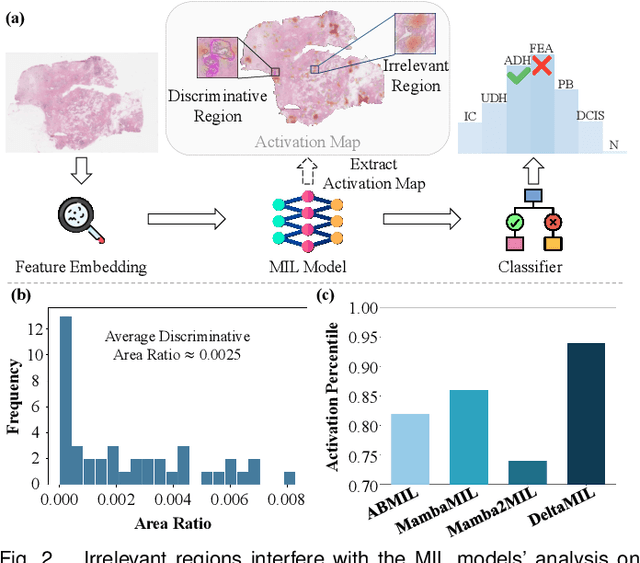

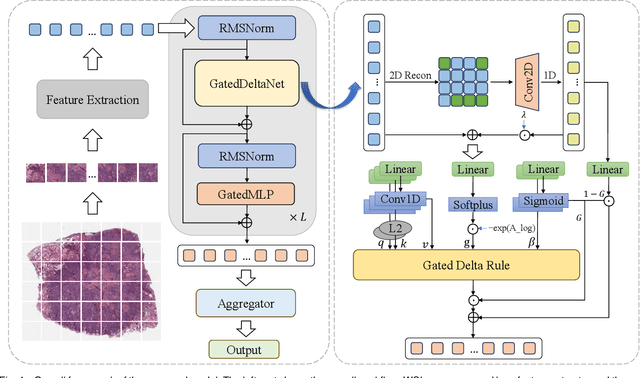
Whole Slide Images (WSIs) are typically analyzed using multiple instance learning (MIL) methods. However, the scale and heterogeneity of WSIs generate highly redundant and dispersed information, making it difficult to identify and integrate discriminative signals. Existing MIL methods either fail to discard uninformative cues effectively or have limited ability to consolidate relevant features from multiple patches, which restricts their performance on large and heterogeneous WSIs. To address this issue, we propose DeltaMIL, a novel MIL framework that explicitly selects semantically relevant regions and integrates the discriminative information from WSIs. Our method leverages the gated delta rule to efficiently filter and integrate information through a block combining forgetting and memory mechanisms. The delta mechanism dynamically updates the memory by removing old values and inserting new ones according to their correlation with the current patch. The gating mechanism further enables rapid forgetting of irrelevant signals. Additionally, DeltaMIL integrates a complementary local pattern mixing mechanism to retain fine-grained pathological locality. Our design enhances the extraction of meaningful cues and suppresses redundant or noisy information, which improves the model's robustness and discriminative power. Experiments demonstrate that DeltaMIL achieves state-of-the-art performance. Specifically, for survival prediction, DeltaMIL improves performance by 3.69\% using ResNet-50 features and 2.36\% using UNI features. For slide-level classification, it increases accuracy by 3.09\% with ResNet-50 features and 3.75\% with UNI features. These results demonstrate the strong and consistent performance of DeltaMIL across diverse WSI tasks.

Data-Driven Machine Learning Approaches for Predicting In-Hospital Sepsis Mortality
Aug 03, 2024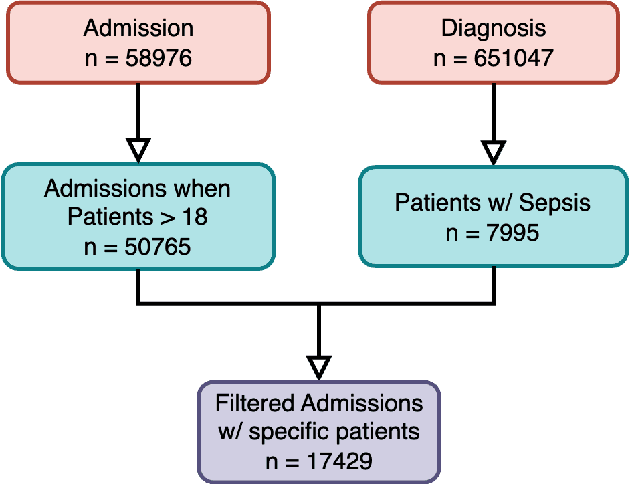
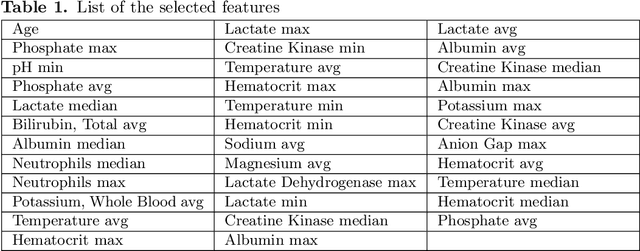
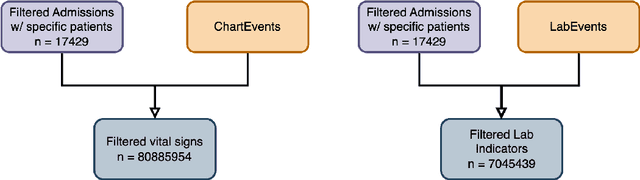
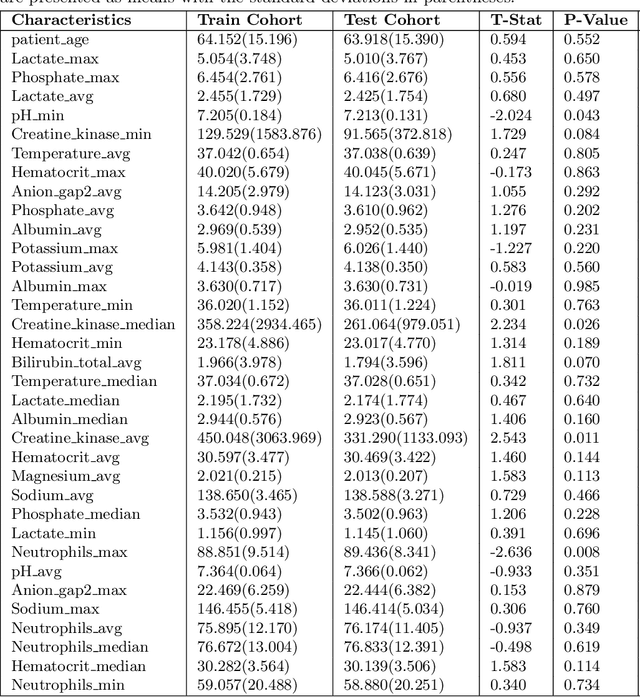
Background: Sepsis is a severe condition responsible for many deaths worldwide. Accurate prediction of sepsis outcomes is crucial for timely and effective treatment. Although previous studies have used ML to forecast outcomes, they faced limitations in feature selection and model comprehensibility, resulting in less effective predictions. Thus, this research aims to develop an interpretable and accurate ML model to help clinical professionals predict in-hospital mortality. Methods: We analyzed ICU patient records from the MIMIC-III database based on specific criteria and extracted relevant data. Our feature selection process included a literature review, clinical input refinement, and using Random Forest to select the top 35 features. We performed data preprocessing, including cleaning, imputation, standardization, and applied SMOTE for oversampling to address imbalance, resulting in 4,683 patients, with admission counts of 17,429. We compared the performance of Random Forest, Gradient Boosting, Logistic Regression, SVM, and KNN models. Results: The Random Forest model was the most effective in predicting sepsis-related in-hospital mortality. It outperformed other models, achieving an accuracy of 0.90 and an AUROC of 0.97, significantly better than the existing literature. Our meticulous feature selection contributed to the model's precision and identified critical determinants of sepsis mortality. These results underscore the pivotal role of data-driven ML in healthcare, especially for predicting in-hospital mortality due to sepsis. Conclusion: This study represents a significant advancement in predicting in-hospital sepsis mortality, highlighting the potential of ML in healthcare. The implications are profound, offering a data-driven approach that enhances decision-making in patient care and reduces in-hospital mortality.