 Add to Chrome
 Add to Firefox
 Add to Edge
Beyond Benchmarks of IUGC: Rethinking Requirements of Deep Learning Methods for Intrapartum Ultrasound Biometry from Fetal Ultrasound Videos
Feb 13, 2026
A substantial proportion (45\%) of maternal deaths, neonatal deaths, and stillbirths occur during the intrapartum phase, with a particularly high burden in low- and middle-income countries. Intrapartum biometry plays a critical role in monitoring labor progression; however, the routine use of ultrasound in resource-limited settings is hindered by a shortage of trained sonographers. To address this challenge, the Intrapartum Ultrasound Grand Challenge (IUGC), co-hosted with MICCAI 2024, was launched. The IUGC introduces a clinically oriented multi-task automatic measurement framework that integrates standard plane classification, fetal head-pubic symphysis segmentation, and biometry, enabling algorithms to exploit complementary task information for more accurate estimation. Furthermore, the challenge releases the largest multi-center intrapartum ultrasound video dataset to date, comprising 774 videos (68,106 frames) collected from three hospitals, providing a robust foundation for model training and evaluation. In this study, we present a comprehensive overview of the challenge design, review the submissions from eight participating teams, and analyze their methods from five perspectives: preprocessing, data augmentation, learning strategy, model architecture, and post-processing. In addition, we perform a systematic analysis of the benchmark results to identify key bottlenecks, explore potential solutions, and highlight open challenges for future research. Although encouraging performance has been achieved, our findings indicate that the field remains at an early stage, and further in-depth investigation is required before large-scale clinical deployment. All benchmark solutions and the complete dataset have been publicly released to facilitate reproducible research and promote continued advances in automatic intrapartum ultrasound biometry.

Evolutionary Trigger Detection and Lightweight Model Repair Based Backdoor Defense
Jul 07, 2024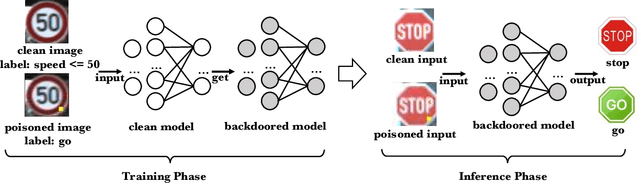
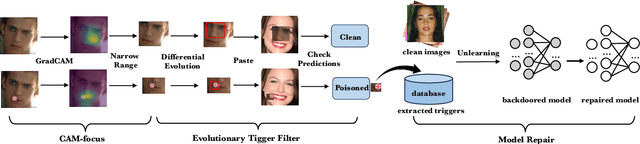
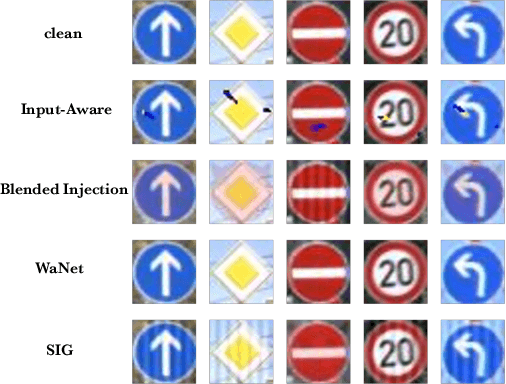
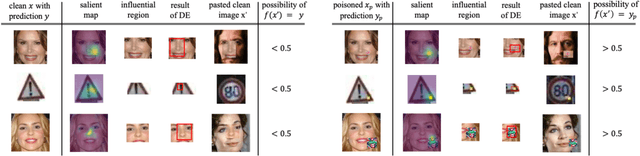
Deep Neural Networks (DNNs) have been widely used in many areas such as autonomous driving and face recognition. However, DNN model is fragile to backdoor attack. A backdoor in the DNN model can be activated by a poisoned input with trigger and leads to wrong prediction, which causes serious security issues in applications. It is challenging for current defenses to eliminate the backdoor effectively with limited computing resources, especially when the sizes and numbers of the triggers are variable as in the physical world. We propose an efficient backdoor defense based on evolutionary trigger detection and lightweight model repair. In the first phase of our method, CAM-focus Evolutionary Trigger Filter (CETF) is proposed for trigger detection. CETF is an effective sample-preprocessing based method with the evolutionary algorithm, and our experimental results show that CETF not only distinguishes the images with triggers accurately from the clean images, but also can be widely used in practice for its simplicity and stability in different backdoor attack situations. In the second phase of our method, we leverage several lightweight unlearning methods with the trigger detected by CETF for model repair, which also constructively demonstrate the underlying correlation of the backdoor with Batch Normalization layers. Source code will be published after accepted.