 Add to Chrome
 Add to Firefox
 Add to Edge
Are Video Models Zero-Shot Learners and Reasoners in Education? EduVideoBench, A Knowledge-Skills-Attitude Benchmark for Educational Video Generation
May 26, 2026
Video generation models (VGMs) are rapidly entering classrooms, yet existing benchmarks evaluate only perceptual quality, intrinsic faithfulness, generic safety, or video as a reasoning medium, and none assesses whether the outputs are educationally valid. In this work, we present EduVideoBench, the first balanced benchmark in the education domain, grounded in the Knowledge-Skills-Attitude (KSA) framework so that pedagogical adequacy and educational safety are evaluated jointly rather than as ad-hoc quality dimensions. Across five frontier VGMs, our results show substantial room for improvement across knowledge, skills, and attitude before they are classroom-ready. We complement this with a qualitative analysis of expert comments, finding that educational validity is multi-component, where a single misaligned element such as pacing, legibility, or notation can invalidate an otherwise correct video. We hope EduVideoBench will guide the development of VGMs that are pedagogically grounded and safe for the classroom.

LLaVA-Docent: Instruction Tuning with Multimodal Large Language Model to Support Art Appreciation Education
Feb 09, 2024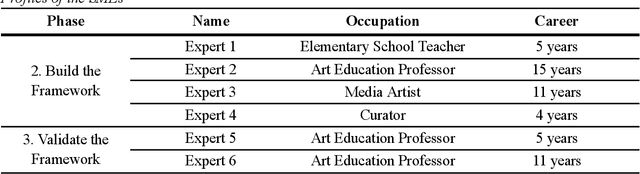
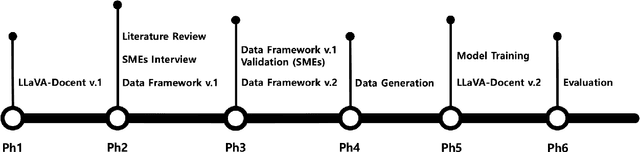
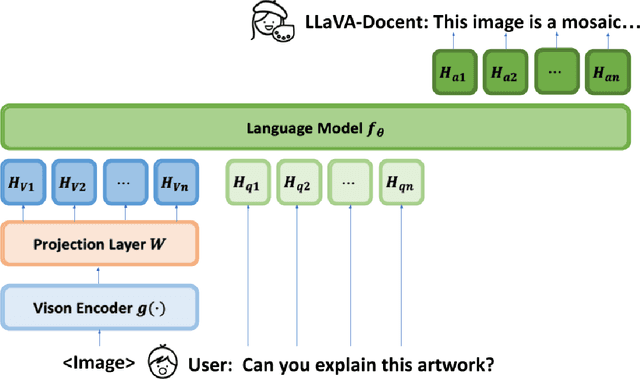
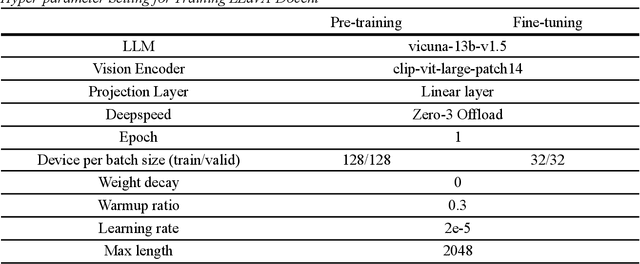
Art appreciation is vital in nurturing critical thinking and emotional intelligence among learners. However, traditional art appreciation education has often been hindered by limited access to art resources, especially for disadvantaged students, and an imbalanced emphasis on STEM subjects in mainstream education. In response to these challenges, recent technological advancements have paved the way for innovative solutions. This study explores the application of multi-modal large language models (MLLMs) in art appreciation education, focusing on developing LLaVA-Docent, a model that leverages these advancements. Our approach involved a comprehensive literature review and consultations with experts in the field, leading to developing a robust data framework. Utilizing this framework, we generated a virtual dialogue dataset that was leveraged by GPT-4. This dataset was instrumental in training the MLLM, named LLaVA-Docent. Six researchers conducted quantitative and qualitative evaluations of LLaVA-Docent to assess its effectiveness, benchmarking it against the GPT-4 model in a few-shot setting. The evaluation process revealed distinct strengths and weaknesses of the LLaVA-Docent model. Our findings highlight the efficacy of LLaVA-Docent in enhancing the accessibility and engagement of art appreciation education. By harnessing the potential of MLLMs, this study makes a significant contribution to the field of art education, proposing a novel methodology that reimagines the way art appreciation is taught and experienced.