 Add to Chrome
 Add to Firefox
 Add to Edge
SMAL-pets: SMAL Based Avatars of Pets from Single Image
Mar 17, 2026
Creating high-fidelity, animatable 3D dog avatars remains a formidable challenge in computer vision. Unlike human digital doubles, animal reconstruction faces a critical shortage of large-scale, annotated datasets for specialized applications. Furthermore, the immense morphological diversity across species, breeds, and crosses, which varies significantly in size, proportions, and features, complicates the generalization of existing models. Current reconstruction methods often struggle to capture realistic fur textures. Additionally, ensuring these avatars are fully editable and capable of performing complex, naturalistic movements typically necessitates labor-intensive manual mesh manipulation and expert rigging. This paper introduces SMAL-pets, a comprehensive framework that generates high-quality, editable animal avatars from a single input image. Our approach bridges the gap between reconstruction and generative modeling by leveraging a hybrid architecture. Our method integrates 3D Gaussian Splatting with the SMAL parametric model to provide a representation that is both visually high-fidelity and anatomically grounded. We introduce a multimodal editing suite that enables users to refine the avatar's appearance and execute complex animations through direct textual prompts. By allowing users to control both the aesthetic and behavioral aspects of the model via natural language, SMAL-pets provides a flexible, robust tool for animation and virtual reality.

Local Multi-Grouped Binary Descriptor with Ring-based Pooling Configuration and Optimization
Sep 22, 2015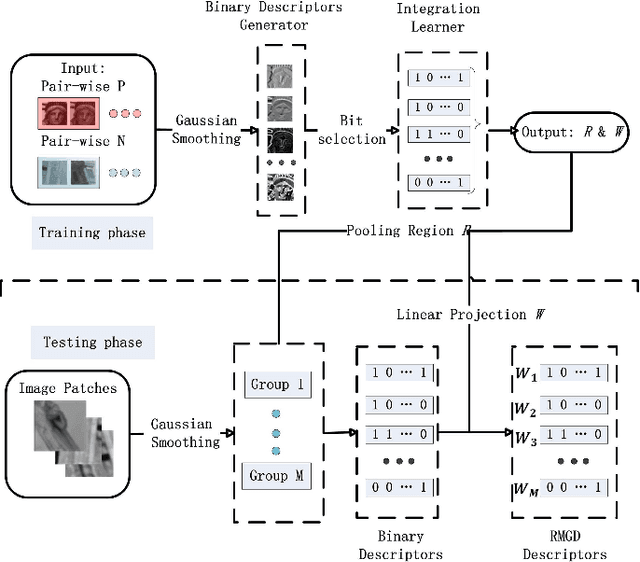
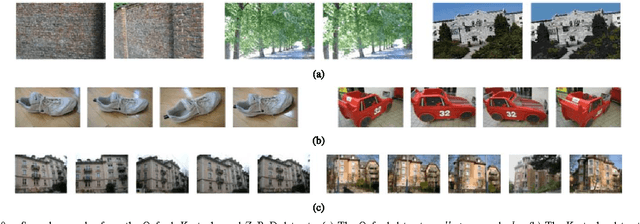
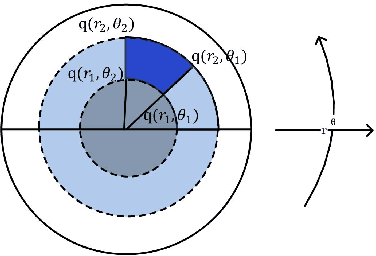
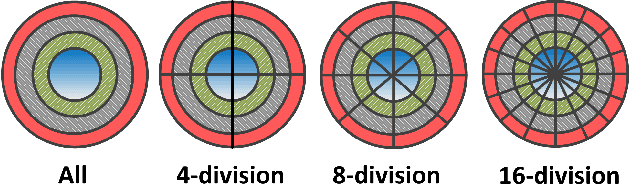
Local binary descriptors are attracting increasingly attention due to their great advantages in computational speed, which are able to achieve real-time performance in numerous image/vision applications. Various methods have been proposed to learn data-dependent binary descriptors. However, most existing binary descriptors aim overly at computational simplicity at the expense of significant information loss which causes ambiguity in similarity measure using Hamming distance. In this paper, by considering multiple features might share complementary information, we present a novel local binary descriptor, referred as Ring-based Multi-Grouped Descriptor (RMGD), to successfully bridge the performance gap between current binary and floated-point descriptors. Our contributions are two-fold. Firstly, we introduce a new pooling configuration based on spatial ring-region sampling, allowing for involving binary tests on the full set of pairwise regions with different shapes, scales and distances. This leads to a more meaningful description than existing methods which normally apply a limited set of pooling configurations. Then, an extended Adaboost is proposed for efficient bit selection by emphasizing high variance and low correlation, achieving a highly compact representation. Secondly, the RMGD is computed from multiple image properties where binary strings are extracted. We cast multi-grouped features integration as rankSVM or sparse SVM learning problem, so that different features can compensate strongly for each other, which is the key to discriminativeness and robustness. The performance of RMGD was evaluated on a number of publicly available benchmarks, where the RMGD outperforms the state-of-the-art binary descriptors significantly.