 Add to Chrome
 Add to Firefox
 Add to Edge
GLM-5: from Vibe Coding to Agentic Engineering
Feb 17, 2026
We present GLM-5, a next-generation foundation model designed to transition the paradigm of vibe coding to agentic engineering. Building upon the agentic, reasoning, and coding (ARC) capabilities of its predecessor, GLM-5 adopts DSA to significantly reduce training and inference costs while maintaining long-context fidelity. To advance model alignment and autonomy, we implement a new asynchronous reinforcement learning infrastructure that drastically improves post-training efficiency by decoupling generation from training. Furthermore, we propose novel asynchronous agent RL algorithms that further improve RL quality, enabling the model to learn from complex, long-horizon interactions more effectively. Through these innovations, GLM-5 achieves state-of-the-art performance on major open benchmarks. Most critically, GLM-5 demonstrates unprecedented capability in real-world coding tasks, surpassing previous baselines in handling end-to-end software engineering challenges. Code, models, and more information are available at https://github.com/zai-org/GLM-5.

Lightweight High-Performance Blind Image Quality Assessment
Mar 23, 2023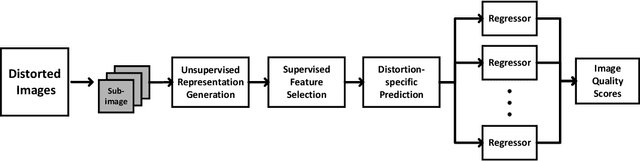
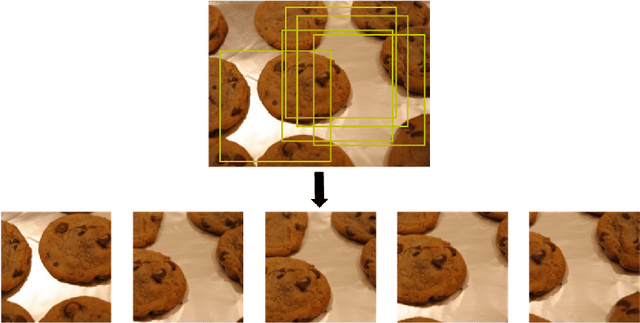
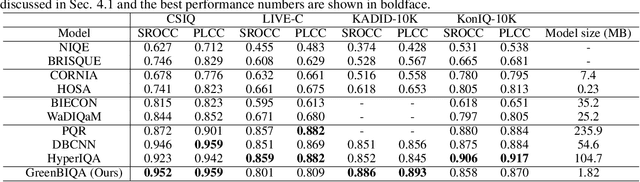
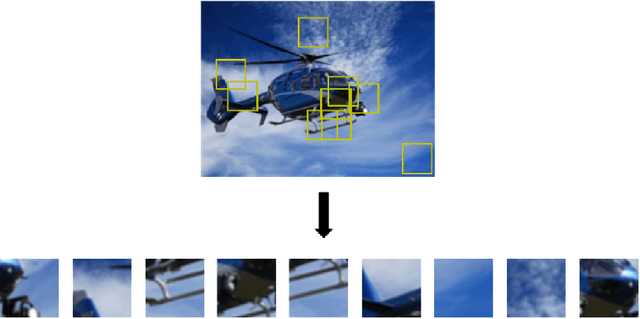
Blind image quality assessment (BIQA) is a task that predicts the perceptual quality of an image without its reference. Research on BIQA attracts growing attention due to the increasing amount of user-generated images and emerging mobile applications where reference images are unavailable. The problem is challenging due to the wide range of content and mixed distortion types. Many existing BIQA methods use deep neural networks (DNNs) to achieve high performance. However, their large model sizes hinder their applicability to edge or mobile devices. To meet the need, a novel BIQA method with a small model, low computational complexity, and high performance is proposed and named "GreenBIQA" in this work. GreenBIQA includes five steps: 1) image cropping, 2) unsupervised representation generation, 3) supervised feature selection, 4) distortion-specific prediction, and 5) regression and decision ensemble. Experimental results show that the performance of GreenBIQA is comparable with that of state-of-the-art deep-learning (DL) solutions while demanding a much smaller model size and significantly lower computational complexity.