 Add to Chrome
 Add to Firefox
 Add to Edge
LSEAD: A Privacy-Preserving LLM-Based Speech Analysis Framework for Early Alzheimer's Disease Screening
Aug 07, 2026
Early diagnosis of Alzheimer's disease (AD) is critical for enabling timely interventions that may slow disease progression and improve patient outcomes. There is a growing need for AD detection methods that are non-invasive and cost-effective, especially in real-world clinical settings with diverse patient populations and recording conditions. Speech-based screening addresses these needs by using natural speech collected without specialized equipment. Recent advances in large language models (LLMs) have improved speech analysis by providing rich linguistic representations and strong generalization. In this study, we propose LSEAD, a speech-based AD detection framework using pretrained open-source LLMs. Speech recordings are automatically transcribed, and text embeddings are extracted using locally deployed LLMs. Principal component analysis (PCA) is applied to reduce dimensionality before classification. Because the framework relies only on speech transcripts and locally deployed models, it supports privacy-preserving AD risk assessment without external data exchange. We evaluate LSEAD on the ADReSS20 and ADReSSo2021 benchmark datasets. Experimental results show that LLM-based embeddings generalize well across datasets and improve AD classification accuracy by up to 5 percent over existing methods, especially for early-stage detection. These results demonstrate that LSEAD provides a practical, secure, and scalable approach for early AD screening.

Toward Generalizable Cognitive Impairment Detection with Speech-Based Multimodal Large Language Models
Jul 23, 2026Cognitive impairment (CI) is a growing public health concern. Early and accurate diagnosis is critical for enabling timely intervention and improving patient outcomes. Speech-based CI detection has emerged as a promising non-invasive approach, as speech signals encode both linguistic and acoustic markers associated with cognitive decline. Recent advances in large language models (LLMs) further strengthen the potential of speech-based assessment by enabling more expressive representation learning and improved generalization across diverse speakers, recording devices, and clinical environments. Moreover, multimodal learning by jointly modeling linguistic and acoustic features allows for a more comprehensive characterization of cognitive and behavioral changes related to CI, leading to more reliable detection. In this work, we propose a multimodal CI detection framework based on open-source LLMs that integrates speech audio and corresponding transcripts while preserving patient privacy. Acoustic embeddings are extracted directly from speech signals, while textual embeddings are generated from automatically transcribed speech. These modality-specific embeddings are then concatenated to create a combined feature vector and used for downstream classification, without requiring access to raw or sensitive patient data. The proposed approach is evaluated on the ADReSS20 and ADReSSo21 benchmark datasets. Experimental results show that the proposed multimodal framework achieves an CI classification accuracy of 92.4% and consistently outperforms single-modality baselines. Our work establishes a new state-of-the-art for CI identification, with the proposed method demonstrating superior cross-dataset generalization. This advance highlights the power of an LLM-based multimodal framework that fuses linguistic and acoustic data to enable robust, scalable, and non-invasive screening.
Progress towards machine learning methodologies for laser-induced breakdown spectroscopy with an emphasis on soil analysis
Aug 15, 2022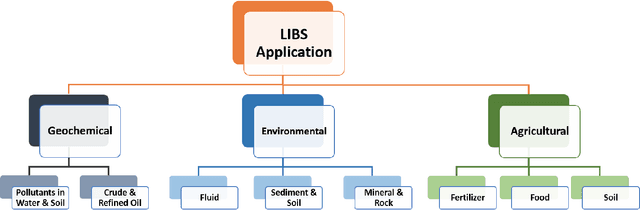
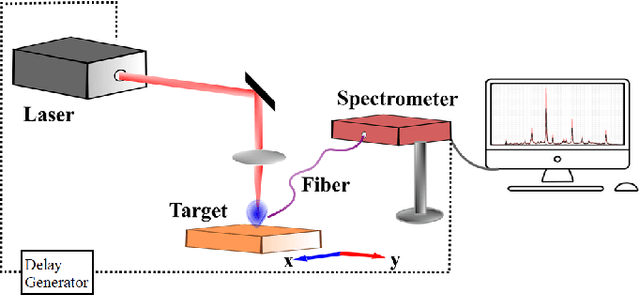
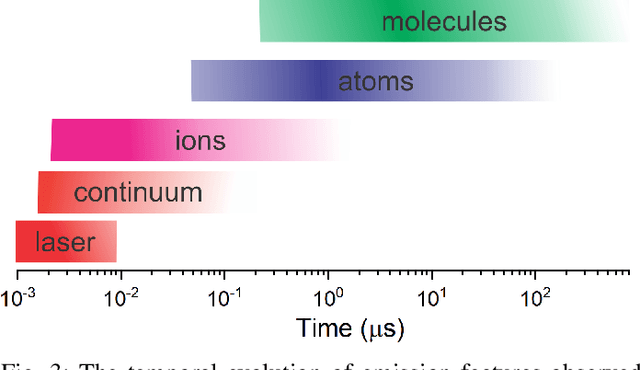
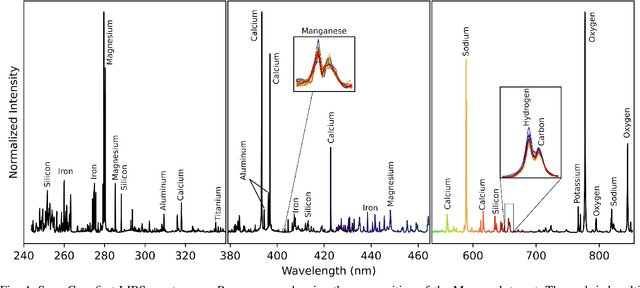
Optical emission spectroscopy of laser-produced plasmas, commonly known as laser-induced breakdown spectroscopy (LIBS), is an emerging analytical tool for rapid soil analysis. However, specific challenges with LIBS exist, such as matrix effects and quantification issues, that require further study in the application of LIBS, particularly for analysis of heterogeneous samples such as soils. Advancements in the applications of Machine Learning (ML) methods can address some of these issues, advancing the potential for LIBS in soil analysis. This article aims to review the progress of LIBS application combined with ML methods, focusing on methodological approaches used in reducing matrix effect, feature selection, quantification analysis, soil classification, and self-absorption. The performance of various adopted ML approaches is discussed, including their shortcomings and advantages, to provide researchers with a clear picture of the current status of ML applications in LIBS for improving its analytical capability. The challenges and prospects of LIBS development in soil analysis are proposed, offering a path toward future research. This review article emphasize ML tools for LIBS soil analysis that are broadly relevant for other LIBS applications.