 Add to Chrome
 Add to Firefox
 Add to Edge
Agile-VLA: Few-Shot Industrial Pose Rectification via Implicit Affordance Anchoring
Mar 24, 2026
Deploying Vision-Language-Action (VLA) models on resource-constrained edge platforms encounters a fundamental conflict between high-latency semantic inference and the high-frequency control required for dynamic manipulation. To address the challenge, this paper presents Agile-VLA, a hierarchical framework designed for industrial pose reorientation tasks on edge devices such as the NVIDIA Jetson Orin Nano. The core innovation is an Implicit Affordance Anchoring mechanism that directly maps geometric visual cues, specifically centroid and rim keypoint anchors, into structured parametric action primitives, thereby substantially reducing reliance on high-latency semantic inference during closed-loop control. By decoupling perception (10 Hz) from control (50 Hz) via an asynchronous dual-stream architecture, the system effectively mitigates the frequency mismatch inherent in edge-based robot learning. Experimental results on a standard 6-DoF manipulator demonstrate that Agile-VLA achieves robust rectification of complex, irregular workpieces using only 5-shot demonstrations through extrinsic dexterity.

DPNet: Dynamic Pooling Network for Tiny Object Detection
May 05, 2025

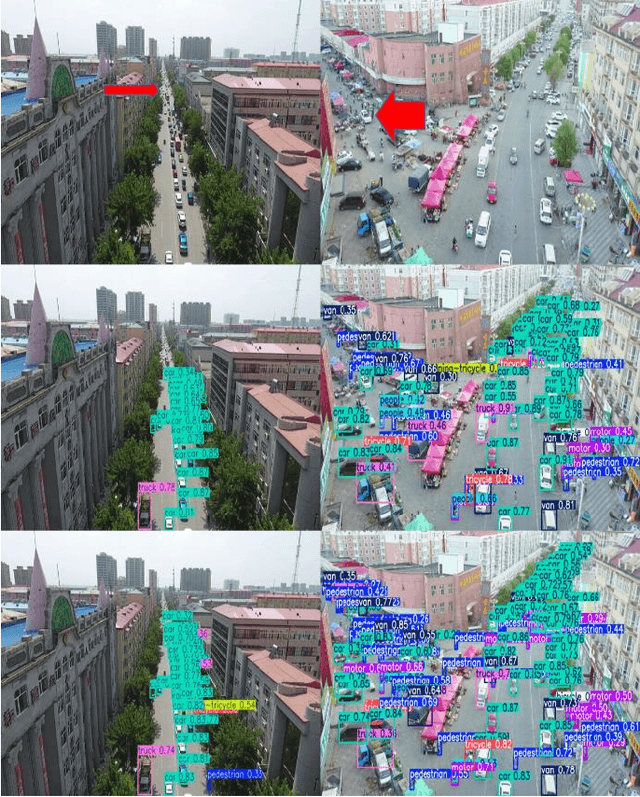
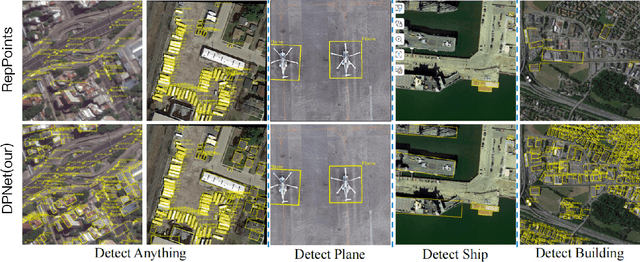
In unmanned aerial systems, especially in complex environments, accurately detecting tiny objects is crucial. Resizing images is a common strategy to improve detection accuracy, particularly for small objects. However, simply enlarging images significantly increases computational costs and the number of negative samples, severely degrading detection performance and limiting its applicability. This paper proposes a Dynamic Pooling Network (DPNet) for tiny object detection to mitigate these issues. DPNet employs a flexible down-sampling strategy by introducing a factor (df) to relax the fixed downsampling process of the feature map to an adjustable one. Furthermore, we design a lightweight predictor to predict df for each input image, which is used to decrease the resolution of feature maps in the backbone. Thus, we achieve input-aware downsampling. We also design an Adaptive Normalization Module (ANM) to make a unified detector compatible with different dfs. A guidance loss supervises the predictor's training. DPNet dynamically allocates computing resources to trade off between detection accuracy and efficiency. Experiments on the TinyCOCO and TinyPerson datasets show that DPNet can save over 35% and 25% GFLOPs, respectively, while maintaining comparable detection performance. The code will be made publicly available.