 Add to Chrome
 Add to Firefox
 Add to Edge
Robust Deepfake Detection, NTIRE 2026 Challenge: Report
Apr 27, 2026
Robustness is a long-overlooked problem in deepfake detection. However, detection performance is nearly worthless in the real world if it suffers under exposure to even slight image degradation. In addition to weaker degradations that can accidentally occur in the image processing pipeline, there is another risk of malicious deepfakes that specifically introduce degradations, purposefully exploiting the detector's weaknesses in that regard. Here, we present an overview of the NTIRE 2026 Robust Deepfake Detection Challenge, which specifically addresses that problem. Participants were tasked with building a detector that would later be tested on an unknown test-set, which included both common and uncommon degradations of various strengths. With a total number of 337 participants and 57 submissions to the final leaderboard, the first edition of the challenge was well received. To ensure the reliability of the results, participants were given only 24h to complete the test run with no labels provided, limiting the possibility of training on the test data. Furthermore, the top solutions were scored on a private test-set to detect any such overfitting. This report presents the competition setting, dataset preparation, as well as details and performance of methods. Top methods rely on large foundation models, ensembles, and degradation training to combine generality and robustness.

Public Opinion and The Rise of Digital Minds: Perceived Risk, Trust, and Regulation Support
Apr 30, 2025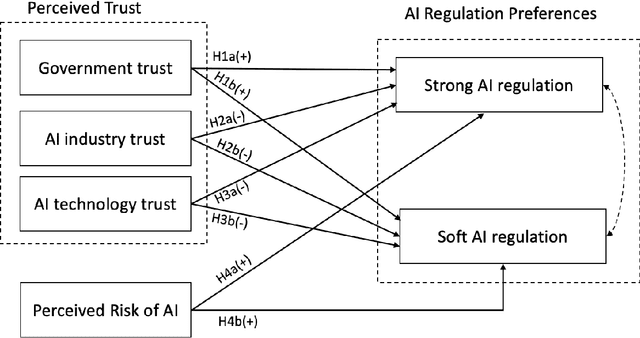
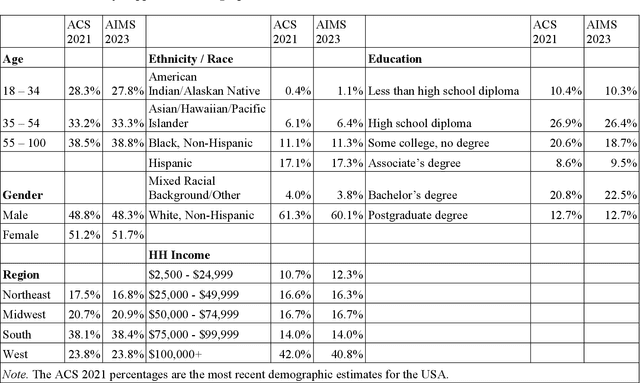
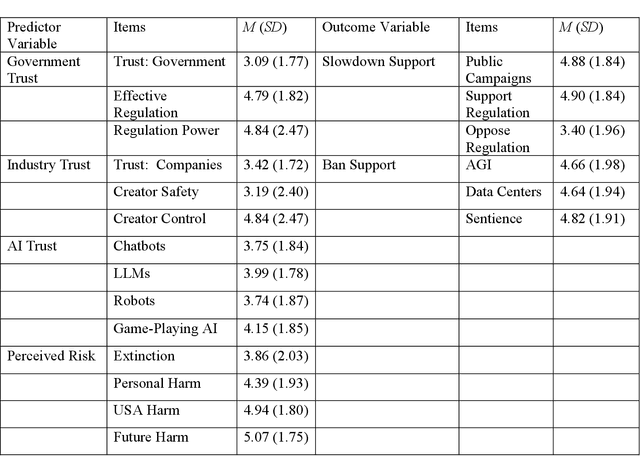
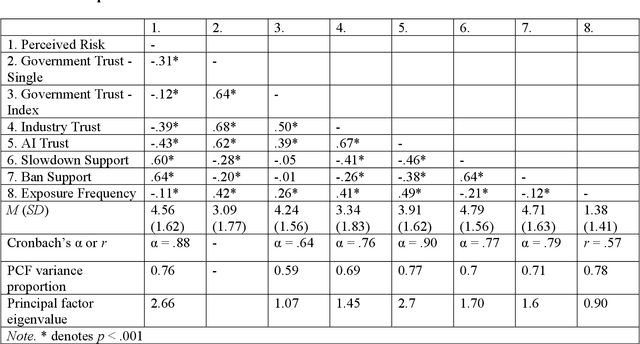
Governance institutions must respond to societal risks, including those posed by generative AI. This study empirically examines how public trust in institutions and AI technologies, along with perceived risks, shape preferences for AI regulation. Using the nationally representative 2023 Artificial Intelligence, Morality, and Sentience (AIMS) survey, we assess trust in government, AI companies, and AI technologies, as well as public support for regulatory measures such as slowing AI development or outright bans on advanced AI. Our findings reveal broad public support for AI regulation, with risk perception playing a significant role in shaping policy preferences. Individuals with higher trust in government favor regulation, while those with greater trust in AI companies and AI technologies are less inclined to support restrictions. Trust in government and perceived risks significantly predict preferences for both soft (e.g., slowing development) and strong (e.g., banning AI systems) regulatory interventions. These results highlight the importance of public opinion in AI governance. As AI capabilities advance, effective regulation will require balancing public concerns about risks with trust in institutions. This study provides a foundational empirical baseline for policymakers navigating AI governance and underscores the need for further research into public trust, risk perception, and regulatory strategies in the evolving AI landscape.