 Add to Chrome
 Add to Firefox
 Add to Edge
HemoPIC: A Physics-Informed Cerebral Hemodynamics Digital Twin for Brain Perfusion
Jul 08, 2026
Perfusion imaging guides clinical evaluation of stroke and brain tumors by characterizing tissue-level hemodynamics. Routine quantification relies on manual arterial input function (AIF) selection followed by deconvolution, producing summary maps without an executable temporal model for simulation or mechanistic insight. Tracer-dynamics-based models infer transport or compartmental parameters from perfusion time series, but do not yield clinically actionable perfusion indices (e.g., CBF, CBV, MTT) that inform diagnosis and treatment decisions. In this work, we propose HemoPIC, a physics-informed cerebral hemodynamics digital twin that explains perfusion time series through tracer mass conservation and a lumped parameter hemodynamic model. Specifically, HemoPIC solves a constrained inverse problem that jointly estimates digital twin parameters and latent states from perfusion imaging, eliminating manual AIF selection and deconvolution from routine perfusion quantification while directly producing clinically actionable perfusion summary maps. Experiments demonstrate that HemoPIC reconstructs tracer dynamics, generates physiologically consistent perfusion maps with lesion hypoperfusion patterns, satisfies central volume consistency, and yields a mechanistic hemodynamic digital twin that enables forward simulation and counterfactual intervention analysis. Code is publicly available at https://github.com/jhuldr/HemoPIC.

Effective and Low-cost Lane-based Map Localization for Vehicle-Centric Route Generation
Jun 15, 2026Driver-centric route representation plays a vital role in intuitive driving guidance systems. This paper presents OLRA, a low-cost, map-localization-based framework that derives driver-view-aligned routes by matching map-based navigation routes with camera-detected lane markings. This alignment process mutually enhances vehicle localization accuracy and visual route consistency. To bridge the evaluation gap across different paradigms, we introduce practical route evaluation metrics and benchmark OLRA against OpenPilot, a representative direct-generation approach. Experimental results on the nuScenes dataset demonstrate that OLRA outperforms OpenPilot in complex road segments and in route estimation at distance beyond 20 meters, achieving lower overall Euclidean error. This study is expected to promote future research in low-cost, maplocalization-based route generation methods.
Transformer Approximations from ReLUs
Apr 27, 2026We provide a systematic recipe for translating ReLU approximation results to softmax attention mechanism. This recipe covers many common approximation targets. Importantly, it yields target-specific, economic resource bounds beyond universal approximation statements. We showcase the recipe on multiplication, reciprocal computation, and min/max primitives. These results provide new analytical tools for analyzing softmax transformer models.
On Statistical Rates of Conditional Diffusion Transformers: Approximation, Estimation and Minimax Optimality
Nov 26, 2024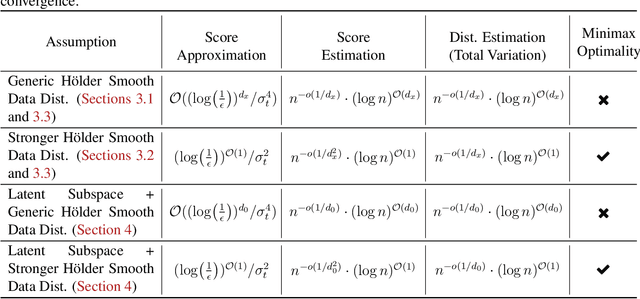
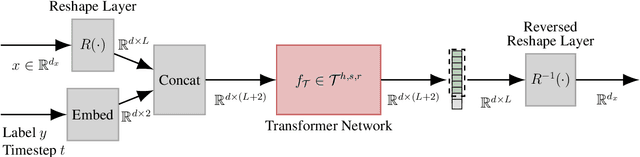
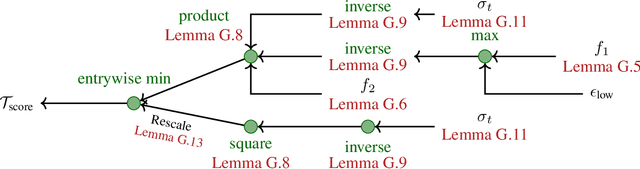
We investigate the approximation and estimation rates of conditional diffusion transformers (DiTs) with classifier-free guidance. We present a comprehensive analysis for ``in-context'' conditional DiTs under four common data assumptions. We show that both conditional DiTs and their latent variants lead to the minimax optimality of unconditional DiTs under identified settings. Specifically, we discretize the input domains into infinitesimal grids and then perform a term-by-term Taylor expansion on the conditional diffusion score function under H\"older smooth data assumption. This enables fine-grained use of transformers' universal approximation through a more detailed piecewise constant approximation and hence obtains tighter bounds. Additionally, we extend our analysis to the latent setting under the linear latent subspace assumption. We not only show that latent conditional DiTs achieve lower bounds than conditional DiTs both in approximation and estimation, but also show the minimax optimality of latent unconditional DiTs. Our findings establish statistical limits for conditional and unconditional DiTs, and offer practical guidance toward developing more efficient and accurate DiT models.