 Add to Chrome
 Add to Firefox
 Add to Edge
A Systematic Evaluation of Imbalance Handling Methods in Biomedical Binary Classification
May 13, 2026
Objective: The primary goal of this study was to systematically examine the impact of commonly used imbalance handling methods (IHMs) on predictive performance in biomedical binary classification, considering the interplay between model complexity and diverse data modalities. Material and Methods: We evaluated five representative IHMs: random undersampling (RUS), random oversampling (ROS), SMOTE, re-weighting (RW), and direct F1-score optimization (DMO), against a raw training (RAW) baseline. The evaluation encompassed three public biomedical datasets: MIMIC-III (tabular), ADE-Corpus-V2 (text), and MURA (image), spanning three common biomedical data modalities. To assess varying model complexity, we employed a range of architectures, from classical logistic regression and random forest to deep neural networks, including multilayer perceptron (MLP), BiLSTM, BERT, DenseNet, and DINOv2. Results: For simpler models such as logistic regression on tabular data, IHMs yielded no significant advantage over the RAW baseline, aligning with prior findings. However, clear benefits were observed for more complex models and unstructured data: (a) ROS and RW consistently enhanced the performance of powerful models; (b) direct F1-score optimization demonstrated utility primarily for unstructured text and image data; and (c) RUS and SMOTE consistently degraded performance and are therefore not recommended. Conclusion: The effectiveness of IHMs depends on both model complexity and data modality. Performance gains are most pronounced when leveraging appropriate IHMs, such as ROS, RW, and DMO, on high-complexity models.

Welfare and Fairness Dynamics in Federated Learning: A Client Selection Perspective
Feb 17, 2023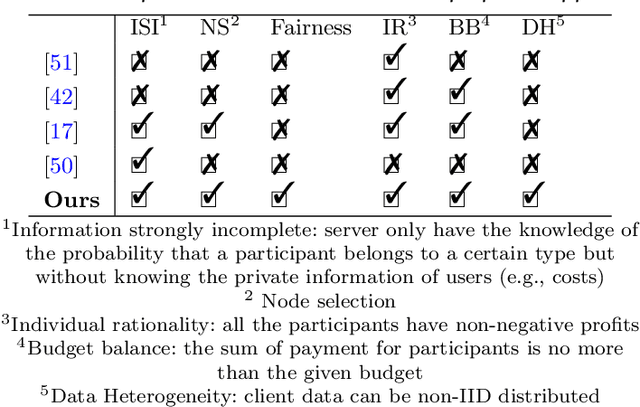
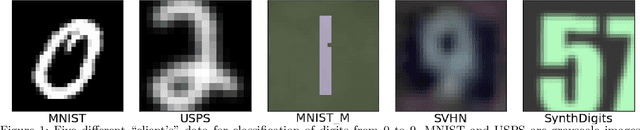
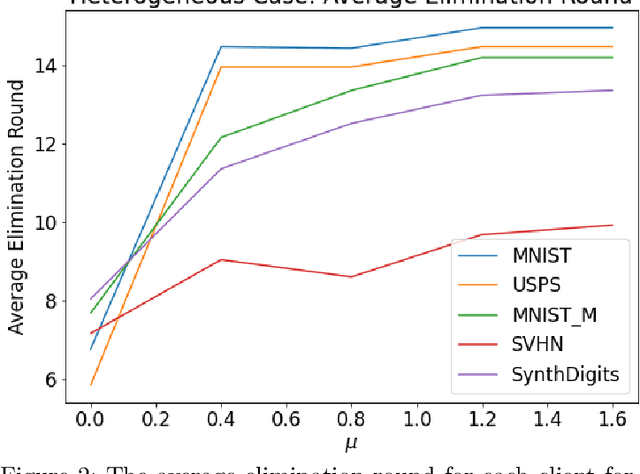
Federated learning (FL) is a privacy-preserving learning technique that enables distributed computing devices to train shared learning models across data silos collaboratively. Existing FL works mostly focus on designing advanced FL algorithms to improve the model performance. However, the economic considerations of the clients, such as fairness and incentive, are yet to be fully explored. Without such considerations, self-motivated clients may lose interest and leave the federation. To address this problem, we designed a novel incentive mechanism that involves a client selection process to remove low-quality clients and a money transfer process to ensure a fair reward distribution. Our experimental results strongly demonstrate that the proposed incentive mechanism can effectively improve the duration and fairness of the federation.