 Add to Chrome
 Add to Firefox
 Add to Edge
OLEDLM: A Unified Language Model for OLED Molecular Design
Jul 22, 2026
The development of organic light-emitting diode (OLED) materials faces the compounded challenges of an astronomically large chemical space, stringent quantum-chemical constraints, and a scarcity of labeled data. Although the question of OLED generation is important, few models have been trained effectively for this specific domain. We propose an inverse molecular design framework based on causal language models: given target optoelectronic properties (e.g., excitation energy, oscillator strength), our model directly generates OLED SMILES sequences satisfying the specified constraints. We employ a multi-stage strategy: first, we establish a foundational chemical language model using a LLaMA-style transformer architecture. To the best of our knowledge, this represents the first successful adaptation of LLMs specifically for the OLED domain, bridging the gap between generic molecular generation and the stringent structural requirements of optoelectronic materials. Second, we fine-tune property predictors based on a BERT model pre-trained on our large-scale OLED dataset. Then, we perform Reinforcement Learning on our fine-tuned model, leveraging our property predictor, for better SMILES generation. Finally, through DFT verification, we demonstrate that our framework can efficiently navigate the OLED chemical space, generating novel candidates with high structural validity and optimized optoelectronic properties.

Fine-Grained Post-Training Quantization for Large Vision Language Models with Quantization-Aware Integrated Gradients
Mar 18, 2026Large Vision Language Models (LVLMs) have achieved remarkable success in a range of downstream tasks that require multimodal interaction, but their capabilities come with substantial computational and memory overhead, which hinders practical deployment. Among numerous acceleration techniques, post-training quantization is a popular and effective strategy for reducing memory cost and accelerating inference. However, existing LVLM quantization methods typically measure token sensitivity at the modality level, which fails to capture the complex cross-token interactions and falls short in quantitatively measuring the quantization error at the token level. As tokens interact within the model, the distinction between modalities gradually diminishes, suggesting the need for fine-grained calibration. Inspired by axiomatic attribution in mechanistic interpretability, we introduce a fine-grained quantization strategy on Quantization-aware Integrated Gradients (QIG), which leverages integrated gradients to quantitatively evaluate token sensitivity and push the granularity from modality level to token level, reflecting both inter-modality and intra-modality dynamics. Extensive experiments on multiple LVLMs under both W4A8 and W3A16 settings show that our method improves accuracy across models and benchmarks with negligible latency overhead. For example, under 3-bit weight-only quantization, our method improves the average accuracy of LLaVA-onevision-7B by 1.60%, reducing the gap to its full-precision counterpart to only 1.33%. The code is available at https://github.com/ucas-xiang/QIG.
MolSculpt: Sculpting 3D Molecular Geometries from Chemical Syntax
Dec 09, 2025Generating precise 3D molecular geometries is crucial for drug discovery and material science. While prior efforts leverage 1D representations like SELFIES to ensure molecular validity, they fail to fully exploit the rich chemical knowledge entangled within 1D models, leading to a disconnect between 1D syntactic generation and 3D geometric realization. To bridge this gap, we propose MolSculpt, a novel framework that "sculpts" 3D molecular geometries from chemical syntax. MolSculpt is built upon a frozen 1D molecular foundation model and a 3D molecular diffusion model. We introduce a set of learnable queries to extract inherent chemical knowledge from the foundation model, and a trainable projector then injects this cross-modal information into the conditioning space of the diffusion model to guide the 3D geometry generation. In this way, our model deeply integrates 1D latent chemical knowledge into the 3D generation process through end-to-end optimization. Experiments demonstrate that MolSculpt achieves state-of-the-art (SOTA) performance in \textit{de novo} 3D molecule generation and conditional 3D molecule generation, showing superior 3D fidelity and stability on both the GEOM-DRUGS and QM9 datasets. Code is available at https://github.com/SakuraTroyChen/MolSculpt.
Decouple Graph Neural Networks: Train Multiple Simple GNNs Simultaneously Instead of One
Apr 20, 2023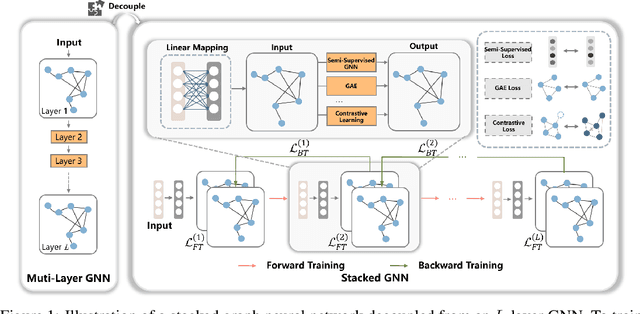
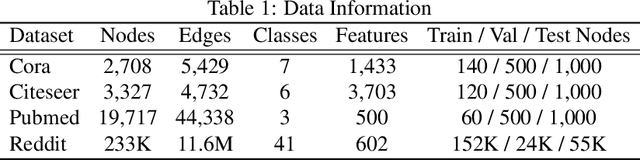
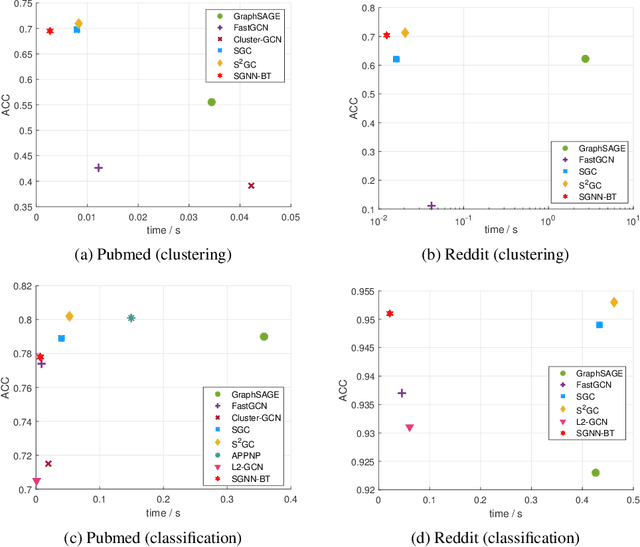
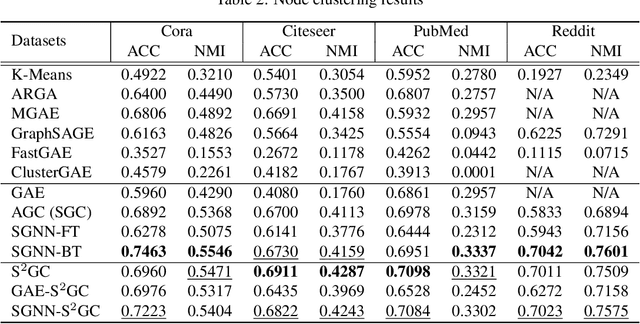
Graph neural networks (GNN) suffer from severe inefficiency. It is mainly caused by the exponential growth of node dependency with the increase of layers. It extremely limits the application of stochastic optimization algorithms so that the training of GNN is usually time-consuming. To address this problem, we propose to decouple a multi-layer GNN as multiple simple modules for more efficient training, which is comprised of classical forward training (FT)and designed backward training (BT). Under the proposed framework, each module can be trained efficiently in FT by stochastic algorithms without distortion of graph information owing to its simplicity. To avoid the only unidirectional information delivery of FT and sufficiently train shallow modules with the deeper ones, we develop a backward training mechanism that makes the former modules perceive the latter modules. The backward training introduces the reversed information delivery into the decoupled modules as well as the forward information delivery. To investigate how the decoupling and greedy training affect the representational capacity, we theoretically prove that the error produced by linear modules will not accumulate on unsupervised tasks in most cases. The theoretical and experimental results show that the proposed framework is highly efficient with reasonable performance.
A deep convolutional neural network approach to single-particle recognition in cryo-electron microscopy
Dec 31, 2016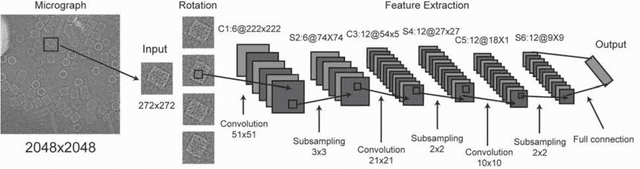
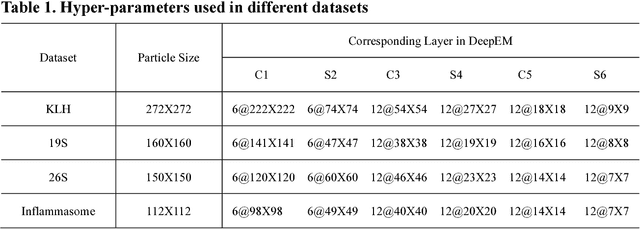
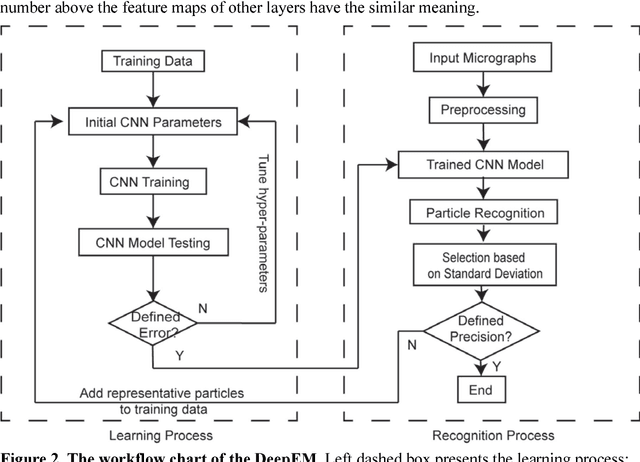
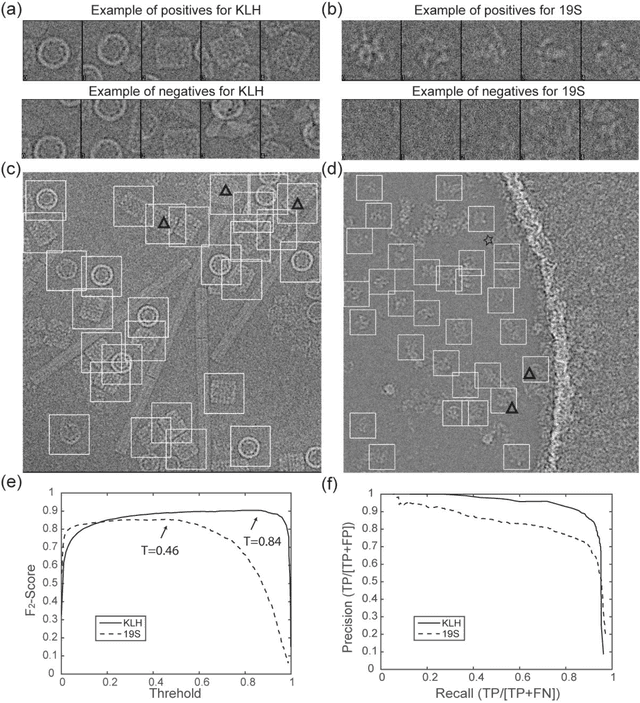
Background: Single-particle cryo-electron microscopy (cryo-EM) has become a popular tool for structural determination of biological macromolecular complexes. High-resolution cryo-EM reconstruction often requires hundreds of thousands of single-particle images. Particle extraction from experimental micrographs thus can be laborious and presents a major practical bottleneck in cryo-EM structural determination. Existing computational methods of particle picking often use low-resolution templates as inputs for particle matching, making it possible to cause reference-dependent bias. It is critical to develop a highly efficient template-free method to automatically recognize particle images from cryo-EM micrographs. Results: We developed a deep learning-based algorithmic framework, DeepEM, for single-particle recognition from noisy cryo-EM micrographs, enabling automated particle picking, selection and verification in an integrated fashion. The kernel of DeepEM is built upon a convolutional neural network (CNN) of eight layers, which can be recursively trained to be highly "knowledgeable". Our approach exhibits improved performance and high precision when tested on the standard KLH dataset. Application of DeepEM to several challenging experimental cryo-EM datasets demonstrates its capability in avoiding selection of un-wanted particles and non-particles even when true particles contain fewer features. Conclusions: The DeepEM method derived from a deep CNN allows automated particle extraction from raw cryo-EM micrographs in the absence of templates, which demonstrated improved performance, objectivity and accuracy. Application of this novel approach is expected to free the labor involved in single-particle verification, thus promoting the efficiency of cryo-EM data processing.
* 26 pages, 6 figures, 1 table