 Add to Chrome
 Add to Firefox
 Add to Edge
CFRNet: Cycle-Consistent Fixed-Point Training for Real-Time Blind Face Restoration on Consumer Embedded NPUs
Jun 05, 2026
Blind face restoration on consumer devices has to balance image quality against speed and memory. Strong methods such as GFPGAN and CodeFormer give good perceptual quality, but they rely on large pretrained generative priors and on operators such as attention, codebook lookup, and style modulation that are hard to compile and quantize on the small neural processing units (NPUs) used in consumer hardware. Small convolutional restorers run fast enough, but they tend to over-smooth and to leave artifacts around the eyes, nose, and mouth. We present CFRNet, a 2.0,M-parameter ResNet-style restorer for on-device use at $256\times256$, the common face-crop size on consumer NPUs. The main idea is Cycle-Consistent Fixed-Point Training (CCFP). Instead of training the network for one pass and then running it several times by hand, we train it to act as a fixed-point operator, so that applying it again to a restored face does not change the face. CCFP uses three training losses, namely progressive multi-cycle supervision, an idempotence loss, and a re-degradation cycle loss, and it adds no cost at inference. To compare fairly under our deployment limits, we retrain all baselines from scratch at the same $256\times256$ resolution. On a 300-image test set, CFRNet reaches the best perceptual score (LPIPS 0.250 at three cycles, which is 31% lower than one cycle) and also the best PSNR and SSIM at two cycles. It runs in about 23,ms per cycle in INT8 on a HiSilicon Hi3402 NPU, while the same baselines cannot be compiled to that chip. The cycle count $k$ acts as a simple quality knob that needs no retraining: PSNR is best at $k\!=\!2$ and LPIPS keeps improving up to $k\!=\!3$. We further show that the same idea works with a plain CNN that is even easier to deploy, and we run the model in real time on an in-car driver-monitoring board.

Spiking SiamFC++: Deep Spiking Neural Network for Object Tracking
Sep 24, 2022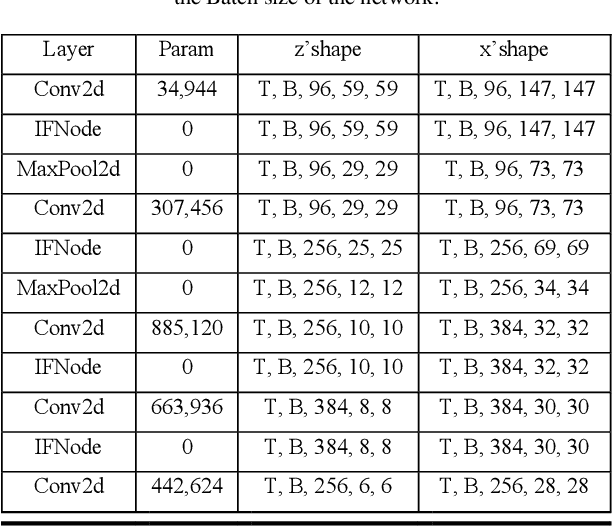
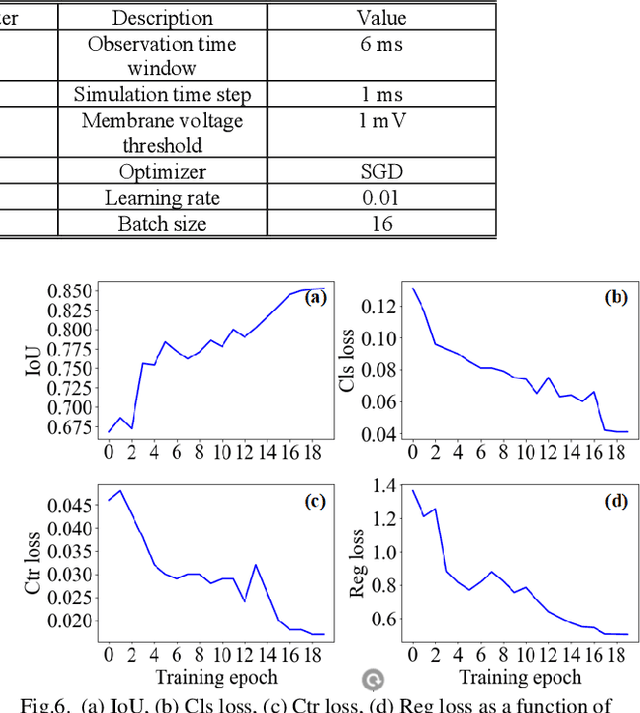
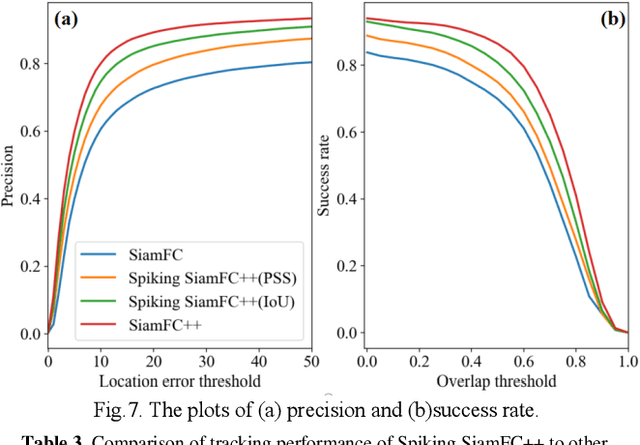
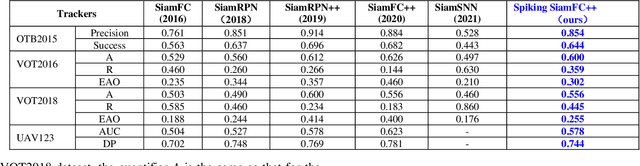
Spiking neural network (SNN) is a biologically-plausible model and exhibits advantages of high computational capability and low power consumption. While the training of deep SNN is still an open problem, which limits the real-world applications of deep SNN. Here we propose a deep SNN architecture named Spiking SiamFC++ for object tracking with end-to-end direct training. Specifically, the AlexNet network is extended in the time domain to extract the feature, and the surrogate gradient function is adopted to realize direct supervised training of the deep SNN. To examine the performance of the Spiking SiamFC++, several tracking benchmarks including OTB2013, OTB2015, VOT2015, VOT2016, and UAV123 are considered. It is found that, the precision loss is small compared with the original SiamFC++. Compared with the existing SNN-based target tracker, e.g., the SiamSNN, the precision (succession) of the proposed Spiking SiamFC++ reaches 85.24% (64.37%), which is much higher than that of 52.78% (44.32%) achieved by the SiamSNN. To our best knowledge, the performance of the Spiking SiamFC++ outperforms the existing state-of-the-art approaches in SNN-based object tracking, which provides a novel path for SNN application in the field of target tracking. This work may further promote the development of SNN algorithms and neuromorphic chips.
All-optical neuromorphic binary convolution with a spiking VCSEL neuron for image gradient magnitudes
Nov 09, 2020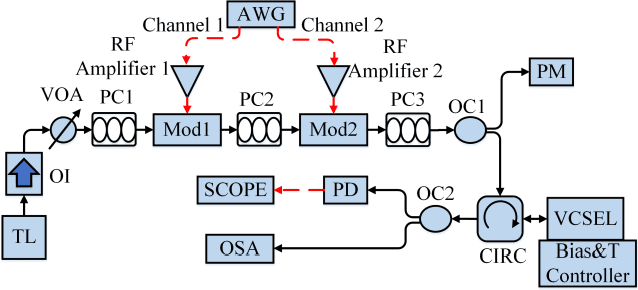
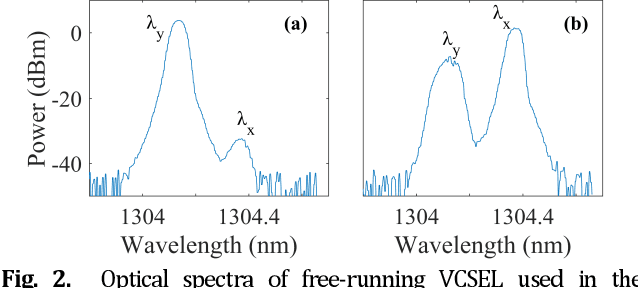
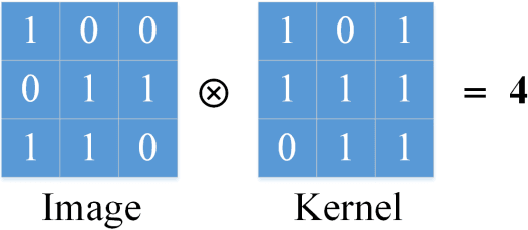
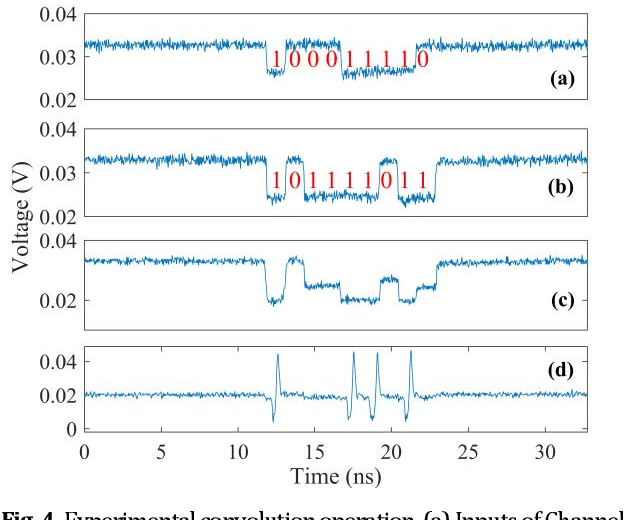
All-optical binary convolution with a photonic spiking vertical-cavity surface-emitting laser (VCSEL) neuron is proposed and demonstrated experimentally for the first time. Optical inputs, extracted from digital images and temporally encoded using rectangular pulses, are injected in the VCSEL neuron which delivers the convolution result in the number of fast (<100 ps long) spikes fired. Experimental and numerical results show that binary convolution is achieved successfully with a single spiking VCSEL neuron and that all-optical binary convolution can be used to calculate image gradient magnitudes to detect edge features and separate vertical and horizontal components in source images. We also show that this all-optical spiking binary convolution system is robust to noise and can operate with high-resolution images. Additionally, the proposed system offers important advantages such as ultrafast speed, high energy efficiency and simple hardware implementation, highlighting the potentials of spiking photonic VCSEL neurons for high-speed neuromorphic image processing systems and future photonic spiking convolutional neural networks.
Deep Transfer Convolutional Neural Network and Extreme Learning Machine for Lung Nodule Diagnosis on CT images
Jan 05, 2020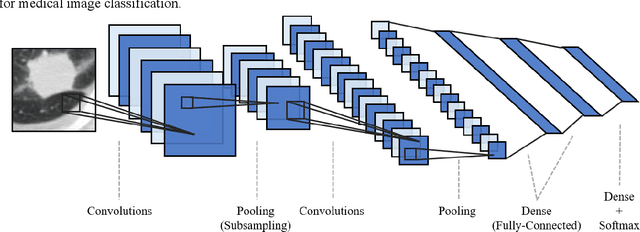
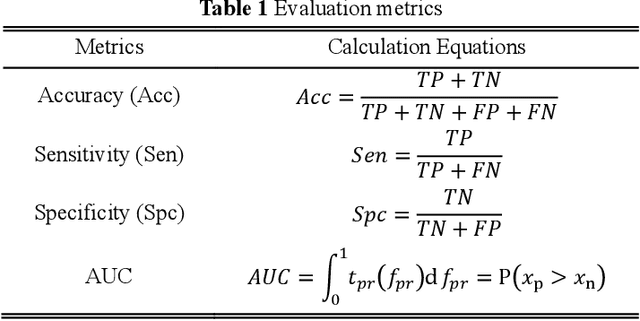
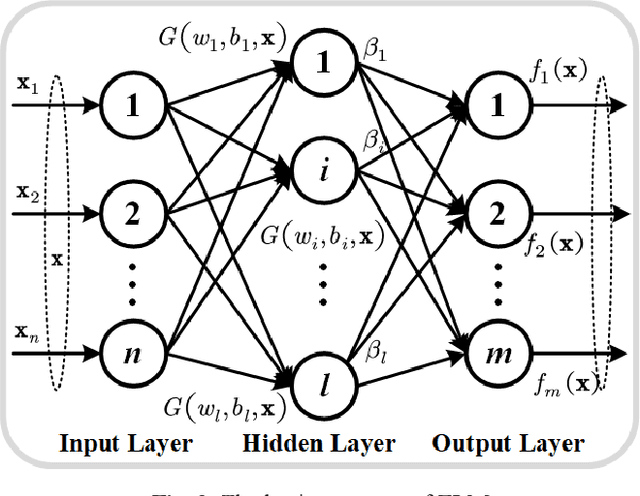
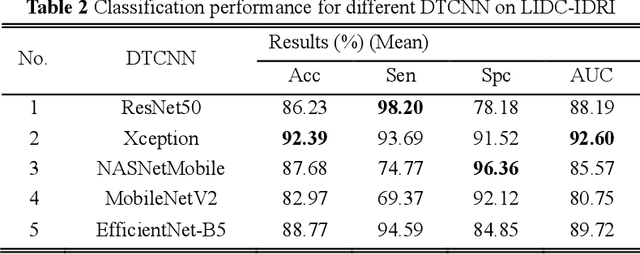
Diagnosis of benign-malignant nodules in the lung on Computed Tomography (CT) images is critical for determining tumor level and reducing patient mortality. Deep learning-based diagnosis of nodules in lung CT images, however, is time-consuming and less accurate due to redundant structure and the lack of adequate training data. In this paper, a novel diagnosis method based on Deep Transfer Convolutional Neural Network (DTCNN) and Extreme Learning Machine (ELM) is explored, which merges the synergy of two algorithms to deal with benign-malignant nodules classification. An optimal DTCNN is first adopted to extract high level features of lung nodules, which has been trained with the ImageNet dataset beforehand. After that, an ELM classifier is further developed to classify benign and malignant lung nodules. Two datasets, including the Lung Image Database Consortium and Image Database Resource Initiative (LIDC-IDRI) public dataset and a private dataset from the First Affiliated Hospital of Guangzhou Medical University in China (FAH-GMU), have been conducted to verify the efficiency and effectiveness of the proposed approach. The experimental results show that our novel DTCNN-ELM model provides the most reliable results compared with current state-of-the-art methods.