 Add to Chrome
 Add to Firefox
 Add to Edge
Bridge2AI: Building A Cross-disciplinary Curriculum Towards AI-Enhanced Biomedical and Clinical Care
May 20, 2025
Objective: As AI becomes increasingly central to healthcare, there is a pressing need for bioinformatics and biomedical training systems that are personalized and adaptable. Materials and Methods: The NIH Bridge2AI Training, Recruitment, and Mentoring (TRM) Working Group developed a cross-disciplinary curriculum grounded in collaborative innovation, ethical data stewardship, and professional development within an adapted Learning Health System (LHS) framework. Results: The curriculum integrates foundational AI modules, real-world projects, and a structured mentee-mentor network spanning Bridge2AI Grand Challenges and the Bridge Center. Guided by six learner personas, the program tailors educational pathways to individual needs while supporting scalability. Discussion: Iterative refinement driven by continuous feedback ensures that content remains responsive to learner progress and emerging trends. Conclusion: With over 30 scholars and 100 mentors engaged across North America, the TRM model demonstrates how adaptive, persona-informed training can build interdisciplinary competencies and foster an integrative, ethically grounded AI education in biomedical contexts.

Voice EHR: Introducing Multimodal Audio Data for Health
Apr 02, 2024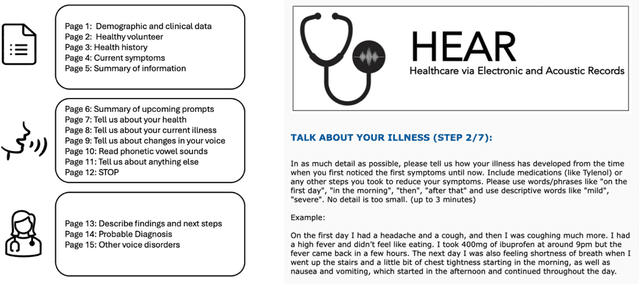
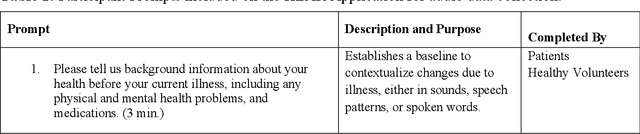
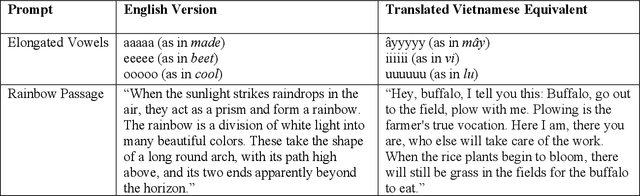
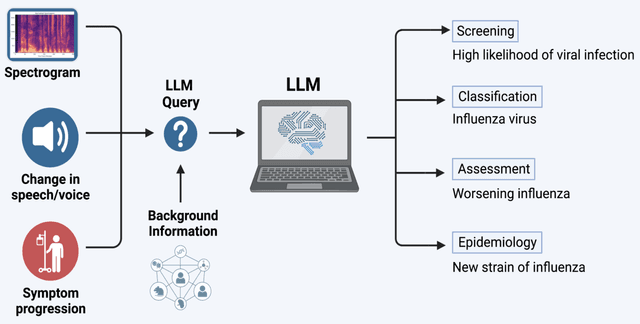
Large AI models trained on audio data may have the potential to rapidly classify patients, enhancing medical decision-making and potentially improving outcomes through early detection. Existing technologies depend on limited datasets using expensive recording equipment in high-income, English-speaking countries. This challenges deployment in resource-constrained, high-volume settings where audio data may have a profound impact. This report introduces a novel data type and a corresponding collection system that captures health data through guided questions using only a mobile/web application. This application ultimately results in an audio electronic health record (voice EHR) which may contain complex biomarkers of health from conventional voice/respiratory features, speech patterns, and language with semantic meaning - compensating for the typical limitations of unimodal clinical datasets. This report introduces a consortium of partners for global work, presents the application used for data collection, and showcases the potential of informative voice EHR to advance the scalability and diversity of audio AI.