 Add to Chrome
 Add to Firefox
 Add to Edge
Toward Personalized Darts Training: A Data-Driven Framework Based on Skeleton-Based Biomechanical Analysis and Motion Modeling
Apr 02, 2026
As sports training becomes more data-driven, traditional dart coaching based mainly on experience and visual observation is increasingly inadequate for high-precision, goal-oriented movements. Although prior studies have highlighted the importance of release parameters, joint motion, and coordination in dart throwing, most quantitative methods still focus on local variables, single-release metrics, or static template matching. These approaches offer limited support for personalized training and often overlook useful movement variability. This paper presents a data-driven dart training assistance system. The system creates a closed-loop framework spanning motion capture, feature modeling, and personalized feedback. Dart-throwing data were collected in markerless conditions using a Kinect 2.0 depth sensor and an optical camera. Eighteen kinematic features were extracted from four biomechanical dimensions: three-link coordination, release velocity, multi-joint angular configuration, and postural stability. Two modules were developed: a personalized optimal throwing trajectory model that combines historical high-quality samples with the minimum jerk criterion, and a motion deviation diagnosis and recommendation model based on z-scores and hierarchical logic. A total of 2,396 throwing samples from professional and non-professional athletes were collected. Results show that the system generates smooth personalized reference trajectories consistent with natural human movement. Case studies indicate that it can detect poor trunk stability, abnormal elbow displacement, and imbalanced velocity control, then provide targeted recommendations. The framework shifts dart evaluation from deviation from a uniform standard to deviation from an individual's optimal control range, improving personalization and interpretability for darts training and other high-precision target sports.

MsPrompt: Multi-step Prompt Learning for Debiasing Few-shot Event Detection
May 16, 2023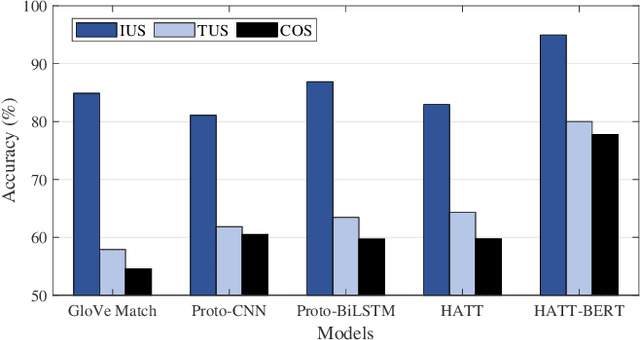
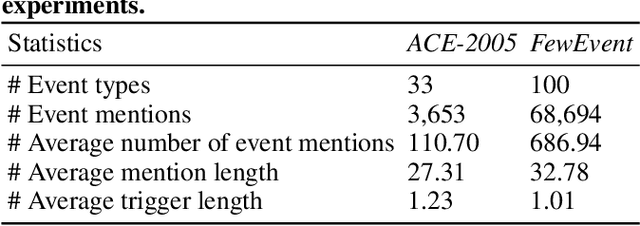
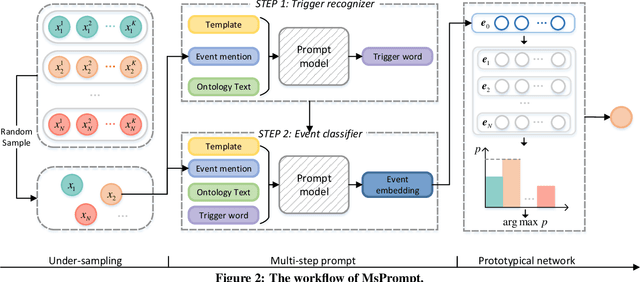
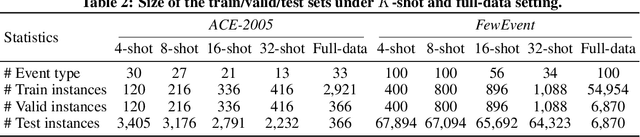
Event detection (ED) is aimed to identify the key trigger words in unstructured text and predict the event types accordingly. Traditional ED models are too data-hungry to accommodate real applications with scarce labeled data. Besides, typical ED models are facing the context-bypassing and disabled generalization issues caused by the trigger bias stemming from ED datasets. Therefore, we focus on the true few-shot paradigm to satisfy the low-resource scenarios. In particular, we propose a multi-step prompt learning model (MsPrompt) for debiasing few-shot event detection, that consists of the following three components: an under-sampling module targeting to construct a novel training set that accommodates the true few-shot setting, a multi-step prompt module equipped with a knowledge-enhanced ontology to leverage the event semantics and latent prior knowledge in the PLMs sufficiently for tackling the context-bypassing problem, and a prototypical module compensating for the weakness of classifying events with sparse data and boost the generalization performance. Experiments on two public datasets ACE-2005 and FewEvent show that MsPrompt can outperform the state-of-the-art models, especially in the strict low-resource scenarios reporting 11.43% improvement in terms of weighted F1-score against the best-performing baseline and achieving an outstanding debiasing performance.