 Add to Chrome
 Add to Firefox
 Add to Edge
Class-Grouped Normalized Momentum and Faster Hyperparameter Exploration to Tackle Class Imbalance in Federated Learning
Jul 01, 2026
Class imbalance poses a critical challenge in federated learning (FL), where underrepresented classes suffer from poor predictive performance yet cannot be addressed by standard centralized techniques due to privacy and heterogeneity constraints. We propose FedCGNM (Federated Class-Grouped Normalized Momentum), a client-side optimizer in FL that partitions classes into a small number of groups based on minimum within-group variance, maintains a momentum per group, normalizes each group momentum to unit length, and uses the summation of the normalized group momentums as an update direction. This design both equalizes gradient magnitude across majority and minority groups and mitigates the noise inherent in rare-class gradients. We further provide a theoretical convergence analysis explicitly accounting for time-varying resampling-rates. Additionally, to efficiently optimize these rates in small-client regimes, we introduce FedHOO, an X-armed-bandit (XAB) based algorithm that exploits federated parallelism that evaluates many combinations of two candidate rates per client at linear cost. Empirical evaluation on four public long-tailed benchmarks and a proprietary chip-defect dataset demonstrates that FedCGNM consistently outperforms baselines, with FedHOO yielding further gains in small-scale federations.

Joint Time Series Chain: Detecting Unusual Evolving Trend across Time Series
Feb 14, 2026Time series chain (TSC) is a recently introduced concept that captures the evolving patterns in large scale time series. Informally, a time series chain is a temporally ordered set of subsequences, in which consecutive subsequences in the chain are similar to one another, but the last and the first subsequences maybe be dissimilar. Time series chain has the great potential to reveal latent unusual evolving trend in the time series, or identify precursor of important events in a complex system. Unfortunately, existing definitions of time series chains only consider finding chains in a single time series. As a result, they are likely to miss unexpected evolving patterns in interrupted time series, or across two related time series. To address this limitation, in this work, we introduce a new definition called \textit{Joint Time Series Chain}, which is specially designed for the task of finding unexpected evolving trend across interrupted time series or two related time series. Our definition focuses on mitigating the robustness issues caused by the gap or interruption in the time series. We further propose an effective ranking criterion to identify the best chain. We demonstrate that our proposed approach outperforms existing TSC work in locating unusual evolving patterns through extensive empirical evaluations. We further demonstrate the utility of our work with a real-life manufacturing application from Intel. Our source code is publicly available at the supporting page https://github.com/lizhang-ts/JointTSC .
Learning Multiple Coordinated Agents under Directed Acyclic Graph Constraints
Jul 13, 2023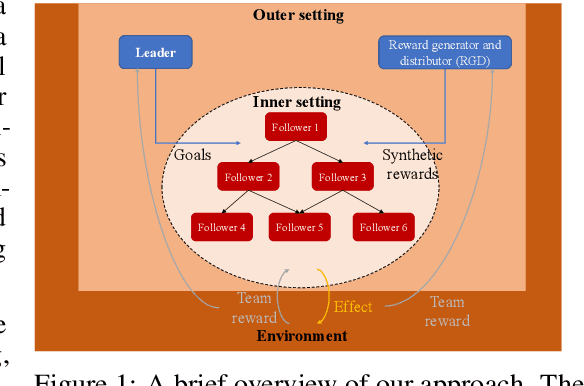
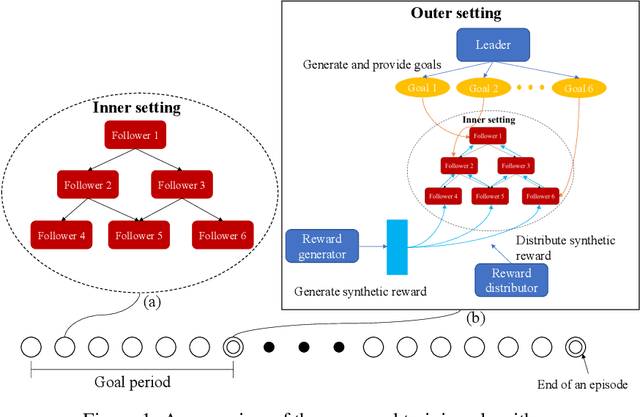
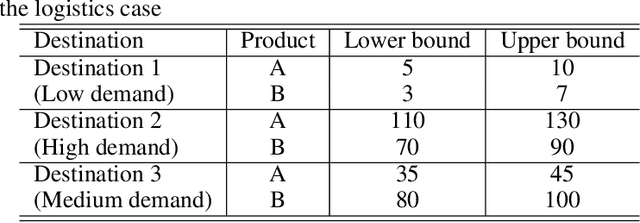
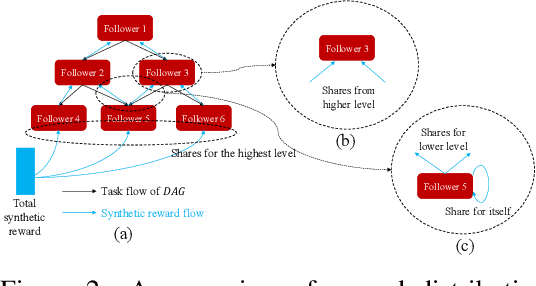
This paper proposes a novel multi-agent reinforcement learning (MARL) method to learn multiple coordinated agents under directed acyclic graph (DAG) constraints. Unlike existing MARL approaches, our method explicitly exploits the DAG structure between agents to achieve more effective learning performance. Theoretically, we propose a novel surrogate value function based on a MARL model with synthetic rewards (MARLM-SR) and prove that it serves as a lower bound of the optimal value function. Computationally, we propose a practical training algorithm that exploits new notion of leader agent and reward generator and distributor agent to guide the decomposed follower agents to better explore the parameter space in environments with DAG constraints. Empirically, we exploit four DAG environments including a real-world scheduling for one of Intel's high volume packaging and test factory to benchmark our methods and show it outperforms the other non-DAG approaches.