 Add to Chrome
 Add to Firefox
 Add to Edge
Convergence Guarantees of Gradient Descent for Neural Networks via Generalized Lipschitz Smoothness
Aug 11, 2026
We establish convergence guarantees of gradient descent for general feedforward neural networks of arbitrary width or depth, with no special requirements on the initialization or dataset. We only assume that the activation functions are Lipschitz smooth, Lipschitz continuous, and linearly bounded--- properties that hold for linear, tanh, softplus, and sigmoid activation functions. For the loss function, we require that it is Lipschitz smooth in the model outputs, which is true for mean-squared error. The key theoretical insight is that the Lipschitz properties of the activation functions are partially preserved even through repeated compositions, leading to a novel generalized Lipschitz smoothness condition where the change in gradient is upper bounded by the change in the parameter space, multiplied by polynomial terms of the parameter norms at both endpoints. This type of condition holds for both the model function and the loss function, enabling a descent lemma where the loss decreases as long as the learning rate is small enough with respect to the parameter norms. By ensuring that the parameter norms do not grow too quickly to infinity, we prove that the minimum squared gradient norm converges to zero in $T$ iterations at rate $O(1/T^{1/L})$ for an $L$-layer neural network.

Class-Grouped Normalized Momentum and Faster Hyperparameter Exploration to Tackle Class Imbalance in Federated Learning
Jul 01, 2026Class imbalance poses a critical challenge in federated learning (FL), where underrepresented classes suffer from poor predictive performance yet cannot be addressed by standard centralized techniques due to privacy and heterogeneity constraints. We propose FedCGNM (Federated Class-Grouped Normalized Momentum), a client-side optimizer in FL that partitions classes into a small number of groups based on minimum within-group variance, maintains a momentum per group, normalizes each group momentum to unit length, and uses the summation of the normalized group momentums as an update direction. This design both equalizes gradient magnitude across majority and minority groups and mitigates the noise inherent in rare-class gradients. We further provide a theoretical convergence analysis explicitly accounting for time-varying resampling-rates. Additionally, to efficiently optimize these rates in small-client regimes, we introduce FedHOO, an X-armed-bandit (XAB) based algorithm that exploits federated parallelism that evaluates many combinations of two candidate rates per client at linear cost. Empirical evaluation on four public long-tailed benchmarks and a proprietary chip-defect dataset demonstrates that FedCGNM consistently outperforms baselines, with FedHOO yielding further gains in small-scale federations.
Hierarchical Graph Learning for Calendar Spread Strategies in Commodity Futures Markets
Jun 24, 2026Commodity futures can be represented hierarchically, with underlying assets at the upper level and individual futures contracts at the lower level. Entities at each level can be connected by edges reflecting inherent correlations, with cross-level edges capturing contract-to-underlying asset connections. Building on our observations of these structures, we propose a hierarchical graph learning approach for calendar spread (CS) strategies in commodity futures markets, addressing two significant gaps in the machine-learning literature: (i) the absence of learning-based methods for CS strategies in futures markets, and (ii) the lack of consideration of maturity-dependent interrelationships across commodity futures. We first establish the efficacy of CS strategies by analytically showing that CS strategies can possess higher risk-adjusted returns, measured by the information ratio, and lower risk, measured by variance and delta, than long-only strategies. We then introduce a method to convert learning-based predictions into CS positions. Next, we develop a hierarchical graph learning method that predicts futures price movements by utilizing the maturity-dependent interrelationships, thereby yielding a CS trading algorithm. Empirical results on commodity futures markets traded on the Chicago Mercantile Exchange Group demonstrate that our method outperforms benchmark models in both prediction and trading performance. We find that maturity-dependent interrelationships across commodity futures are instrumental in prediction and that CS trading based on hierarchical graph learning is effective for statistical arbitrage.
Model-based Bootstrap of Controlled Markov Chains
May 12, 2026We propose and analyze a model-based bootstrap for transition kernels in finite controlled Markov chains (CMCs) with possibly nonstationary or history-dependent control policies, a setting that arises naturally in offline reinforcement learning (RL) when the behavior policy generating the data is unknown. We establish distributional consistency of the bootstrap transition estimator in both a single long-chain regime and the episodic offline RL regime. The key technical tools are a novel bootstrap law of large numbers (LLN) for the visitation counts and a novel use of the martingale central limit theorem (CLT) for the bootstrap transition increments. We extend bootstrap distributional consistency to the downstream targets of offline policy evaluation (OPE) and optimal policy recovery (OPR) via the delta method by verifying Hadamard differentiability of the Bellman operators, yielding asymptotically valid confidence intervals for value and $Q$-functions. Experiments on the RiverSwim problem show that the proposed bootstrap confidence intervals (CIs), especially the percentile CIs, outperform the episodic bootstrap and plug-in CLT CIs, and are often close to nominal ($50\%$, $90\%$, $95\%$) coverage, while the baselines are poorly calibrated at small sample sizes and short episode lengths.
Rank-Accuracy Trade-off for LoRA: A Gradient-Flow Analysis
Feb 10, 2026Previous empirical studies have shown that LoRA achieves accuracy comparable to full-parameter methods on downstream fine-tuning tasks, even for rank-1 updates. By contrast, the theoretical underpinnings of the dependence of LoRA's accuracy on update rank remain relatively unexplored. In this work, we compare the accuracy of rank-r LoRA updates against full-parameter updates for fine-tuning tasks from a dynamical systems perspective. We perform gradient flow analysis in both full-rank and low-rank regimes to establish explicit relationships between rank and accuracy for two loss functions under LoRA. While gradient flow equations for LoRA are presented in prior work, we rigorously derive their form and show that they are identical for simultaneous and sequential LoRA parameter updates. We then use the resulting dynamical system equations to obtain closed-form relationships between LoRA rank and accuracy for trace-squared and Frobenius-norm low-rank approximation loss functions.
On the Convergence Rate of LoRA Gradient Descent
Dec 20, 2025The low-rank adaptation (LoRA) algorithm for fine-tuning large models has grown popular in recent years due to its remarkable performance and low computational requirements. LoRA trains two ``adapter" matrices that form a low-rank representation of the model parameters, thereby massively reducing the number of parameters that need to be updated at every step. Although LoRA is simple, its convergence is poorly understood due to the lack of Lipschitz smoothness, a key condition for classic convergence analyses. As a result, current theoretical results only consider asymptotic behavior or assume strong boundedness conditions which artificially enforce Lipschitz smoothness. In this work, we provide for the first time a non-asymptotic convergence analysis of the \textit{original LoRA gradient descent} algorithm, which reflects widespread practice, without such assumptions. Our work relies on three key steps: i) reformulating the problem in terms of the outer product of the stacked adapter matrices, ii) a modified descent lemma for the ``Lipschitz-like" reparametrized function, and iii) controlling the step size. With this approach, we prove that LoRA gradient descent converges to a stationary point at rate $O(\frac{1}{\log T})$, where $T$ is the number of iterations.
Zero-shot Graph Reasoning via Retrieval Augmented Framework with LLMs
Sep 16, 2025We propose a new, training-free method, Graph Reasoning via Retrieval Augmented Framework (GRRAF), that harnesses retrieval-augmented generation (RAG) alongside the code-generation capabilities of large language models (LLMs) to address a wide range of graph reasoning tasks. In GRRAF, the target graph is stored in a graph database, and the LLM is prompted to generate executable code queries that retrieve the necessary information. This approach circumvents the limitations of existing methods that require extensive finetuning or depend on predefined algorithms, and it incorporates an error feedback loop with a time-out mechanism to ensure both correctness and efficiency. Experimental evaluations on the GraphInstruct dataset reveal that GRRAF achieves 100% accuracy on most graph reasoning tasks, including cycle detection, bipartite graph checks, shortest path computation, and maximum flow, while maintaining consistent token costs regardless of graph sizes. Imperfect but still very high performance is observed on subgraph matching. Notably, GRRAF scales effectively to large graphs with up to 10,000 nodes.
Subgrid BoostCNN: Efficient Boosting of Convolutional Networks via Gradient-Guided Feature Selection
Jul 30, 2025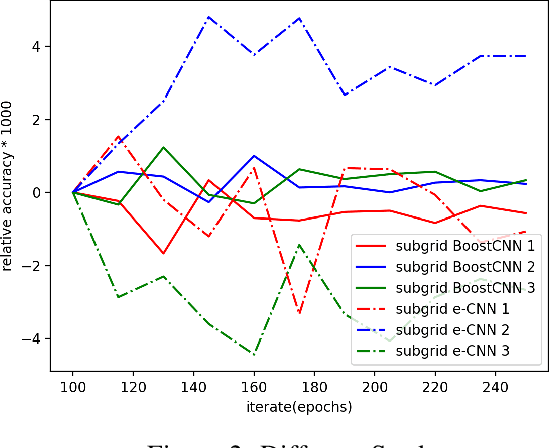
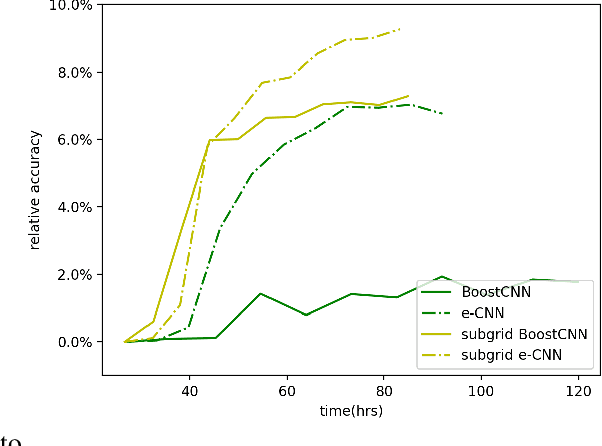
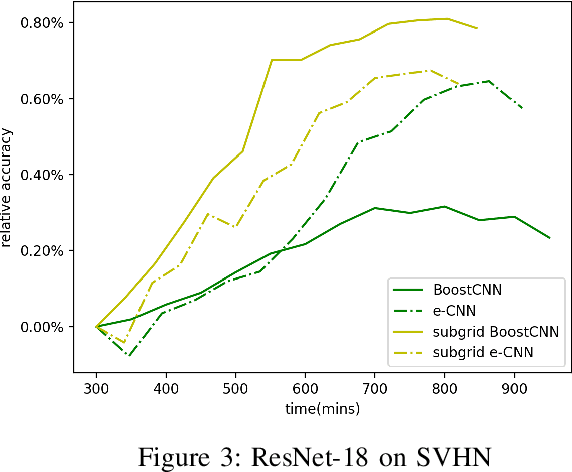
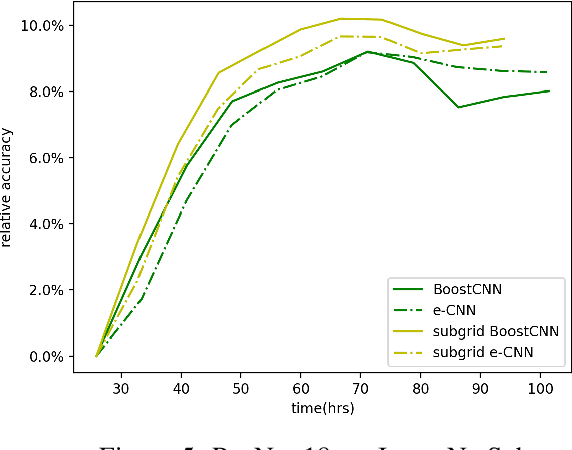
Convolutional Neural Networks (CNNs) have achieved remarkable success across a wide range of machine learning tasks by leveraging hierarchical feature learning through deep architectures. However, the large number of layers and millions of parameters often make CNNs computationally expensive to train, requiring extensive time and manual tuning to discover optimal architectures. In this paper, we introduce a novel framework for boosting CNN performance that integrates dynamic feature selection with the principles of BoostCNN. Our approach incorporates two key strategies: subgrid selection and importance sampling, to guide training toward informative regions of the feature space. We further develop a family of algorithms that embed boosting weights directly into the network training process using a least squares loss formulation. This integration not only alleviates the burden of manual architecture design but also enhances accuracy and efficiency. Experimental results across several fine-grained classification benchmarks demonstrate that our boosted CNN variants consistently outperform conventional CNNs in both predictive performance and training speed.
FedGA-Tree: Federated Decision Tree using Genetic Algorithm
Jun 09, 2025In recent years, with rising concerns for data privacy, Federated Learning has gained prominence, as it enables collaborative training without the aggregation of raw data from participating clients. However, much of the current focus has been on parametric gradient-based models, while nonparametric counterparts such as decision tree are relatively understudied. Existing methods for adapting decision trees to Federated Learning generally combine a greedy tree-building algorithm with differential privacy to produce a global model for all clients. These methods are limited to classification trees and categorical data due to the constraints of differential privacy. In this paper, we explore an alternative approach that utilizes Genetic Algorithm to facilitate the construction of personalized decision trees and accommodate categorical and numerical data, thus allowing for both classification and regression trees. Comprehensive experiments demonstrate that our method surpasses decision trees trained solely on local data and a benchmark algorithm.
BEAR: BGP Event Analysis and Reporting
Jun 04, 2025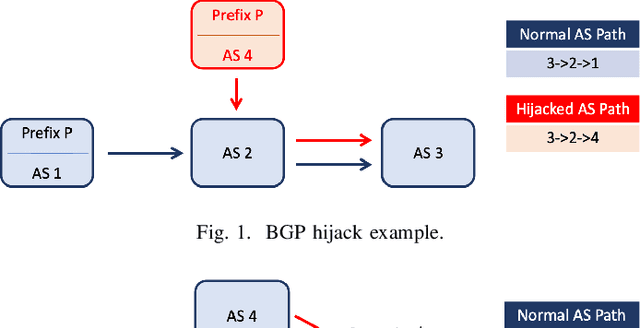
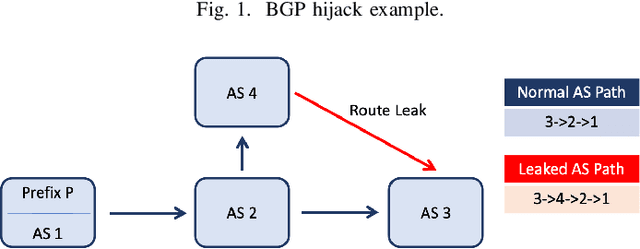
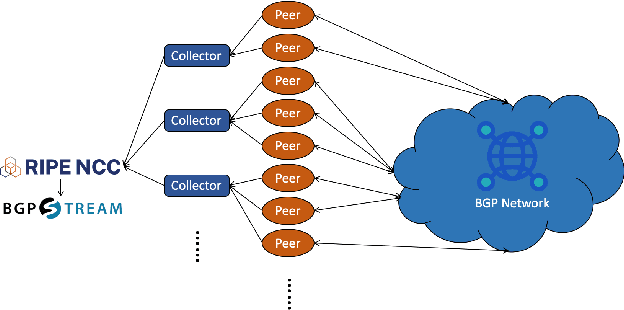
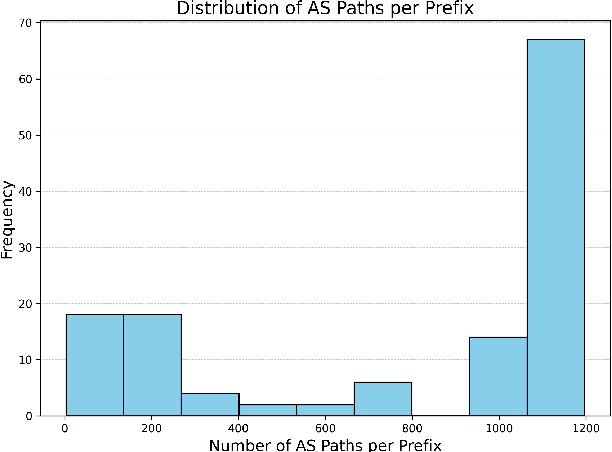
The Internet comprises of interconnected, independently managed Autonomous Systems (AS) that rely on the Border Gateway Protocol (BGP) for inter-domain routing. BGP anomalies--such as route leaks and hijacks--can divert traffic through unauthorized or inefficient paths, jeopardizing network reliability and security. Although existing rule-based and machine learning methods can detect these anomalies using structured metrics, they still require experts with in-depth BGP knowledge of, for example, AS relationships and historical incidents, to interpret events and propose remediation. In this paper, we introduce BEAR (BGP Event Analysis and Reporting), a novel framework that leverages large language models (LLMs) to automatically generate comprehensive reports explaining detected BGP anomaly events. BEAR employs a multi-step reasoning process that translates tabular BGP data into detailed textual narratives, enhancing interpretability and analytical precision. To address the limited availability of publicly documented BGP anomalies, we also present a synthetic data generation framework powered by LLMs. Evaluations on both real and synthetic datasets demonstrate that BEAR achieves 100% accuracy, outperforming Chain-of-Thought and in-context learning baselines. This work pioneers an automated approach for explaining BGP anomaly events, offering valuable operational insights for network management.