 Add to Chrome
 Add to Firefox
 Add to Edge
PowerLens: Taming LLM Agents for Safe and Personalized Mobile Power Management
Mar 20, 2026
Battery life remains a critical challenge for mobile devices, yet existing power management mechanisms rely on static rules or coarse-grained heuristics that ignore user activities and personal preferences. We present PowerLens, a system that tames the reasoning power of Large Language Models (LLMs) for safe and personalized mobile power management on Android devices. The key idea is that LLMs' commonsense reasoning can bridge the semantic gap between user activities and system parameters, enabling zero-shot, context-aware policy generation that adapts to individual preferences through implicit feedback. PowerLens employs a multi-agent architecture that recognizes user context from UI semantics and generates holistic power policies across 18 device parameters. A PDL-based constraint framework verifies every action before execution, while a two-tier memory system learns individualized preferences from implicit user overrides through confidence-based distillation, requiring no explicit configuration and converging within 3--5 days. Extensive experiments on a rooted Android device show that PowerLens achieves 81.7% action accuracy and 38.8% energy saving over stock Android, outperforming rule-based and LLM-based baselines, with high user satisfaction, fast preference convergence, and strong safety guarantees, with the system itself consuming only 0.5% of daily battery capacity.

Detection and Analysis of Sensitive and Illegal Content on the Ethereum Blockchain Using Machine Learning Techniques
Dec 19, 2025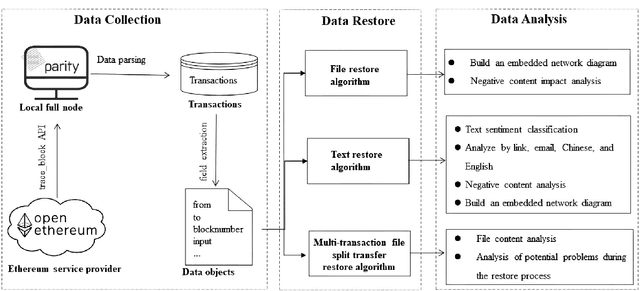
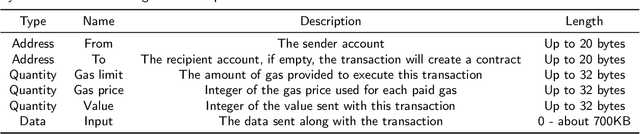
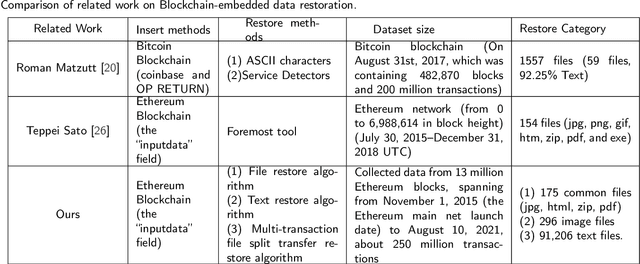
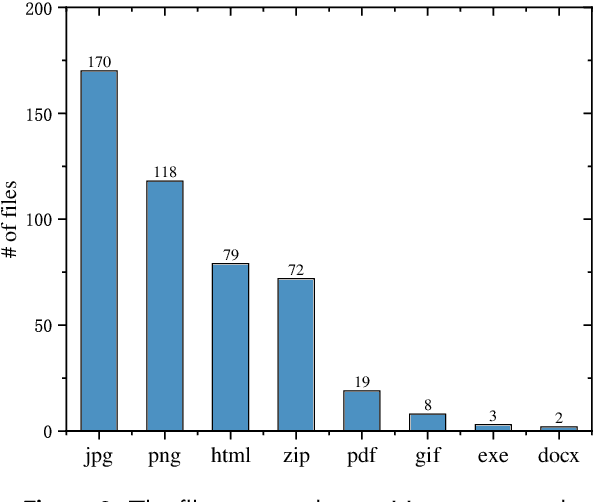
Blockchain technology, lauded for its transparent and immutable nature, introduces a novel trust model. However, its decentralized structure raises concerns about potential inclusion of malicious or illegal content. This study focuses on Ethereum, presenting a data identification and restoration algorithm. Successfully recovering 175 common files, 296 images, and 91,206 texts, we employed the FastText algorithm for sentiment analysis, achieving a 0.9 accuracy after parameter tuning. Classification revealed 70,189 neutral, 5,208 positive, and 15,810 negative texts, aiding in identifying sensitive or illicit information. Leveraging the NSFWJS library, we detected seven indecent images with 100% accuracy. Our findings expose the coexistence of benign and harmful content on the Ethereum blockchain, including personal data, explicit images, divisive language, and racial discrimination. Notably, sensitive information targeted Chinese government officials. Proposing preventative measures, our study offers valuable insights for public comprehension of blockchain technology and regulatory agency guidance. The algorithms employed present innovative solutions to address blockchain data privacy and security concerns.