 Add to Chrome
 Add to Firefox
 Add to Edge
Not All Visual Tokens Are Equally Safe to Remove:Consequence-Sensitive Visual Token Compression
Aug 10, 2026
Visual token compression for vision--language models (VLMs) has largely relied on criteria such as attention, redundancy, and uncertainty to maximize average accuracy under a fixed compute budget, implicitly assuming that all errors carry equal cost. However, the consequence of an incorrect prediction on downstream tasks is rarely symmetric: misreading an invoice amount can be far more costly than misclassifying a background color. Motivated by this, we introduce consequence-sensitive visual token compression, which allocates visual computation across requests according to their potential error costs. Our method follows a calibrate-then-allocate procedure, estimating consequence-specific error-budget curves offline and applying the calibrated token budgets online using consequence signals available from question or task information. On a controlled within-task benchmark, high- and low-consequence questions are drawn from the same document images, so content alone cannot reveal which questions are costly to get wrong. In this setting, our method reduces high-stakes errors from 0.300 to 0.133 under the same total token budget, whereas a content-driven allocator performs no better than uniform allocation. Measuring how error rates change with token budget across different cost ratios, we derive an allocation frontier: uniform allocation is optimal when errors are equally costly, and token transfer toward high-consequence questions becomes increasingly beneficial as the cost gap grows. This allocation principle generalizes well across three dense vision-language benchmarks, two budget realization mechanisms (token deletion and resolution reallocation), two VLM architectures, and multiple token selection strategies. On a realistic mixed workload, consequence-sensitive allocation reduces cost-weighted error by 38% while achieving approximately 21% lower latency than full-resolution inference.

From Relevance to Execution Utility: Reward-Aware Dynamic Execution Gating for Skill-Based LLM Agents
Aug 10, 2026Agent skills are increasingly used to equip large language model (LLM) agents with reusable procedural knowledge. Although recent work has substantially improved skill retrieval due to the increasing skill libraries, retrieving a plausible skill bundle does not guarantee that executing it is worthwhile. Since every skill-conditioned rollout is computationally expensive, deciding whether a retrieved bundle should be executed has become an increasingly important challenge. To this end, we introduce the Reward-Aware Dynamic Execution Gate (RADEG), a lightweight, retriever-agnostic decision layer between skill retrieval and agent execution. RADEG learns a low-cost surrogate model that predicts the execution utility of a query--bundle pair before the expensive rollout is launched. To obtain informative supervision while controlling for task difficulty, we locally perturb each retrieved bundle by deleting, adding, or replacing one skill, producing matched same-query rollouts that isolate the effect of bundle composition on verifier reward. During deployment, RADEG updates only a warm-started logistic head as new verifier feedback becomes available, enabling inexpensive adaptation of the execute/skip boundary without retraining either the retriever or the agent. Under a query-level held-out evaluation on 288 collected rollouts, RADEG substantially reduces unnecessary agent executions while preserving a large fraction of the downstream verifier reward. It consistently outperforms relevance-based and random gating across different execution budgets, demonstrating that execution-aware surrogate modeling provides a practical and cost-effective complement to skill retrieval.
CRIP: Channel Level Representation Injection for Personalized One-Shot Federated Learning
Aug 03, 2026One-shot federated learning (OSFL) has emerged as a promising collaborative model learning framework with only a single round of communication, offering significant advantages in communication efficiency and privacy preservation. However, OSFL often faces inherent limitations under severe domain heterogeneity across clients due to the lack of iterative knowledge exchange. Most existing OSFL methods require an auxiliary public dataset for knowledge distillation or leverage statistical information for parameter-level aggregation, overlooking feature shift caused by domain heterogeneity. To address these challenges, we propose CRIP, a personalized OSFL framework that operates in the representation space via channel-level feature alignment. To achieve this, each client uploads its feature extractor to the server, which broadcasts all extractors back to every client. Since not all source clients share compatible feature distributions with the target client, indiscriminate fusion of cross-client features would introduce domain-specific noise. Therefore, CRIP effectively measures the channel-wise representational similarity between the target client and each source client on a small local mini-batch, and selectively fuses only the most compatible features. Extensive experiments on domain-heterogeneous benchmarks such as DomainNet, PACS, and Office-Home demonstrate that CRIP consistently outperforms local models and state-of-the-art baselines, validating the effectiveness of representation-space personalization under extreme domain heterogeneity.
BudgetDraft: Acceptance-Aware Multi-View Training for Sparse-KV Speculative Decoding
May 29, 2026Speculative decoding speeds up autoregressive decoding by using a drafter to propose multiple tokens that a verifier validates in parallel. In resource-constrained deployments, the drafter uses a sparse KV cache to limit peak GPU memory and end-to-end latency under a fixed KV budget, while the verifier keeps a full KV cache. Mid-to-long context inference (4K--16K context length) is common in real applications. However, naive sparse/full speculative decoding suffers from the sparse/full mismatch as context length grows, causing the acceptance rate to drop quickly. We propose BudgetDraft, a multi-view sparse training method for sparse drafting in mid-to-long inference. The drafter is exposed to multiple sampled KV budgets during training and learns to align each sparse view with one shared full-cache teacher target. BudgetDraft combines an acceptance-aware loss on a full-cache branch with a multi-view loss on a sparse-cache branch, producing a single budget-robust drafter that recovers acceptance across sparsity levels without extra inference-time components. Experimental results on PG-19, LongBench, and LWM show that BudgetDraft achieves up to 6.55x, 4.46x, and 2.10x end-to-end speedup vs AR at 4K, 8K, and 16K context lengths, while keeping the inference pipeline memory-friendly.
ELAS: Efficient Pre-Training of Low-Rank Large Language Models via 2:4 Activation Sparsity
May 05, 2026Large Language Models (LLMs) have achieved remarkable capabilities, but their immense computational demands during training remain a critical bottleneck for widespread adoption. Low-rank training has received attention in recent years due to its ability to significantly reduce training memory usage. Meanwhile, applying 2:4 structured sparsity to weights and activations to leverage NVIDIA GPU support for 2:4 structured sparse format has become a promising direction. However, existing low-rank methods often leave activation matrices in full-rank, which dominates memory consumption and limits throughput during large-batch training. Furthermore, directly applying sparsity to weights often leads to non-negligible performance degradation. To achieve efficient pre-training of LLMs, this paper proposes ELAS: Efficient pre-training of Low-rank LLMs via 2:4 Activation Sparsity, a novel framework for low-rank models via 2:4 activation sparsity. ELAS applies squared ReLU activation functions to the feed-forward networks in low-rank models and implements 2:4 structured sparsity on the activations after the squared ReLU operation. We evaluated ELAS through pre-training experiments on LLaMA models ranging from 60M to 1B parameters. The results demonstrate that ELAS maintains performance with minimal degradation after applying 2:4 activation sparsity, while achieving training and inference acceleration. Moreover, ELAS reduces activation memory overhead, particularly with large batch sizes. Code is available at ELAS Repo.
Self-Supervised Federated Learning under Data Heterogeneity for Label-Scarce Diatom Classification
Mar 31, 2026Label-scarce visual classification under decentralized and heterogeneous data is a fundamental challenge in pattern recognition, especially when sites exhibit partially overlapping class sets. While self-supervised federated learning (SSFL) offers a promising solution, existing studies commonly assume the same data heterogeneity pattern throughout pre-training and fine-tuning. Moreover, current partitioning schemes often fail to generate pure partially class-disjoint data settings, limiting controllable simulation of real-world label-space heterogeneity. In this work, we introduce SSFL for diatom classification as a representative real-world instance and systematically investigate stage-specific data heterogeneity. We study cross-site variation in unlabeled data volume during pre-training and label-space misalignment during downstream fine-tuning. To study the latter in a controllable setting, we propose PreDi, a partitioning scheme that disentangles label-space heterogeneity into two orthogonal dimensions, namely class Prevalence and class-set size Disparity, enabling separate analysis of their effects. Guided by the resulting insights, we further propose PreP-WFL (Prevalence-based Personalized Weighted Federated Learning) to adaptively strengthen rare-class representations in low-prevalence scenarios. Extensive experiments show that SSFL consistently outperforms local-only training under both homogeneous and heterogeneous settings. The pronounced heterogeneity in unlabeled data volume is associated with improved representation pre-training, whereas under label-space heterogeneity, prevalence dominates performance and disparity has a smaller effect. PreP-WFL effectively mitigates this degradation, with gains increasing as prevalence decreases. These findings provide a mechanistic basis for characterizing label-space heterogeneity in decentralized recognition systems.
TSegAgent: Zero-Shot Tooth Segmentation via Geometry-Aware Vision-Language Agents
Mar 20, 2026Automatic tooth segmentation and identification from intra-oral scanned 3D models are fundamental problems in digital dentistry, yet most existing approaches rely on task-specific 3D neural networks trained with densely annotated datasets, resulting in high annotation cost and limited generalization to scans from unseen sources. Thus, we propose TSegAgent, which addresses these challenges by reformulating dental analysis as a zero-shot geometric reasoning problem rather than a purely data-driven recognition task. The key idea is to combine the representational capacity of general-purpose foundation models with explicit geometric inductive biases derived from dental anatomy. Instead of learning dental-specific features, the proposed framework leverages multi-view visual abstraction and geometry-grounded reasoning to infer tooth instances and identities without task-specific training. By explicitly encoding structural constraints such as dental arch organization and volumetric relationships, the method reduces uncertainty in ambiguous cases and mitigates overfitting to particular shape distributions. Experimental results demonstrate that this reasoning-oriented formulation enables accurate and reliable tooth segmentation and identification with low computational and annotation cost, while exhibiting strong generalization across diverse and previously unseen dental scans.
Long Chain-of-Thought Compression via Fine-Grained Group Policy Optimization
Feb 10, 2026Large Language Models (LLMs) often generate unnecessarily verbose Chain-of-Thought (CoT) reasoning that increases computational costs and latency without proportional performance gains. In this paper, we propose \textbf{F}ine-grained \textbf{G}roup policy \textbf{O}ptimization (\textbf{FGO}), a Reinforcement Learning (RL) algorithm that refines group responses by subdividing them and assigning appropriate weights based on length and entropy, thereby enabling effective CoT compression. Meanwhile, as an enhanced variant of Group Relative Policy Optimization (GRPO), FGO successfully addresses two major limitations of the GRPO: inefficient data utilization and entropy collapse. We evaluate FGO on multiple reasoning LLMs and benchmarks, including MATH500, AIME24, AMC23, and Minerva. Experimental results show that FGO achieves efficient CoT compression without degrading performance, and simultaneously resolves the key limitations of GRPO.
OWLed: Outlier-weighed Layerwise Pruning for Efficient Autonomous Driving Framework
Nov 12, 2024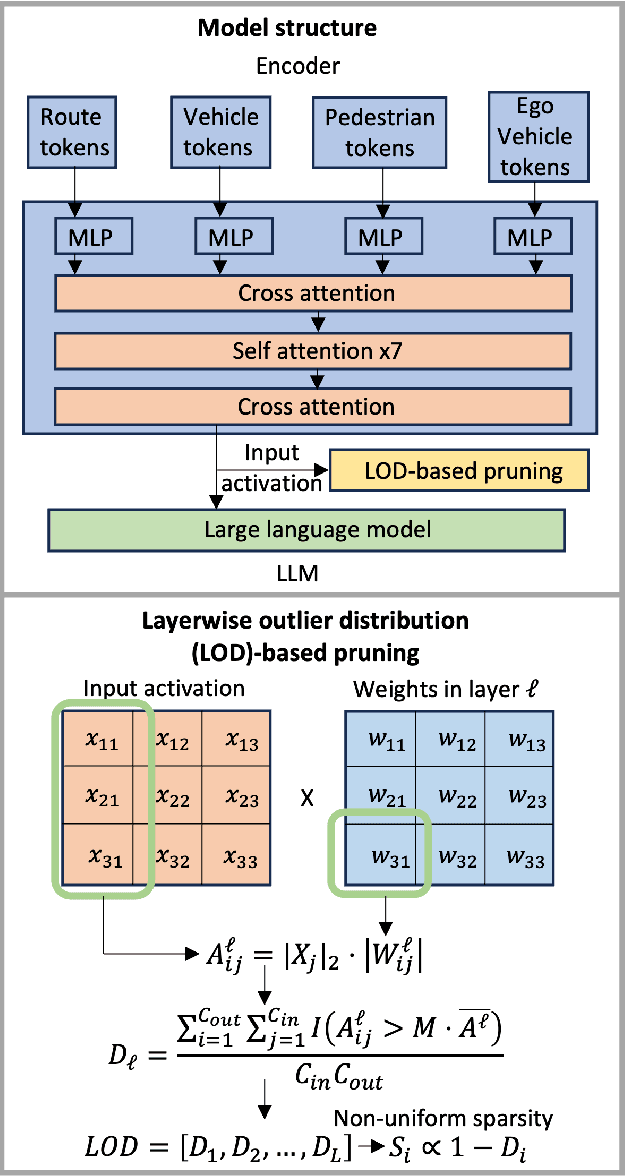
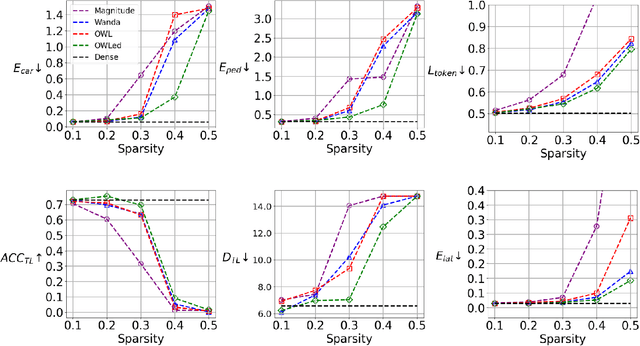
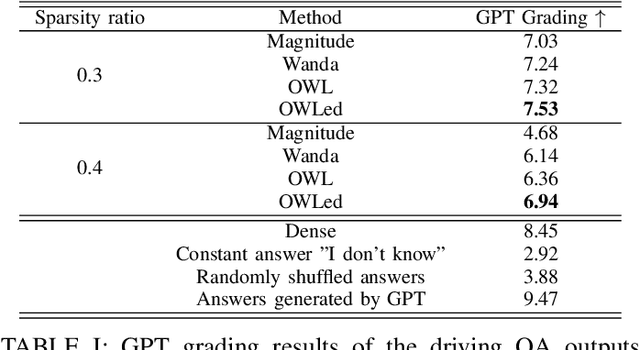
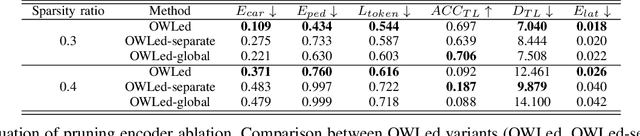
The integration of Large Language Models (LLMs) into autonomous driving systems offers promising enhancements in environmental understanding and decision-making. However, the substantial computational demands of deploying LLMs locally on vehicles render this approach unfeasible for real-world automotive applications. To address this challenge, we introduce OWLed, the Outlier-Weighed Layerwise Pruning for Efficient Autonomous Driving Framework that leverages outlier-weighted layerwise sparsity for model compression. Our method assigns non-uniform sparsity ratios to different layers based on the distribution of outlier features, significantly reducing the model size without the need for fine-tuning. To ensure the compressed model adapts well to autonomous driving tasks, we incorporate driving environment data into both the calibration and pruning processes. Our empirical studies reveal that the encoder component is more sensitive to pruning than the LLM, highlighting its critical role in the system. Experimental results demonstrate that OWLed outperforms existing methods in perception, action prediction, and language understanding while substantially lowering computational requirements. These findings underscore the potential of combining advanced pruning techniques with LLMs to develop efficient and robust autonomous driving systems capable of handling complex scenarios. Code will be made publicly available.
Alleviating Search Bias in Bayesian Evolutionary Optimization with Many Heterogeneous Objectives
Aug 25, 2022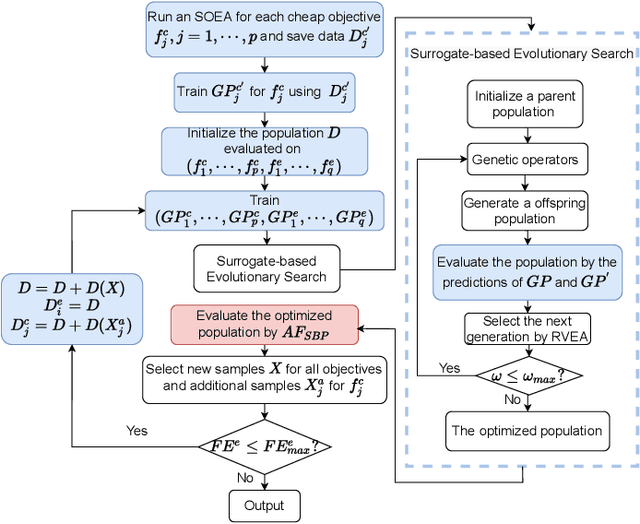
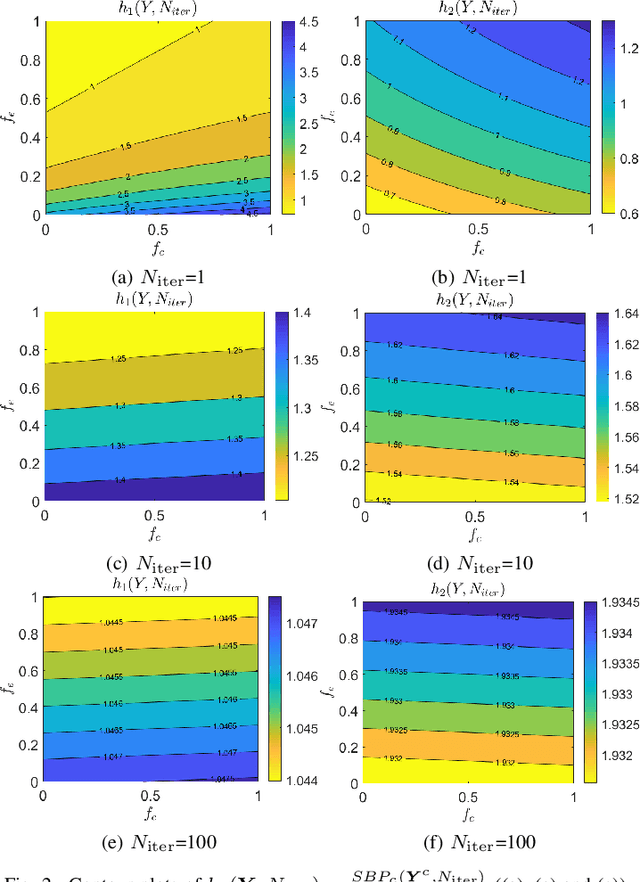
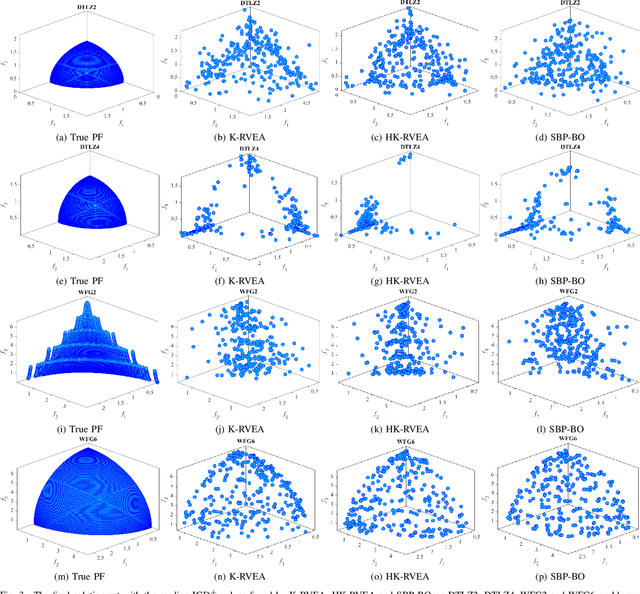
Multi-objective optimization problems whose objectives have different evaluation costs are commonly seen in the real world. Such problems are now known as multi-objective optimization problems with heterogeneous objectives (HE-MOPs). So far, however, only a few studies have been reported to address HE-MOPs, and most of them focus on bi-objective problems with one fast objective and one slow objective. In this work, we aim to deal with HE-MOPs having more than two black-box and heterogeneous objectives. To this end, we develop a multi-objective Bayesian evolutionary optimization approach to HE-MOPs by exploiting the different data sets on the cheap and expensive objectives in HE-MOPs to alleviate the search bias caused by the heterogeneous evaluation costs for evaluating different objectives. To make the best use of two different training data sets, one with solutions evaluated on all objectives and the other with those only evaluated on the fast objectives, two separate Gaussian process models are constructed. In addition, a new acquisition function that mitigates search bias towards the fast objectives is suggested, thereby achieving a balance between convergence and diversity. We demonstrate the effectiveness of the proposed algorithm by testing it on widely used multi-/many-objective benchmark problems whose objectives are assumed to be heterogeneously expensive.